Utility Scale String Inverters: Cost and Efficiency Trade-Offs
Key Takeaways
- How grid access delays are reshaping renewable project timelines in Latin AmericaDr. Elena Volt
- What drives energy storage systems price per kWh for commercial projects?Dr. Julian Volt
- What manufacturers should compare in emissions tracking softwareLina Cloud
- Why high-net-worth buyers are reshaping demand for automotive technologyDr. Aris Sun
- Can project tender intelligence software improve bid opportunity quality?Lina Cloud
- Which metrics reveal whether a P2P energy trading platform is working?Lina Cloud
- When does strategic link acquisition improve a clean energy site's authority?Dr. Aris Sun
- What drives solar street lighting cost for a new installation?Dr. Aris Sun
Industry Overview
Our mission is to safeguard the future of global renewable energy development through verifiable data, interdisciplinary academic scrutiny, and unwavering industry integrity.
Utility Scale String Inverters: Cost and Efficiency Trade-Offs
As Utility Scale solar projects expand across complex grids, inverter architecture has become a strategic performance decision.
String inverters now compete directly with centralized platforms in large PV plants, especially where terrain, availability, and grid response matter.
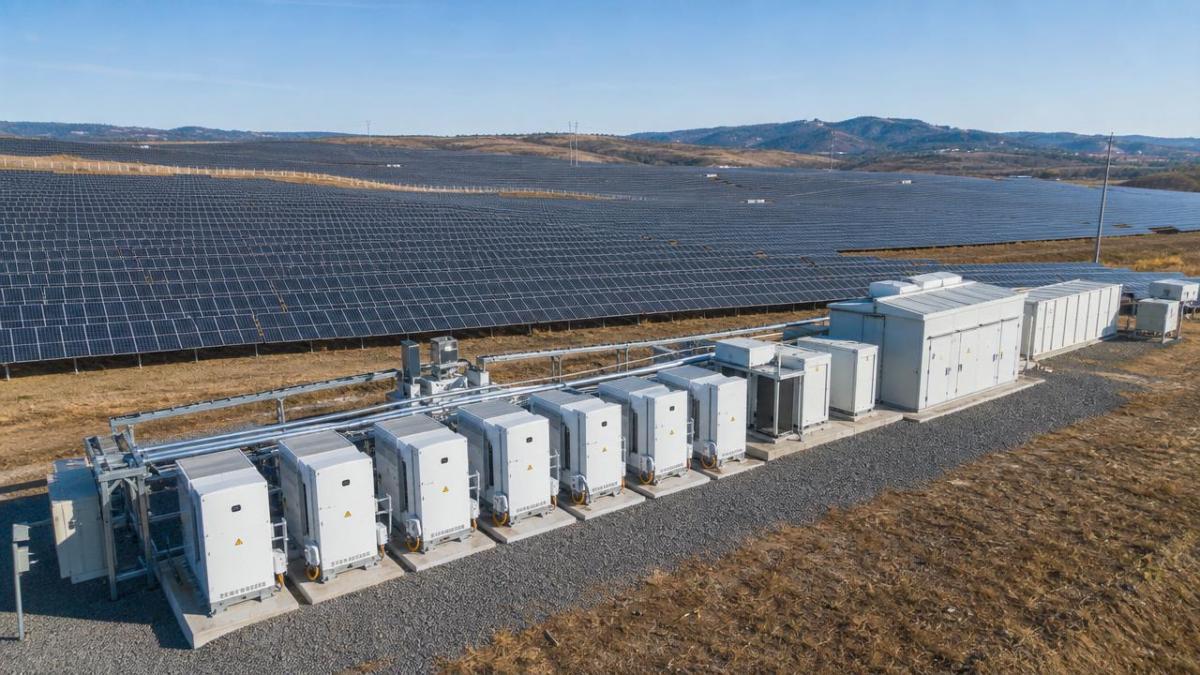
The core question is no longer only capex. Utility Scale value depends on energy yield, uptime, maintenance access, and compliance resilience.
This shift affects procurement models, plant layout, electrical design, and long-term asset risk allocation.
Utility Scale Solar Is Moving Toward More Distributed Conversion
Historically, central inverters dominated Utility Scale PV because they concentrated power conversion and simplified early plant control.
That logic still works for uniform sites with predictable irradiance, stable grids, and consolidated service models.
However, many new Utility Scale projects occupy irregular land, hybrid energy parks, and grid-constrained interconnection zones.
In these environments, string inverters provide modularity, finer MPPT control, and improved fault containment.
The trend is not a full replacement of central technology. It is a broader optimization of inverter topology.
Trend Signals Reshaping Inverter Selection
- Higher DC/AC ratios increase the importance of conversion behavior under clipping conditions.
- Bifacial modules amplify mismatch risk across uneven albedo and sloped terrain.
- Grid codes require faster reactive power, voltage ride-through, and frequency response.
- Utility Scale O&M teams need replaceable units and shorter fault isolation cycles.
- Hybrid PV-plus-storage plants demand more granular monitoring and control visibility.
Why Cost Comparisons Are Becoming More Complex
A simple equipment price comparison can mislead Utility Scale investment decisions.
String inverter systems may require more units, more AC collection planning, and greater communication integration.
Central inverters may reduce unit count, but they can increase single-point failure exposure and specialized service dependence.
The real comparison should include installed cost, energy gain, service cost, downtime probability, and replacement logistics.
For Utility Scale plants, the strongest business case usually appears when operating variability is high.
Sites with row shading, module mismatch, long feeder distances, or phased construction often favor string-based architecture.
Efficiency Trade-Offs Depend on Site Behavior, Not Datasheets Alone
Peak conversion efficiency is useful, but Utility Scale performance depends on annual operating distribution.
A high peak rating may contribute less value if the inverter often operates outside its optimal load range.
String inverters can improve energy capture through multiple MPPT channels across smaller DC blocks.
This matters when module strings experience different irradiance, temperature, soiling, degradation, or orientation conditions.
Central inverters can still perform efficiently on flat, homogeneous arrays with consistent string behavior.
Where String Inverters Often Gain Energy
- Uneven terrain creates different row angles and localized irradiance differences.
- Bifacial arrays experience variable rear-side gain across ground conditions.
- Partial shading from trackers, vegetation, snow, or nearby infrastructure affects limited blocks.
- Module aging diverges across batches, suppliers, or construction phases.
- Utility Scale repowering requires flexible matching of old and new DC sections.
The efficiency advantage is therefore contextual. It should be modeled with hourly simulations, not assumed universally.
Yield modeling should include clipping, thermal derating, auxiliary load, transformer losses, and inverter availability.
Grid-Code Pressure Is Raising the Value of Control Granularity
Utility Scale interconnection rules are becoming stricter as renewable penetration rises.
Inverters now participate in voltage regulation, reactive power support, ramp control, and disturbance recovery.
This changes the evaluation from hardware efficiency toward grid-forming readiness and plant-level control coordination.
String inverters offer distributed controllability, but they require robust communication and supervisory plant controllers.
Central systems may simplify command pathways, but their control response depends on larger conversion blocks.
Compliance Factors That Should Be Tested Early
- IEC, IEEE, UL, and local interconnection certifications.
- Low-voltage and high-voltage ride-through performance.
- Reactive power capability across temperature and load ranges.
- Harmonic behavior under weak-grid conditions.
- Cybersecurity and firmware management for distributed assets.
For Utility Scale projects, grid compliance should be verified before final electrical architecture freezes.
Late changes can affect transformer sizing, protection coordination, commissioning schedules, and revenue start dates.
Operational Impact Spreads Across Design, Construction, and Asset Management
Inverter topology affects more than energy conversion. It changes workflows across the entire Utility Scale lifecycle.
During design, string architecture supports smaller repeatable blocks and easier adaptation to land constraints.
During construction, distributed devices may reduce heavy lifting but increase field coordination and labeling needs.
During operations, fault isolation can be faster because failures affect limited sections rather than large power stations.
These effects can either improve lifecycle economics or create hidden complexity.
The outcome depends on project governance, digital monitoring quality, and supplier support depth.
Key Points for Utility Scale Decision Models
A disciplined decision model should compare architectures under the same assumptions.
It should quantify uncertainty, not only calculate a single levelized cost result.
- Energy yield: Model MPPT gains, clipping, soiling response, and mismatch losses.
- Availability: Estimate outage size, repair time, and spare-part logistics.
- Electrical balance: Compare DC cabling, AC cabling, transformers, switchgear, and protection systems.
- Grid services: Validate reactive power, ride-through, ramp control, and plant controller compatibility.
- Bankability: Review warranties, service network, firmware policy, and field failure data.
- Cyber resilience: Assess communication architecture, access control, update procedures, and monitoring integrity.
For Utility Scale portfolios, standardization can also matter as much as single-project optimization.
A consistent inverter platform can simplify training, spare inventory, analytics, and warranty administration.
How to Judge the Next Phase of the Trend
The next phase will be shaped by grid strength, hybridization, and software-defined plant control.
Utility Scale plants increasingly need inverters that function as intelligent grid assets, not passive conversion devices.
String inverters will gain where modular resilience, terrain adaptability, and diagnostic transparency deliver measurable value.
Central platforms will remain competitive where site uniformity, simplicity, and large-block economics dominate.
The most reliable approach is scenario testing. Compare architectures across base, stress, and future grid-code cases.
Sensitivity analysis should cover curtailment, component failure, module degradation, replacement cost, and price volatility.
Action Steps for Better Utility Scale Inverter Decisions
Start with a site-specific energy model rather than a generic inverter preference.
Then compare total lifecycle value using transparent assumptions and verified technical evidence.
- Map terrain, string grouping, shading, albedo, and thermal exposure before topology selection.
- Request efficiency curves, derating data, fault records, and compliance test documentation.
- Evaluate plant controller integration with storage, SCADA, protection, and grid operator requirements.
- Calculate downtime impact by affected capacity, repair pathway, spare availability, and response time.
- Benchmark suppliers against IEC, IEEE, UL, warranty terms, cybersecurity controls, and long-term service capacity.
Utility Scale string inverters are not automatically cheaper or more efficient in every case.
Their value emerges when modularity, MPPT granularity, and operational resilience offset added system complexity.
G-REI’s benchmarking approach helps connect inverter performance, grid-code readiness, and commercial risk into one evaluation framework.
The practical next step is to build a quantified comparison before procurement locks the project into a fixed architecture.
Deep Dive
Related Intelligence
- Which string cable loss metrics matter most in PV system design?Author :

- Next-Gen Solar Inverter Technology Grid-Forming: Key Performance Trade-OffsAuthor :

- Solar Inverter Harmonic Analysis: When Distortion Becomes a Cost IssueAuthor :

- How to Compare an Off-Grid Solar System Factory Supplier on Cost and Lead TimeAuthor :