String Inverter Manufacturer Comparison: Efficiency vs Uptime
Key Takeaways
- How grid access delays are reshaping renewable project timelines in Latin AmericaDr. Elena Volt
- What drives energy storage systems price per kWh for commercial projects?Dr. Julian Volt
- What manufacturers should compare in emissions tracking softwareLina Cloud
- Why high-net-worth buyers are reshaping demand for automotive technologyDr. Aris Sun
- Can project tender intelligence software improve bid opportunity quality?Lina Cloud
- Which metrics reveal whether a P2P energy trading platform is working?Lina Cloud
- When does strategic link acquisition improve a clean energy site's authority?Dr. Aris Sun
- What drives solar street lighting cost for a new installation?Dr. Aris Sun
Industry Overview
Our mission is to safeguard the future of global renewable energy development through verifiable data, interdisciplinary academic scrutiny, and unwavering industry integrity.
For commercial evaluators comparing every string inverter manufacturer, the real decision is not just peak efficiency—it is bankable uptime across volatile grid conditions, service cycles, and lifetime yield. This guide examines how leading suppliers balance conversion performance, reliability engineering, and operational continuity to help procurement teams make smarter, lower-risk investment decisions.
Why efficiency alone is not enough when comparing a string inverter manufacturer
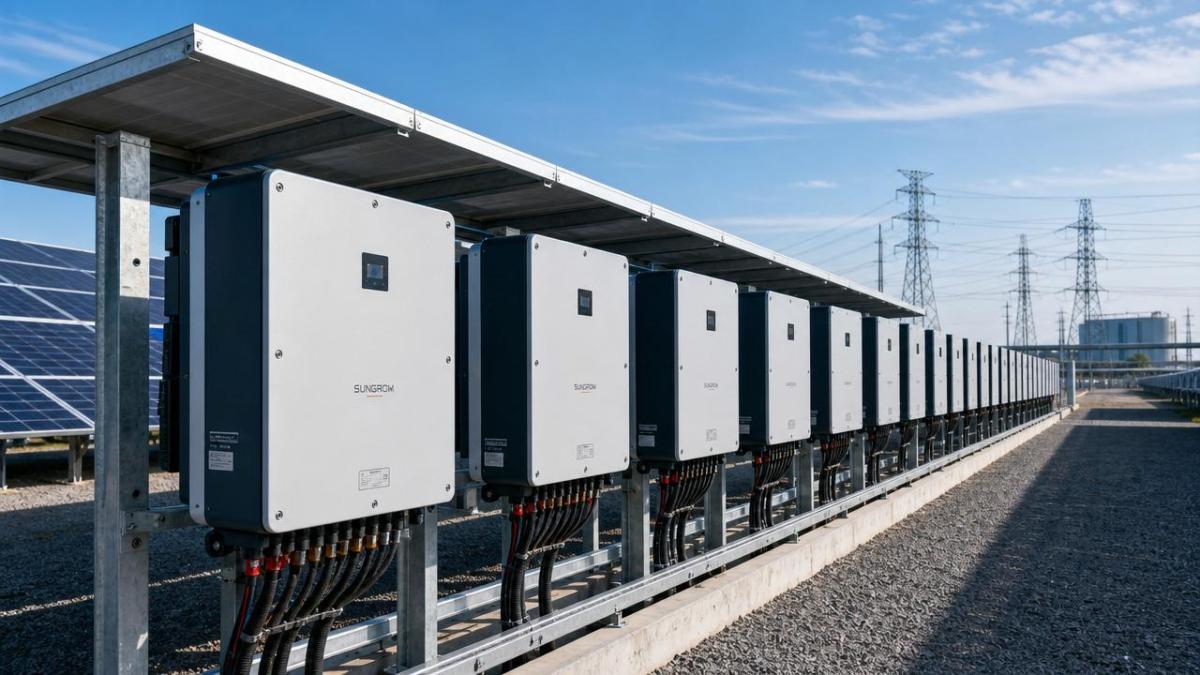
In utility, C&I, and distributed solar projects, the headline efficiency number often gets too much attention. A 0.2% or 0.3% conversion gain can look decisive in a bid sheet, yet the commercial impact may be smaller than a few additional hours of downtime each year.
That is why a serious string inverter manufacturer comparison should connect lab performance with field reliability. Procurement teams need to assess how the equipment behaves under voltage fluctuation, thermal stress, dust load, grid disturbances, firmware updates, and maintenance constraints.
G-REI approaches this topic from both hardware benchmarking and grid-integration intelligence. For evaluators working across global renewable portfolios, that dual perspective matters because inverter value is created at the intersection of power electronics, compliance, and operational continuity.
- Efficiency affects energy conversion and annual yield, but only within the operating window where the inverter is online and stable.
- Uptime affects availability, maintenance cost, site labor planning, and revenue confidence under PPA or merchant exposure.
- Grid support functions affect curtailment risk, interconnection approval, and the project’s long-term ability to meet changing utility requirements.
For business evaluators, the best supplier is rarely the one with the highest single performance metric. It is usually the one that delivers the most resilient operating profile over the project life.
What should commercial evaluators compare across suppliers?
A useful string inverter manufacturer review should move beyond brochure language and score vendors against measurable procurement criteria. The table below summarizes the dimensions that matter most when balancing efficiency against uptime.
This framework helps procurement teams avoid one-dimensional decisions. A string inverter manufacturer with slightly lower advertised efficiency may still produce a stronger business case if it reduces field interventions and protects operating continuity in difficult grid environments.
How G-REI adds value to the comparison process
G-REI supports commercial evaluation by linking equipment benchmarks with policy movement, project tender signals, and standards interpretation. This is especially useful when teams must compare suppliers across regions where grid behavior, certification expectations, and service density vary significantly.
Instead of isolating inverter efficiency as a hardware attribute, G-REI places it inside the full project context: module pairing, grid connection requirements, storage interaction, and the operational economics of uptime.
Efficiency vs uptime: which metric drives project value in real operating conditions?
For business evaluators, the key issue is not choosing one metric over the other. It is understanding when efficiency creates marginal value and when uptime becomes the dominant economic variable. That balance changes by project type.
In high-irradiance, stable-grid projects
In sunny regions with predictable operating temperatures and robust grid infrastructure, small efficiency differences can accumulate over large installed capacity. Here, a string inverter manufacturer with better weighted efficiency and favorable MPPT behavior may improve annual yield enough to matter in a tight LCOE model.
In weak-grid, remote, or harsh-environment projects
In remote utility sites, mining loads, islanded edges of the network, or dust-heavy industrial zones, uptime usually carries more financial weight. A single recurring trip event, replacement delay, or poor thermal design can wipe out the benefit of a small efficiency advantage.
In portfolios with lean O&M staffing
If the owner operates dozens of plants with limited technical staff, diagnostic quality and serviceability become strategic. A string inverter manufacturer that enables fast fault isolation, remote reset logic, and reliable spare part planning can materially lower operational friction.
The table below shows how evaluators can prioritize criteria by project condition rather than relying on a universal scoring model.
The practical lesson is clear: the best string inverter manufacturer depends on the operating environment and the cost of failure. Procurement models should reflect the site reality, not just the datasheet headline.
Which technical indicators reveal true reliability, not just marketing claims?
Reliability is often discussed vaguely, but buyers can force specificity. When reviewing a string inverter manufacturer, ask for evidence that connects design choices with lower downtime exposure.
- Thermal management strategy: fan-cooled and natural convection architectures have different maintenance implications. Evaluators should ask how heat is dissipated and how dust affects long-term stability.
- Protection architecture: surge protection, ingress rating, anti-corrosion treatment, and internal compartment design influence field survival in coastal, desert, and industrial settings.
- DC input flexibility: wide MPPT voltage range and current handling matter when pairing with modern high-power modules, especially in repowering or mixed-array projects.
- Fault diagnostics: detailed event logs, alarm categorization, and remote parameter visibility shorten troubleshooting cycles and reduce truck rolls.
- Service model: local warehousing, replacement logistics, and commissioning support often have greater commercial impact than small efficiency gains.
Do standards and certifications influence uptime decisions?
Yes, but they should be read correctly. Compliance with relevant IEC, UL, IEEE, or local grid-connection standards does not guarantee superior uptime on its own. It does, however, indicate whether the inverter platform is designed for the regulatory and electrical conditions of the target market.
For G-REI, standards review is part of risk screening. Commercial teams should verify whether the string inverter manufacturer supports the certification package needed for the project geography and whether future firmware or control updates can preserve compliance over time.
How should procurement teams score suppliers before issuing a final award?
A disciplined award process reduces the chance of choosing the wrong string inverter manufacturer for the wrong reasons. Instead of using price and efficiency alone, procurement teams should structure a weighted scorecard tied to lifetime project risk.
Recommended procurement checklist
- Confirm the operating scenario. Define climate, grid quality, altitude, site access, O&M staffing, and curtailment expectations before comparing bids.
- Normalize efficiency claims. Ensure every string inverter manufacturer is compared on equivalent metrics such as weighted efficiency, not mixed test conventions.
- Request derating and environmental data. Ask when derating begins and how performance shifts at high temperature or under sustained full load.
- Examine service architecture. Map local support presence, spare parts commitments, remote diagnostics capability, and realistic replacement timelines.
- Review grid-function readiness. Confirm support for ride-through, reactive power control, plant controller communication, and relevant utility settings.
- Model the cost of downtime. Estimate the revenue effect of outages, not only the upfront CAPEX difference between suppliers.
This approach is especially effective for multi-country project developers and energy groups that need a bankable, repeatable supplier qualification method across different regulatory environments.
Common mistakes in a string inverter manufacturer comparison
Mistake 1: Overpaying for marginal efficiency gains
A premium efficiency claim can be valuable, but only if the site conditions allow the gain to be realized consistently. If maintenance delays or trip events are more likely, the extra premium may not translate into better net returns.
Mistake 2: Ignoring grid complexity
Many evaluations assume ideal network conditions. In reality, weak-grid behavior, voltage variation, and utility-specific controls can shape inverter performance far more than lab conversion numbers.
Mistake 3: Treating warranty length as service quality
A long warranty is not the same as fast problem resolution. Commercial evaluators should review response process, fault triage, local spare stock, and escalation paths, because those factors determine real operational exposure.
Mistake 4: Separating inverter selection from system architecture
Inverter choice should reflect module current characteristics, DC/AC ratio strategy, storage coupling plans, and plant controller integration. G-REI emphasizes this system-level view because isolated component selection often produces hidden losses later.
FAQ for business evaluators reviewing a string inverter manufacturer
How much efficiency difference is commercially meaningful?
It depends on project size, irradiation, clipping strategy, and downtime assumptions. In many cases, a small efficiency gap is less important than serviceability and grid stability. Evaluators should test the impact in an energy model rather than assuming every efficiency increment has equal value.
Which sites should prioritize uptime over peak conversion efficiency?
Remote utility sites, harsh industrial environments, weak-grid projects, and portfolios with limited technical staff should usually weight uptime more heavily. In these settings, fault resilience and maintenance speed often dominate lifetime value.
What documents should we request from each string inverter manufacturer?
Ask for datasheets, efficiency curves, derating information, environmental ratings, grid code support details, communication protocol documentation, warranty terms, service process descriptions, and available certification evidence for the intended market.
How does G-REI help reduce selection risk?
G-REI combines technical benchmarking with market intelligence, standards awareness, and cross-sector energy infrastructure expertise. That means procurement teams can evaluate a string inverter manufacturer not only on component performance, but also on grid-readiness, project fit, and long-term operational implications.
Why choose us for string inverter manufacturer evaluation and procurement support
G-REI supports commercial evaluators who need more than a datasheet comparison. Our advantage is the ability to connect inverter performance with broader renewable and smart-grid realities, including PV architecture, storage interaction, grid compliance pathways, and project tender economics.
You can contact us for practical support on supplier screening, parameter confirmation, product selection logic, grid-code review, delivery cycle planning, certification requirement alignment, and quote-level comparison across multiple string inverter manufacturer options.
If your team is balancing efficiency targets against uptime risk, we can help structure a procurement scorecard, identify hidden technical trade-offs, clarify service assumptions, and support a lower-risk selection process for utility, C&I, and distributed renewable projects.
Deep Dive
Related Intelligence
- Which string cable loss metrics matter most in PV system design?Author :

- Next-Gen Solar Inverter Technology Grid-Forming: Key Performance Trade-OffsAuthor :

- Solar Inverter Harmonic Analysis: When Distortion Becomes a Cost IssueAuthor :

- How to Compare an Off-Grid Solar System Factory Supplier on Cost and Lead TimeAuthor :