Turnkey Poultry Solutions: What to Check Before Signing
Key Takeaways
- How grid access delays are reshaping renewable project timelines in Latin AmericaDr. Elena Volt
- What drives energy storage systems price per kWh for commercial projects?Dr. Julian Volt
- What manufacturers should compare in emissions tracking softwareLina Cloud
- Why high-net-worth buyers are reshaping demand for automotive technologyDr. Aris Sun
- Can project tender intelligence software improve bid opportunity quality?Lina Cloud
- Which metrics reveal whether a P2P energy trading platform is working?Lina Cloud
- When does strategic link acquisition improve a clean energy site's authority?Dr. Aris Sun
- What drives solar street lighting cost for a new installation?Dr. Aris Sun
Industry Overview
Our mission is to safeguard the future of global renewable energy development through verifiable data, interdisciplinary academic scrutiny, and unwavering industry integrity.
Signing off on Turnkey Poultry Solutions is rarely a simple equipment purchase. It is a decision about process stability, animal environment control, utility efficiency, compliance exposure, and operational continuity over many years.
That is why the strongest evaluations go well beyond quoted capacity and delivery schedules. The practical question is whether the full system can perform as an integrated production asset under real site conditions.
This matters even more in a market shaped by energy volatility, tighter biosecurity expectations, and rising pressure to reduce carbon intensity. From a broader industrial perspective, the same discipline used in infrastructure benchmarking also helps here: verify interfaces, validate standards, and test lifecycle assumptions before the contract is signed.
What a turnkey poultry package really includes
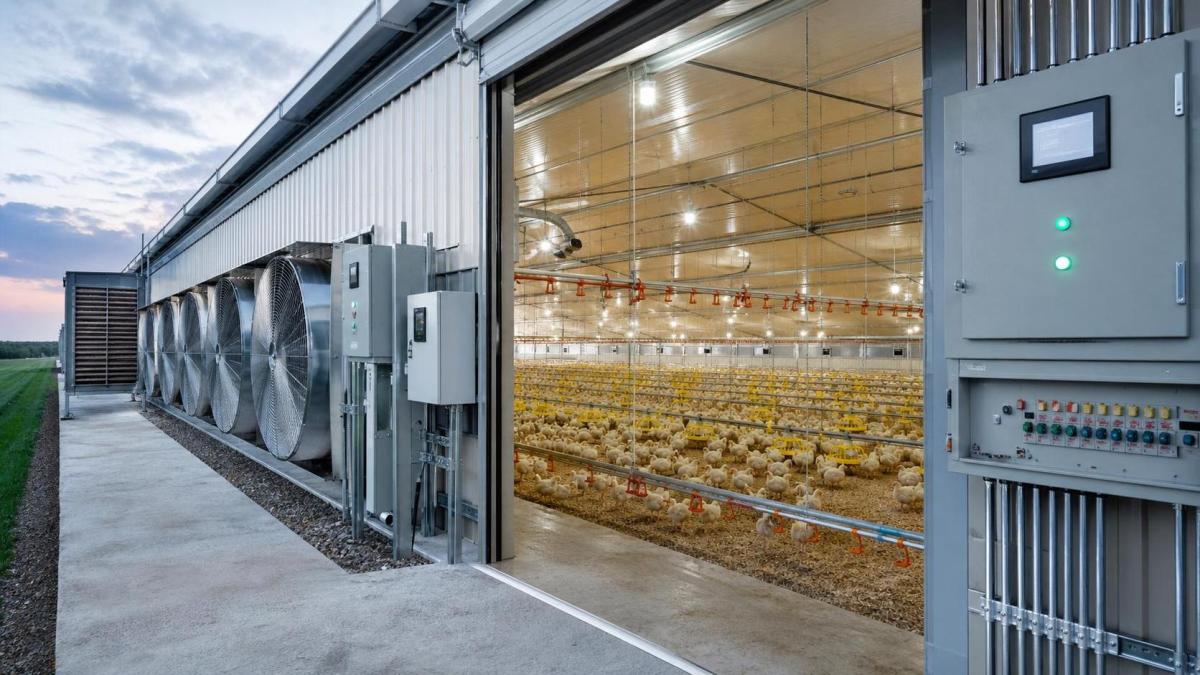
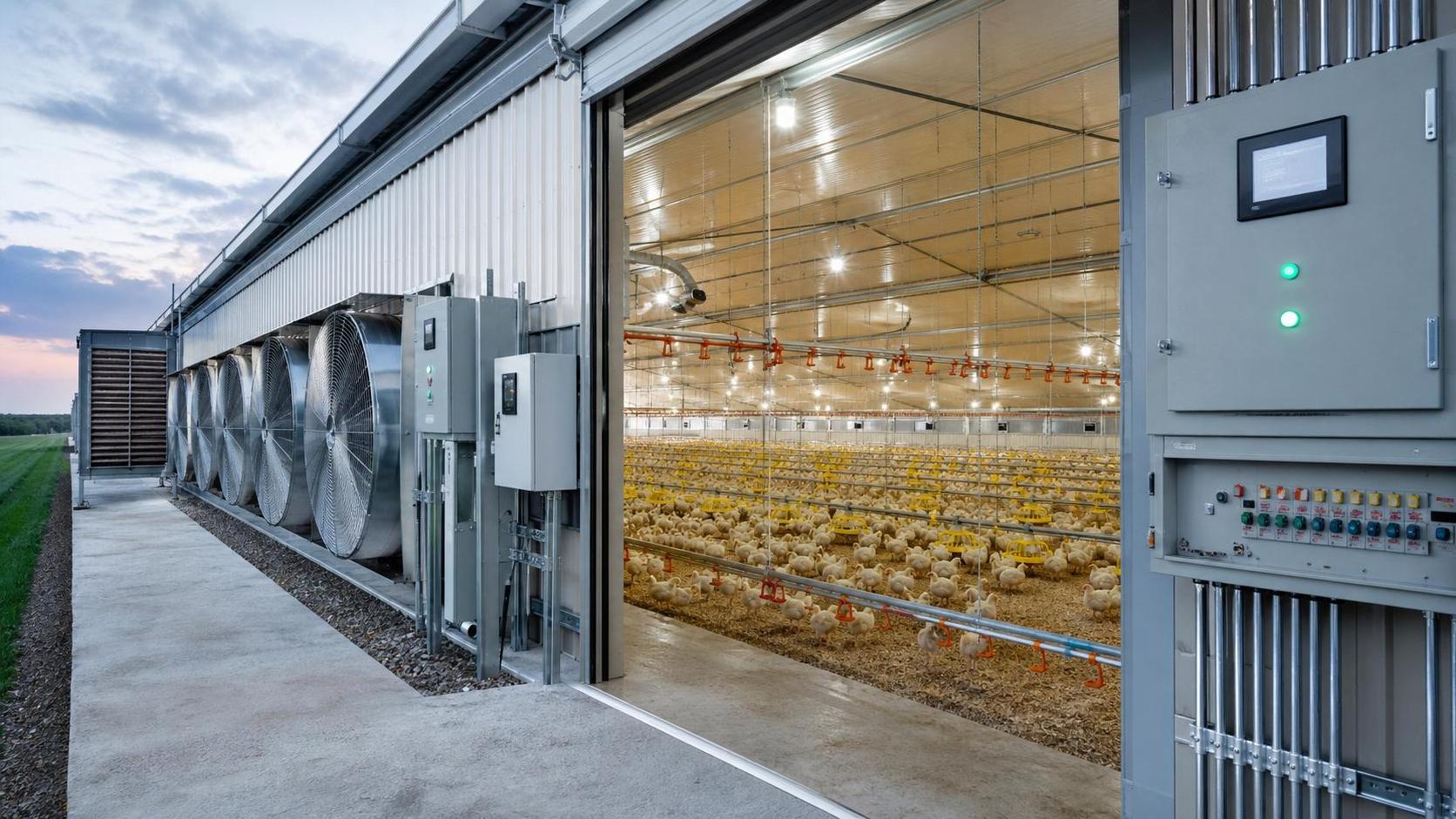
Turnkey Poultry Solutions usually combine buildings, environmental control, feeding lines, drinking systems, lighting, waste handling, electrical distribution, and digital control into one delivery scope.
In some cases, the package also covers ventilation design, standby power, water treatment, hatchery interfaces, and commissioning support. The term sounds comprehensive, but its boundaries vary widely between suppliers.
A proposal may appear complete while leaving out civil works, grid connection upgrades, insulation details, software licenses, spare parts, or local compliance documentation. Those omissions often become the most expensive surprises later.
For that reason, the first review should focus on scope definition rather than headline pricing. If the package cannot be mapped into a clear responsibility matrix, it is not yet turnkey in any meaningful sense.
Why this decision now carries more operational risk
Poultry facilities are increasingly connected to wider industrial priorities. Energy cost swings, emissions reporting, water stress, and digital traceability now affect investment logic as much as production volume.
This is where lessons from G-REI’s infrastructure benchmarking are useful. High-performing systems are not judged only by nameplate output. They are judged by integration quality, standard alignment, resilience, and measurable lifecycle performance.
A poultry project follows the same pattern. Ventilation loads, backup power logic, sensor accuracy, and automation responses must work together. A weak link in one subsystem can disrupt the whole production environment.
In practice, Turnkey Poultry Solutions now sit closer to engineered infrastructure than to ordinary agricultural equipment. That shift changes how contracts, factory acceptance, and site acceptance should be reviewed.
The checkpoints that deserve early attention
Before technical comparison becomes too detailed, several checkpoints should be established as non-negotiable. These points help reveal whether the offer is operationally credible.
- Defined scope boundaries for design, procurement, installation, testing, and training.
- Guaranteed performance values under stated climate, density, and utility conditions.
- Documented interface list covering civil, mechanical, electrical, and software handoffs.
- Compliance evidence for local animal welfare, electrical safety, water, and emissions rules.
- Service model with spare parts access, fault response times, and remote support terms.
If these are vague, the negotiation is still too early for commitment. A polished presentation should never substitute for measurable acceptance criteria.
Site readiness is often underestimated
Many delays begin before equipment arrives. Soil conditions, drainage, road access, water source reliability, transformer capacity, and local permitting can reshape the entire installation plan.
Turnkey Poultry Solutions should be reviewed against an actual site-readiness checklist, not an assumed one. Otherwise, the contract may push hidden enabling works back onto the buyer after signature.
Integration matters more than component quality alone
A strong fan, a reliable feeder, and a modern controller do not automatically create a stable barn environment. Performance depends on how subsystems react together during heat stress, power interruptions, or water pressure changes.
That is why interface logic deserves written review. Alarm hierarchy, sensor calibration methods, fail-safe modes, and manual override pathways should all be visible before procurement is finalized.
What to ask about utilities, power, and control architecture
Energy and automation are no longer side issues. They shape operating cost, reliability, and future upgrade potential. This is especially relevant where electricity prices are unstable or grid quality is inconsistent.
Borrowing from smart-grid thinking, a poultry facility should be treated as a managed load environment. Critical loads, flexible loads, backup systems, and monitoring layers need to be identified clearly.
A supplier that cannot explain these points in operational terms is unlikely to support high-confidence commissioning later.
Compliance, documentation, and proof of performance
A contract for Turnkey Poultry Solutions should not rely on broad claims such as efficient, compliant, or fully automated. Each claim needs documentary support and a testing pathway.
This includes equipment certifications where relevant, electrical drawings, ventilation calculations, consumable assumptions, software version control, and as-built documentation commitments.
Where local rules are strict, the review should also cover wastewater handling, odor management, emergency ventilation, fire safety, and worker access requirements. These details often influence redesign costs after installation starts.
Performance proof should also be contract-linked. Instead of general promises, define measurable thresholds for climate stability, feed delivery accuracy, water distribution, energy consumption bands, and commissioning completion.
Reference sites need the right questions
Reference visits are useful only when they go beyond visual impressions. Ask how the system behaves during seasonal extremes, maintenance windows, and utility disruptions.
It is also worth checking whether the installed configuration truly matches the proposed one. Sometimes the most stable reference site includes upgrades that were never in the original base package.
Commercial terms that shape technical outcomes
Even technically solid Turnkey Poultry Solutions can underperform when the contract structure is weak. Payment milestones, liability boundaries, and warranty triggers affect project behavior from day one.
Several commercial clauses deserve close attention because they change the real risk profile:
- Link milestone payments to documented engineering outputs and test completion.
- Separate provisional assumptions from guaranteed performance obligations.
- Clarify who absorbs redesign costs if local approvals require modification.
- Define warranty exclusions narrowly, especially for environmental sensors and controls.
- Require training, manuals, and spare-parts lists before final acceptance.
A careful contract does more than protect legal position. It forces technical precision, and that usually improves implementation quality.
How to compare options without reducing everything to price
Price remains important, but it should sit inside a wider decision frame. The better comparison looks at total operational fit over the expected production cycle.
A practical review can score each proposal against five dimensions: scope completeness, integration maturity, utility efficiency, compliance readiness, and support depth after handover.
That method usually exposes why one low-cost offer may create higher downstream risk. Missing backup logic, limited spare parts, or weak commissioning support can erase any early savings.
Seen this way, Turnkey Poultry Solutions are best evaluated like other engineered assets: by resilience, transparency, and long-term controllability, not by brochure simplicity.
A practical next step before commitment
Before signing, build one internal review sheet that connects technical scope, site conditions, utility assumptions, compliance items, and acceptance metrics in a single decision record.
Then compare each turnkey offer against that same structure. This makes it easier to see whether Turnkey Poultry Solutions are genuinely ready for deployment or simply packaged to look complete.
In most cases, the best decision comes from narrowing uncertainty before procurement begins. Clearer interfaces, clearer guarantees, and clearer support obligations usually matter more than a faster signature.
If the proposal still leaves major questions around integration, power reliability, or operating accountability, the next move is not urgency. It is a better specification.
Deep Dive
Related Intelligence
- Why high-net-worth buyers are reshaping demand for automotive technologyAuthor :

- When does strategic link acquisition improve a clean energy site's authority?Author :

- What drives solar street lighting cost for a new installation?Author :

- How much do livestock management software solutions cost?Author :