Solar Street Lighting Cost Breakdown: Upfront, Maintenance, and ROI
Key Takeaways
- How grid access delays are reshaping renewable project timelines in Latin AmericaDr. Elena Volt
- What drives energy storage systems price per kWh for commercial projects?Dr. Julian Volt
- What manufacturers should compare in emissions tracking softwareLina Cloud
- Why high-net-worth buyers are reshaping demand for automotive technologyDr. Aris Sun
- Can project tender intelligence software improve bid opportunity quality?Lina Cloud
- Which metrics reveal whether a P2P energy trading platform is working?Lina Cloud
- When does strategic link acquisition improve a clean energy site's authority?Dr. Aris Sun
- What drives solar street lighting cost for a new installation?Dr. Aris Sun
Industry Overview
Our mission is to safeguard the future of global renewable energy development through verifiable data, interdisciplinary academic scrutiny, and unwavering industry integrity.
Why does solar street lighting cost vary so much at the planning stage?
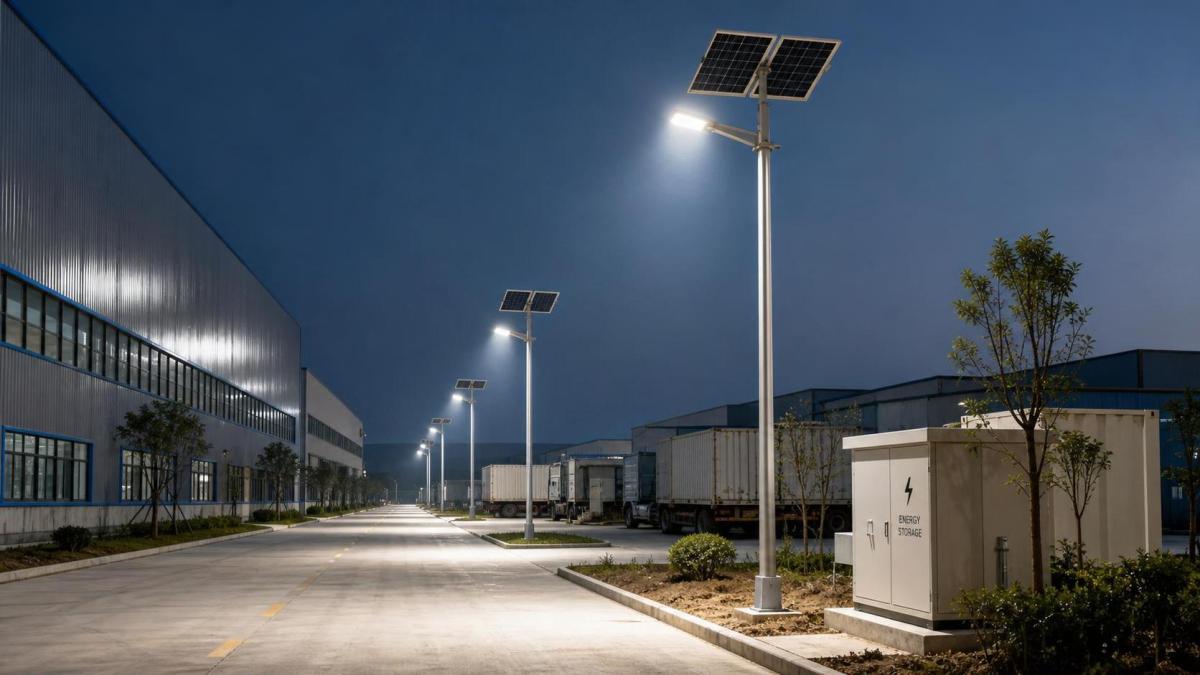
Solar street lighting cost rarely comes down to the pole and lamp alone. Most budgets shift because system design, site conditions, and performance expectations are not the same from project to project.
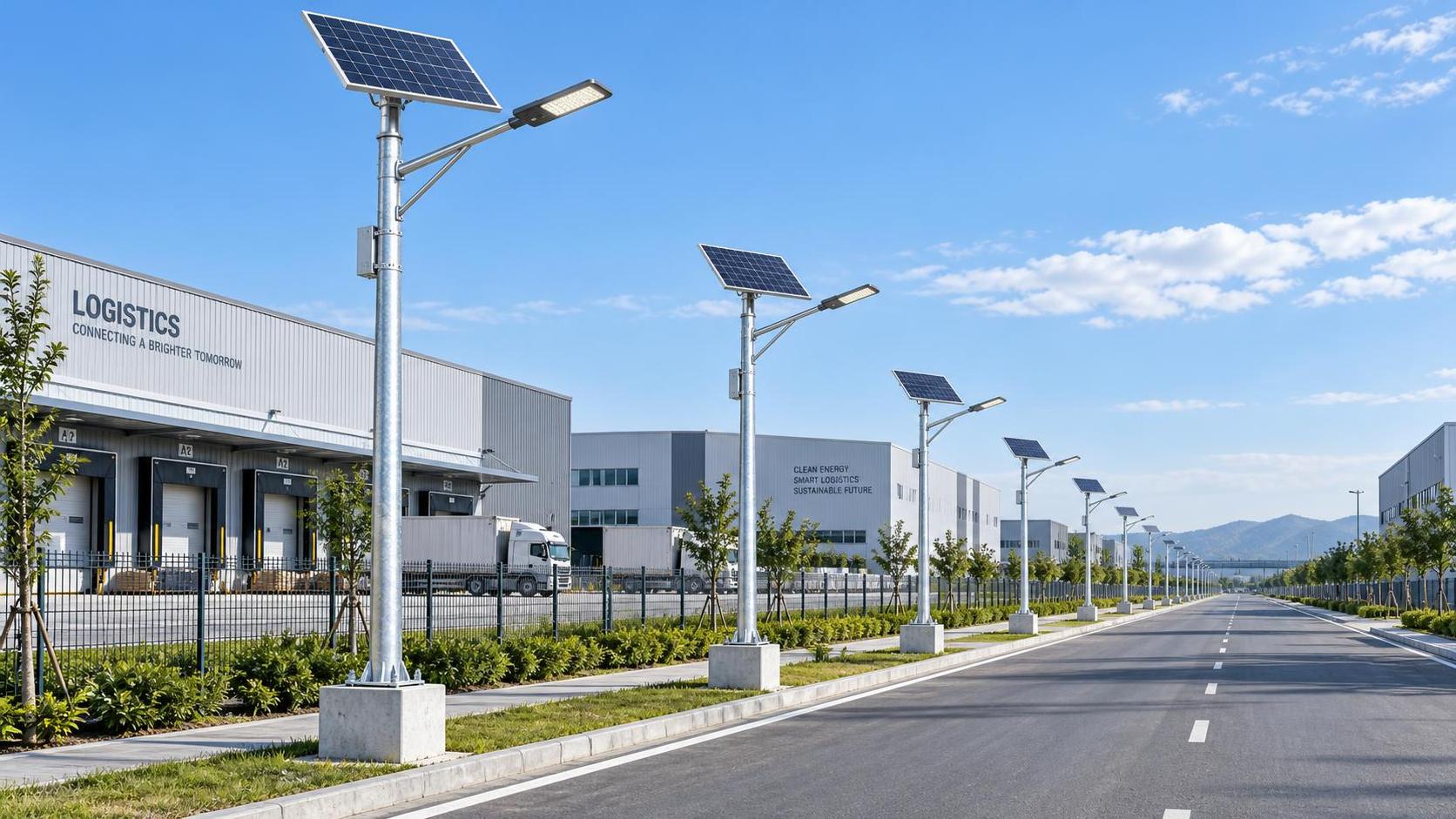
For public roads, industrial parks, campuses, ports, and remote corridors, the first question is simple: what lighting duty is required each night, and under what weather pattern?
That answer drives panel size, battery capacity, luminaire wattage, controller logic, pole height, and autonomy days. Each of those items can materially change the total purchase value.
In practical terms, a low-traffic pathway and a logistics yard should not be priced with the same assumptions. One needs modest illumination. The other needs higher uniformity, better optics, and tighter reliability margins.
This is why solar street lighting cost should be reviewed as a system benchmark, not as a single-unit sticker price. G-REI follows the same logic across energy infrastructure: compare technical fit before comparing quotations.
A useful early distinction is whether the project uses integrated all-in-one units or split systems. Integrated units simplify installation, while split systems often allow larger solar and battery configurations for demanding sites.
Another factor is standards alignment. If a project requires IEC, UL, corrosion resistance, surge protection, or smart control compatibility, the specification will increase cost, but it may also reduce long-term operating risk.
What is usually included in the upfront equipment price?
When buyers ask about solar street lighting cost, the equipment package usually includes six primary elements. Missing one of them in a quotation can make a cheap offer look better than it really is.
- LED luminaire, including wattage, efficacy, optical distribution, and housing protection rating
- Solar PV module sized for local irradiation and seasonal charging conditions
- Battery pack, often lithium iron phosphate, defined by usable capacity and cycle life
- Charge controller, motion dimming logic, timer, or remote monitoring unit
- Pole, bracket, foundation interface, and corrosion protection treatment
- Cables, connectors, enclosures, and hardware for field assembly
The larger cost swings usually come from the battery and pole structure. Battery oversizing adds resilience, but it can also inflate CAPEX if the autonomy target is unrealistic for the site.
Pole design is often underestimated. Coastal zones, high-wind roads, and heavy vehicle areas may require thicker steel, stronger anchor cages, or hot-dip galvanizing with additional surface treatment.
Smart controls can add cost as well, but not always by much. Adaptive dimming, fault alarms, and asset monitoring often improve lifecycle economics, especially where maintenance visits are expensive.
The table below helps separate normal line items from items that are sometimes omitted in early quotations.
A good quotation should also show autonomy assumptions, expected runtime, and local solar resource basis. Without that, solar street lighting cost is difficult to compare fairly.
How much do installation and civil works change the real project cost?
Often more than expected. The appeal of solar lighting is that it avoids trenching, grid cabling, transformer coordination, and utility interconnection. That usually lowers site work compared with conventional street lighting.
Even so, installation is not negligible. Foundation excavation, concrete, anchor bolts, lifting equipment, transport to remote areas, and commissioning can move project totals significantly.
Soil condition matters. Rocky ground, flood-prone zones, and unstable shoulders may require deeper foundations or revised pole engineering. Those changes should be captured before award, not during installation.
There is also a logistics premium in remote projects. Small islands, mining roads, desert sites, and border infrastructure can carry higher freight, spare parts lead times, and contractor mobilization costs.
In many tenders, the better comparison is not solar unit price versus grid light unit price. It is total installed cost across both options, including cabling, permits, outages, and future network extension.
That broader approach aligns with how G-REI evaluates distributed energy assets. Infrastructure choices make more sense when hardware, installation, and system interaction are assessed together.
Where do maintenance costs actually come from after commissioning?
Solar street lighting is often described as low maintenance, which is generally true. It is not maintenance-free, and that distinction matters when estimating long-term solar street lighting cost.
Routine cost usually comes from cleaning, inspection, battery replacement timing, controller faults, and occasional luminaire or sensor issues. In dusty regions, panel cleaning frequency can directly affect lighting reliability.
Battery life is the largest planned maintenance event. Chemistry, ambient temperature, charge control strategy, and nightly discharge depth all affect replacement timing. A cheap battery can erase early CAPEX savings later.
Corrosion is another hidden driver. Coastal salt, industrial emissions, and monsoon exposure can damage brackets, fasteners, and enclosures if coating quality is weak or sealing is inconsistent.
Remote monitoring changes this picture. It does not eliminate field service, but it can reduce labor hours by identifying underperforming assets before large outages appear across a site.
A sensible maintenance review should ask four things:
- What is the warranted battery cycle life under stated operating conditions?
- How easy is component replacement without replacing the full unit?
- Are spare parts standardized across multiple project phases?
- Can faults be diagnosed remotely before dispatching a technician?
Those questions are more useful than asking whether maintenance is “low” in general. They turn OPEX into measurable planning assumptions.
When does the ROI look strong, and when is it less convincing?
The strongest ROI appears where grid extension is expensive, unreliable, or slow. Remote access roads, rural municipalities, industrial perimeters, and temporary infrastructure often see the clearest financial case.
Savings usually come from avoided trenching, no electricity bills, lower outage exposure, and simpler deployment schedules. In some markets, faster project delivery has real economic value by itself.
ROI is weaker when solar resources are poor, shading is severe, nighttime lighting loads are heavy, or the specification demands unusually long autonomy without grid backup.
It also weakens when pricing ignores replacement cycles. A five-year financial view can overstate value if the battery event happens in year six and is excluded from evaluation.
A practical ROI model should include CAPEX, site works, cleaning, replacement parts, service visits, residual asset value, and avoided electricity or network expansion costs.
For multinational infrastructure portfolios, it helps to benchmark against recognized standards and climate assumptions. That is consistent with G-REI’s data-led approach to comparing energy hardware across regions and use cases.
A quick decision table for solar street lighting cost
What mistakes distort supplier comparison the most?
The most common error is comparing nominal power instead of delivered lighting performance. Two 60W fixtures can produce very different roadway results depending on optics, mounting height, and control profile.
Another weak comparison is battery capacity without usable energy context. Nameplate values look impressive, but usable depth of discharge and thermal protection matter more for lifecycle value.
Quotations also become misleading when autonomy is undefined. A low-cost system designed for one cloudy day should not be compared directly with a system designed for three to five cloudy days.
Warranty language deserves attention. Some offers provide a long fixture warranty but a much shorter battery warranty. Since battery replacement is a major cost event, that gap can reshape total ownership cost.
A more reliable supplier review usually includes photometric files, battery test data, corrosion details, controller functions, spare parts terms, and references from similar climates.
If the goal is a defensible solar street lighting cost benchmark, the shortlist should be built around verified assumptions, not attractive unit pricing alone.
So what is the next step before budget approval?
Start with a site-specific cost framework. Define lighting class, operating hours, autonomy target, solar resource, corrosion exposure, and maintenance access before asking for final pricing.
Then compare solar street lighting cost on a lifecycle basis. Include equipment, civil works, battery timing, monitoring, cleaning, and replacement assumptions in one view.
It is also worth aligning technical review with recognized benchmarks. In complex infrastructure environments, disciplined comparison reduces the risk of underdesigned systems and optimistic ROI claims.
The practical goal is not finding the lowest number. It is finding the cost structure that stays credible through installation, operation, and replacement cycles.
A short decision memo should capture specification assumptions, exclusions, expected service model, and break-even logic. That usually makes vendor comparison clearer and budget approval more resilient.
Deep Dive
Related Intelligence
- Why high-net-worth buyers are reshaping demand for automotive technologyAuthor :

- When does strategic link acquisition improve a clean energy site's authority?Author :

- What drives solar street lighting cost for a new installation?Author :

- How much do livestock management software solutions cost?Author :