Chemical Sourcing Risks That Delay Supply and Raise Cost
Key Takeaways
- How grid access delays are reshaping renewable project timelines in Latin AmericaDr. Elena Volt
- What drives energy storage systems price per kWh for commercial projects?Dr. Julian Volt
- What manufacturers should compare in emissions tracking softwareLina Cloud
- Why high-net-worth buyers are reshaping demand for automotive technologyDr. Aris Sun
- Can project tender intelligence software improve bid opportunity quality?Lina Cloud
- Which metrics reveal whether a P2P energy trading platform is working?Lina Cloud
- When does strategic link acquisition improve a clean energy site's authority?Dr. Aris Sun
- What drives solar street lighting cost for a new installation?Dr. Aris Sun
Industry Overview
Our mission is to safeguard the future of global renewable energy development through verifiable data, interdisciplinary academic scrutiny, and unwavering industry integrity.
Why Chemical Sourcing Risk Matters Earlier Than Most Energy Teams Expect
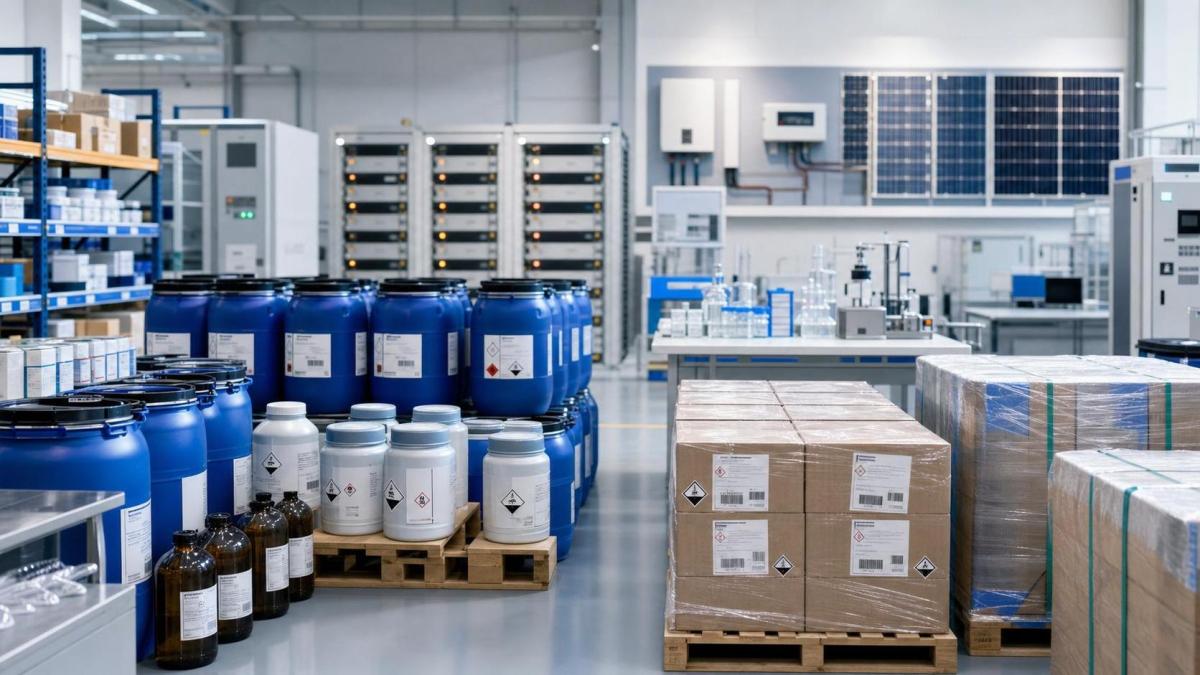
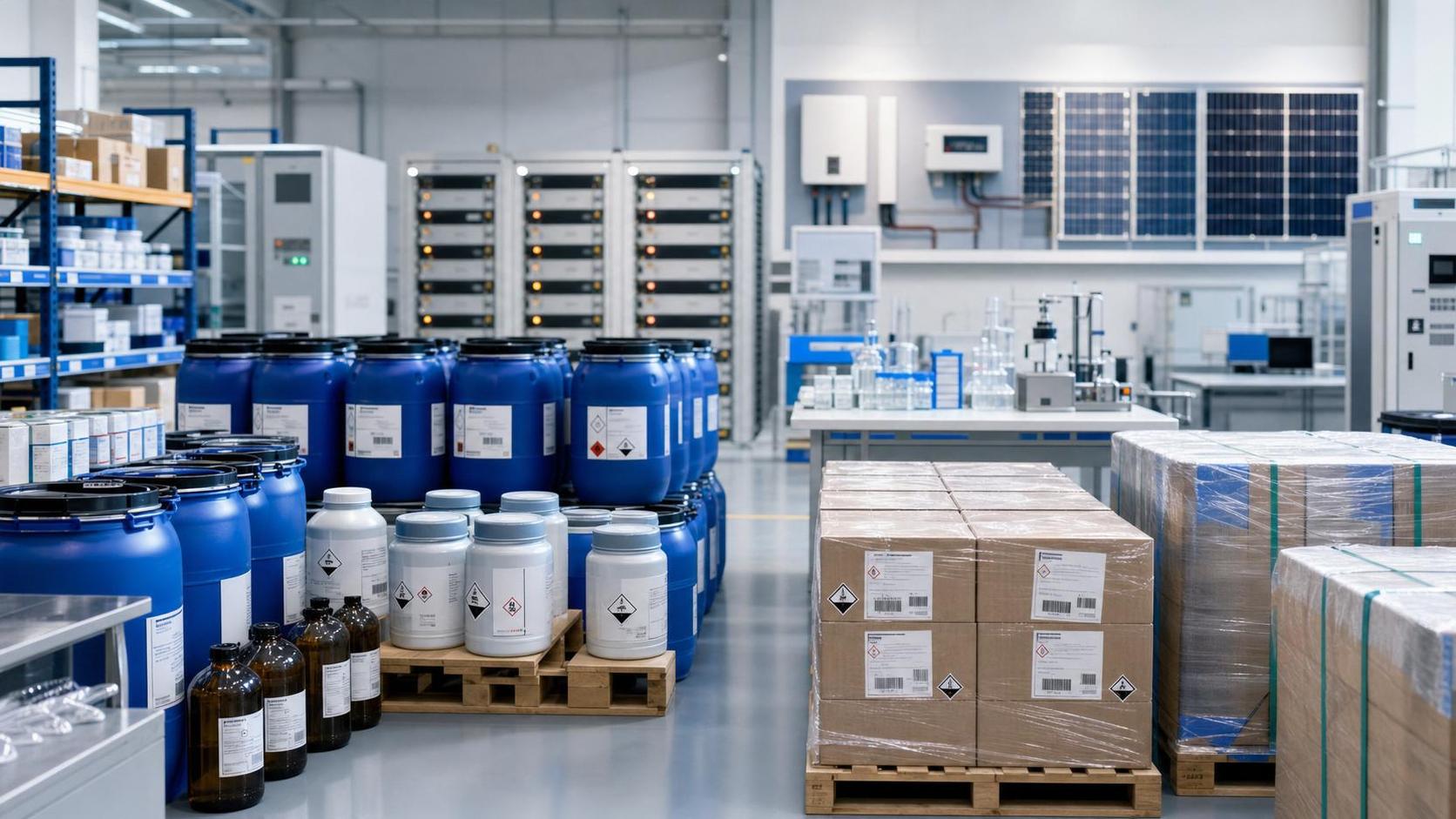
Chemical Sourcing rarely fails in one dramatic moment. It usually slips through material approvals, transport windows, and supplier substitutions.
That is why cost pressure often appears after engineering is frozen, not before. By then, schedule flexibility is already thin.
Across renewable energy and smart-grid infrastructure, this pattern is especially sensitive. Many critical components depend on specialized resins, electrolytes, coatings, adhesives, solvents, and flame-retardant systems.
A delay in Chemical Sourcing can hold back battery enclosures, cable insulation, inverter assemblies, transformer parts, or PV backsheet production.
The commercial impact goes beyond purchase price. Expedited freight, retesting, scrap, and liquidated-delay exposure can quickly outweigh an apparent material saving.
For platforms such as G-REI, the issue is not only whether chemicals are available. The more useful question is whether sourcing choices remain compliant, stable, and technically equivalent across different project conditions.
Different Energy Assets Create Different Chemical Sourcing Pressure Points
In practical terms, Chemical Sourcing risk changes with asset type. A solar module line does not face the same material exposure as a liquid-cooled BESS project.
For PV, the concern often starts with encapsulants, backsheets, conductive pastes, and process chemicals tied to throughput consistency and long-term weather resistance.
For wind systems, composite resins, curing agents, coatings, and lubrication chemistry matter more because downtime offshore or at remote sites is expensive.
Grid-scale storage brings another profile. Electrolytes, thermal interface materials, fire suppression agents, and coolant chemistry can trigger both safety review and insurance scrutiny.
Smart power distribution projects usually care about insulation systems, potting compounds, cable compounds, and SF6 alternatives where regulatory transition is accelerating.
This is where benchmark-driven evaluation becomes useful. Standards such as IEC, IEEE, and UL help, but they do not eliminate the need to judge source stability and substitution risk.
A quick comparison of where Chemical Sourcing risk shows up
When Fast Project Schedules Make Chemical Sourcing More Fragile
Utility-scale projects often compress procurement decisions into narrow tender cycles. Under that pressure, Chemical Sourcing can be treated like a routine purchasing item.
That assumption is risky when a material requires batch traceability, export documentation, hazardous handling, or multistep qualification.
A common example appears in battery storage deployment. One approved coolant or adhesive may be unavailable regionally, even though the base hardware remains the same.
The substitute may look equivalent on paper. Yet viscosity, thermal behavior, curing time, or fire-performance data can alter enclosure design and test timing.
In smart-grid rollouts, the problem often appears later. Switchgear and transformer accessories arrive, but one insulation compound or sealant is missing local approval.
The result is not a simple shortage. It becomes a commissioning delay tied to documentation, utility acceptance, and sometimes warranty interpretation.
What deserves closer review before locking the schedule
- Whether the chemical has a single qualified source or a genuine second-source path.
- Whether transport class, shelf life, or storage temperature creates hidden lead-time constraints.
- Whether a substitution triggers fresh IEC, UL, or internal validation requirements.
- Whether local grid codes or environmental rules restrict formulation changes.
The Lowest Quoted Material Is Not Always the Lowest Landed Risk
Cost inflation linked to Chemical Sourcing rarely comes from the invoice alone. More often, it comes from the chain reaction after a fragile decision.
For instance, a cheaper coating system for wind towers may reduce unit cost, yet increase cure sensitivity during humid installation periods.
That small variance can create reblasting, recoating, and vessel rescheduling. The sourcing choice then becomes a project-finance issue, not a material issue.
In PV manufacturing, a low-cost adhesive or backsheet alternative can also shift long-term reliability exposure. Savings at module assembly may later reappear in claims or accelerated testing failures.
The more useful evaluation method is to compare total landed risk. That includes validation effort, field failure sensitivity, compliance burden, and replacement complexity.
Chemical Sourcing decisions become stronger when price is reviewed alongside process compatibility and site conditions, not apart from them.
Where Misjudgment Usually Happens in Cross-Border Chemical Sourcing
Cross-border energy supply chains add another layer. A material can be technically suitable and still fail operationally because the sourcing route is weak.
One frequent mistake is assuming similar formulations are interchangeable. In practice, impurity levels, packaging standards, and batch consistency can affect production stability.
Another mistake is focusing on material data sheets while ignoring regulatory movement. Restrictions on fluorinated gases, hazardous additives, or transport labeling can change faster than framework contracts.
There is also a timing issue. Some chemicals are available globally, but not with the same lead time during port congestion, seasonal shutdowns, or feedstock disruption.
For G-REI-style market intelligence, this is where benchmark data and tender visibility matter together. Technical equivalence means little if delivery resilience is not tested under real regional conditions.
Common blind spots worth correcting
- Treating compliant paperwork as proof of stable sourcing capacity.
- Assuming one approved formula works across desert, offshore, and cold-climate installations.
- Comparing purchase price without including retest, downtime, and warranty exposure.
- Using a substitute before confirming utility, insurer, or certification acceptance.
A More Practical Way to Judge Chemical Sourcing by Scenario
A stronger approach is to classify Chemical Sourcing by operational consequence, not by commodity category alone.
If a material affects safety behavior, grid compliance, or lifetime performance, the review threshold should be higher than for general consumables.
If a chemical is hard to replace after installation, the sourcing check should include service access, field repair constraints, and climate stress.
If the material sits inside a high-volume production line, the key issue may be process drift rather than headline lead time.
This kind of scenario-based filter keeps Chemical Sourcing grounded in project reality. It also reduces the chance of approving a material that looks efficient but behaves poorly in service.
What to Do Before the Next Procurement Cycle Tightens
The immediate task is not to audit every chemical equally. It is to identify where sourcing fragility can interrupt value creation fastest.
Start by mapping critical materials against project milestones, validation dependencies, and regional compliance triggers. That usually reveals which items deserve early escalation.
Then compare approved sources against real delivery resilience. A qualified supplier with unstable feedstock access is still a Chemical Sourcing risk.
It also helps to build a substitution path before pressure appears. Predefined equivalence criteria save time when schedules tighten unexpectedly.
In renewable energy and smart-grid programs, strong Chemical Sourcing discipline supports more than procurement control. It protects commissioning certainty, compliance continuity, and asset-life economics.
A practical next step is to review each major asset category, define its most sensitive chemical inputs, and rank them by delay impact, replacement difficulty, and regulatory exposure.
Deep Dive
Related Intelligence
- Why high-net-worth buyers are reshaping demand for automotive technologyAuthor :

- When does strategic link acquisition improve a clean energy site's authority?Author :

- What drives solar street lighting cost for a new installation?Author :

- How much do livestock management software solutions cost?Author :