String Inverter Manufacturer Comparison for Utility-Scale Uptime
Key Takeaways
- How grid access delays are reshaping renewable project timelines in Latin AmericaDr. Elena Volt
- What drives energy storage systems price per kWh for commercial projects?Dr. Julian Volt
- What manufacturers should compare in emissions tracking softwareLina Cloud
- Why high-net-worth buyers are reshaping demand for automotive technologyDr. Aris Sun
- Can project tender intelligence software improve bid opportunity quality?Lina Cloud
- Which metrics reveal whether a P2P energy trading platform is working?Lina Cloud
- When does strategic link acquisition improve a clean energy site's authority?Dr. Aris Sun
- What drives solar street lighting cost for a new installation?Dr. Aris Sun
Industry Overview
Our mission is to safeguard the future of global renewable energy development through verifiable data, interdisciplinary academic scrutiny, and unwavering industry integrity.
String Inverter Manufacturer Comparison for Utility-Scale Uptime
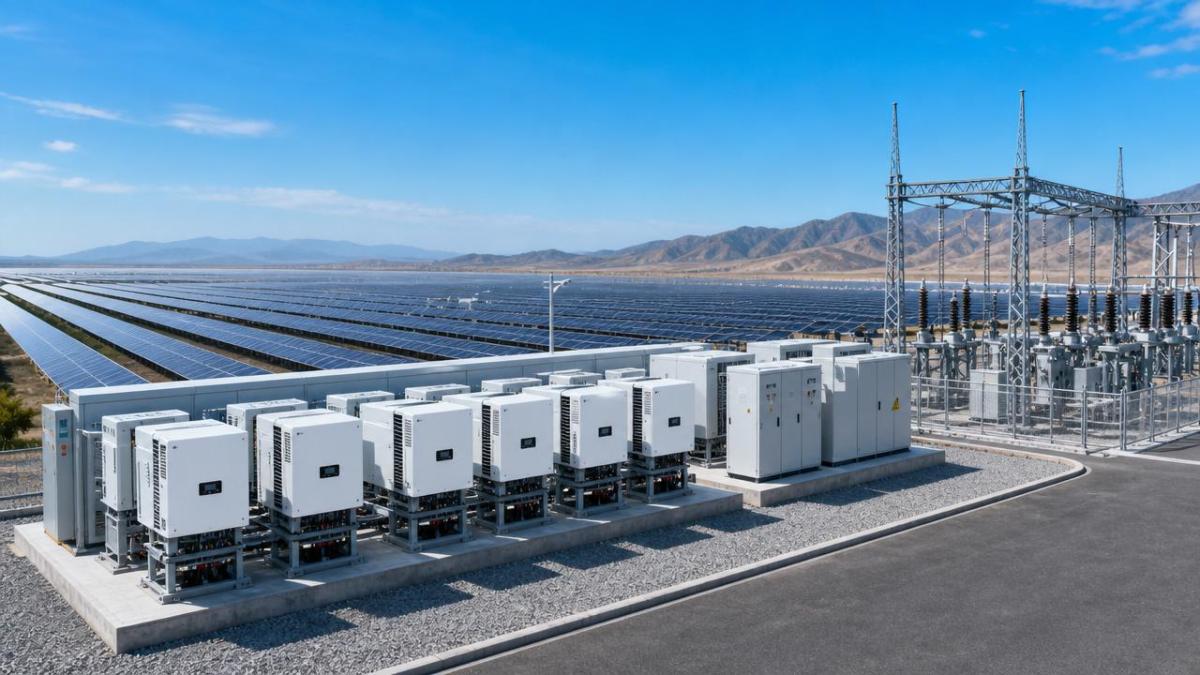
Choosing the right string inverter manufacturer can directly influence utility-scale uptime, O&M costs, and long-term project bankability.
For business evaluation teams, comparison goes far beyond nameplate efficiency.
A utility-scale decision should test grid compliance, thermal durability, service coverage, digital diagnostics, and lifecycle reliability under real field conditions.
This article explains how to compare each string inverter manufacturer using practical checkpoints relevant to large renewable assets and smart-grid performance.
Why a structured comparison matters
A weak comparison process often overweights purchase price and peak efficiency.
That approach can hide downtime risks, firmware instability, slow spare-part delivery, or poor response during grid disturbances.
For utility assets, one underperforming string inverter manufacturer can affect production forecasts, curtailment behavior, and contractual revenue certainty.
A structured review helps align technical due diligence with bankability, compliance, and long-term operating economics.
Core points to review in any string inverter manufacturer comparison
- Verify conversion efficiency across partial-load conditions, not only peak ratings, because utility plants often operate below ideal irradiance and temperature profiles.
- Confirm compliance with IEC, IEEE, UL, and local grid-code requirements, including LVRT, HVRT, reactive power control, and frequency ride-through behavior.
- Assess thermal design, cooling architecture, derating curves, and enclosure integrity for sustained operation in high ambient temperatures, dust, humidity, or saline air.
- Review DC input flexibility, MPPT count, string current limits, and compatibility with high-power modules such as TOPCon or bifacial utility PV formats.
- Check historical field reliability data, failure modes, MTBF assumptions, and replacement records instead of relying only on laboratory certification reports.
- Compare monitoring platforms, SCADA integration, API openness, alarm granularity, and remote firmware management for faster diagnosis and lower truck-roll frequency.
- Examine service network depth, spare-part stocking strategy, regional engineering presence, and guaranteed response time under warranty and extended support contracts.
- Evaluate cyber security readiness, communication redundancy, and software update governance because inverter fleets are increasingly embedded in smart-grid control environments.
- Study total lifecycle cost, including energy yield, maintenance intervals, inverter replacement probability, auxiliary consumption, and service pricing over project duration.
- Review the financial stability and global execution record of each string inverter manufacturer to reduce supply continuity and long-term support risk.
How to compare manufacturers beyond datasheets
Grid behavior under real disturbance events
Datasheets rarely show how an inverter fleet behaves during voltage dips, frequency excursions, or weak-grid oscillations.
Ask for validated ride-through performance, plant controller interoperability, and documented commissioning results from comparable grid environments.
Thermal margin and derating transparency
A capable string inverter manufacturer should provide clear derating curves and fan or liquid-cooling maintenance expectations.
This matters in deserts, tropical sites, and regions with long heatwaves, where hidden derating can erode annual yield projections.
Serviceability at fleet scale
Modular replacement speed, field technician access, and standardized spare kits influence mean time to repair.
In utility operations, hours saved per failure event become significant across hundreds or thousands of inverters.
Scenario-based considerations
Hot and arid solar parks
Prioritize dust ingress protection, heat rejection performance, UV-resistant materials, and low derating at elevated ambient temperatures.
A strong string inverter manufacturer should also document filter maintenance intervals and fan failure impact.
Coastal and high-humidity sites
Salt mist resistance, coating quality, sealing reliability, and corrosion testing become more important than a small efficiency difference.
Review enclosure ratings and regional failure data from similar climates before final selection.
Weak-grid or remote interconnection areas
Stable reactive power support, harmonic performance, and communication resilience should sit near the top of the comparison matrix.
The right string inverter manufacturer should demonstrate compatibility with plant controllers, grid simulators, and dispatch signals.
Projects with storage or smart-grid integration
When PV is linked with BESS, VPP software, or advanced dispatch systems, protocol stability and software governance become critical.
Look for clear API documentation, event logging, cyber security controls, and proven interoperability pathways.
Commonly overlooked issues
Warranty language may not match operational reality
Some warranties exclude environmental stress, communication accessories, or labor costs.
Review claim procedures, replacement timelines, and whether temporary performance losses are compensated.
Monitoring quality can affect uptime
If alarms are too broad or delayed, root-cause analysis becomes slower and unnecessary site visits increase.
A leading string inverter manufacturer should support actionable diagnostics, event history, and granular data export.
Supply-chain strength influences long-term risk
Even technically strong products create project risk if replacement units or boards have long lead times.
Ask about localization plans, approved component alternatives, and end-of-life transition strategy.
Practical execution steps for evaluation teams
- Build a weighted scorecard covering efficiency, grid compliance, reliability, service, software, cyber security, commercial terms, and total lifecycle cost.
- Request site references in matching climates and grid conditions rather than accepting generic global project lists.
- Run technical clarification sessions focused on derating, fault logs, remote reset capability, and spare-part logistics.
- Compare at least three years of service assumptions, including preventive maintenance scope and response-time commitments.
- Validate digital integration with SCADA, EMS, or smart-grid platforms before final award and not after equipment delivery.
- Stress-test commercial offers against downtime scenarios to identify the truly bankable string inverter manufacturer.
FAQ on string inverter manufacturer selection
Is the highest efficiency model always the best choice?
No.
A lower-risk string inverter manufacturer with stronger uptime, service, and grid-support capability may create better lifetime value.
What matters most for utility-scale uptime?
Reliability history, thermal stability, spare-part readiness, alarm quality, and fast field support usually matter more than minor efficiency differences.
How important is software in the comparison?
Very important.
A modern string inverter manufacturer should support secure firmware updates, clear event logs, and seamless plant-level integration.
Conclusion and next action
A reliable string inverter manufacturer comparison should connect product performance with uptime economics, grid behavior, and long-term support capacity.
The best decision usually comes from structured scoring, matched reference checks, and clear evidence beyond marketing claims.
Use the checkpoints above to narrow candidates, standardize evaluation criteria, and improve confidence in utility-scale renewable asset performance.
Deep Dive
Related Intelligence
- Which string cable loss metrics matter most in PV system design?Author :

- Next-Gen Solar Inverter Technology Grid-Forming: Key Performance Trade-OffsAuthor :

- Solar Inverter Harmonic Analysis: When Distortion Becomes a Cost IssueAuthor :

- How to Compare an Off-Grid Solar System Factory Supplier on Cost and Lead TimeAuthor :