Solar Glass Manufacturer Trends Shaping Module Performance
Key Takeaways
- How grid access delays are reshaping renewable project timelines in Latin AmericaDr. Elena Volt
- What drives energy storage systems price per kWh for commercial projects?Dr. Julian Volt
- What manufacturers should compare in emissions tracking softwareLina Cloud
- Why high-net-worth buyers are reshaping demand for automotive technologyDr. Aris Sun
- Can project tender intelligence software improve bid opportunity quality?Lina Cloud
- Which metrics reveal whether a P2P energy trading platform is working?Lina Cloud
- When does strategic link acquisition improve a clean energy site's authority?Dr. Aris Sun
- What drives solar street lighting cost for a new installation?Dr. Aris Sun
Industry Overview
Our mission is to safeguard the future of global renewable energy development through verifiable data, interdisciplinary academic scrutiny, and unwavering industry integrity.
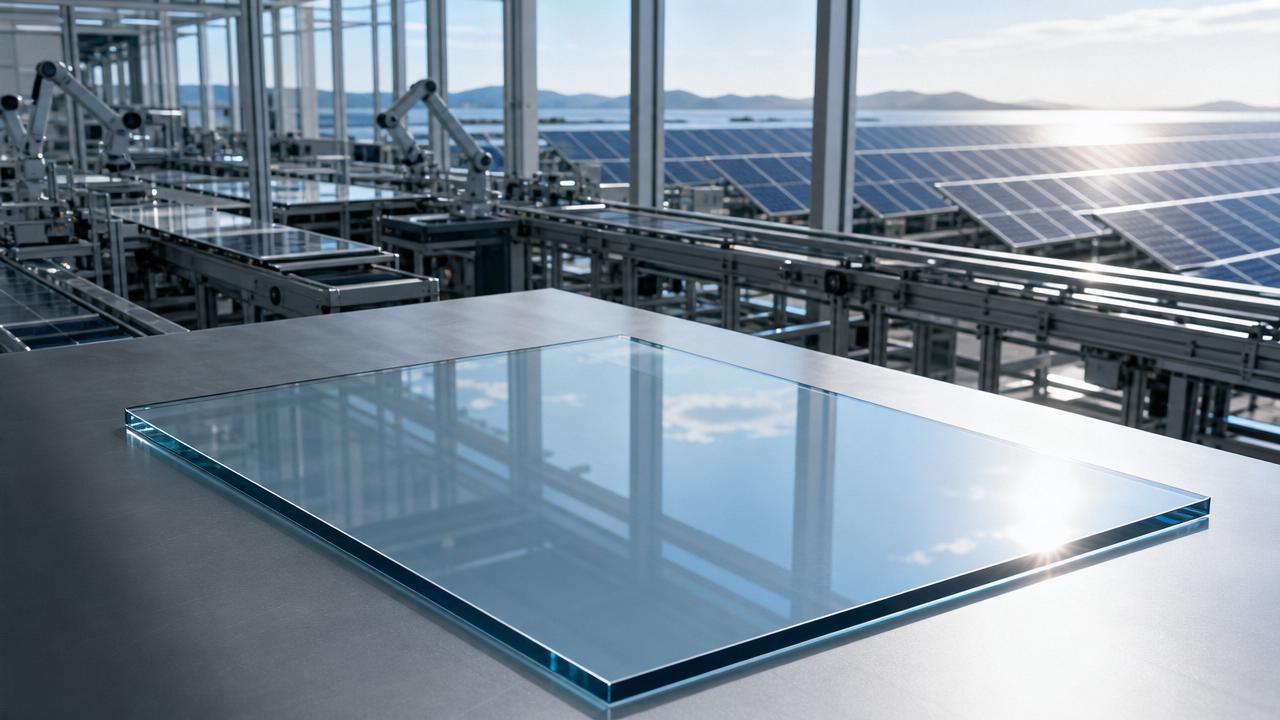
As module efficiency, durability, and bankability become core investment criteria, every solar glass manufacturer is being pushed to innovate beyond basic transparency and strength. From ultra-thin tempered glass to anti-reflective coatings and higher light transmission, emerging trends in solar glass are directly influencing module performance, lifecycle value, and procurement strategy for utility-scale energy stakeholders.
For enterprise decision-makers, the central question is not whether solar glass matters, but which glass innovations measurably improve energy yield, reduce degradation risk, and strengthen project economics. The market is moving from commodity sourcing toward performance-qualified procurement.
The most important trend is clear: solar glass is no longer a passive bill-of-materials item. It has become a strategic component that affects module power output, mechanical reliability, transport loss rates, installation practices, and long-term asset returns.
Why Solar Glass Has Become a Strategic Procurement Decision
When buyers evaluate a solar glass manufacturer today, they are increasingly assessing contribution to levelized cost of electricity rather than simply comparing thickness, price, or nominal transmittance figures in isolation.
This shift is driven by tighter project margins, more demanding financing scrutiny, and wider adoption of high-efficiency cell architectures such as TOPCon, heterojunction, and bifacial module designs across utility and commercial portfolios.
In these applications, glass quality directly affects how much light reaches the cell, how well the module resists thermal and mechanical stress, and how consistently it performs across harsh field conditions.
For procurement directors and project developers, that means solar glass selection now influences more than module specification sheets. It shapes bankability assumptions, warranty confidence, replacement risk, and operational predictability over twenty-five years or more.
As a result, leading buyers are asking more precise questions. Which glass design improves bifacial gain? Which coating retains performance under soiling? Which supplier maintains optical consistency at gigawatt-scale volumes?
Those questions reveal the real search intent behind this topic: decision-makers want to know which manufacturer trends are commercially meaningful, and how to distinguish genuine technical value from marketing claims.
Which Solar Glass Manufacturer Trends Are Actually Improving Module Performance
Several trends are now reshaping module performance outcomes, but not all of them carry equal value. The strongest trends are those that improve light transmission, reduce failure risk, and support advanced module architectures.
First, ultra-high-transmission glass is becoming a baseline expectation for premium modules. Small percentage gains in transmittance can create meaningful annual yield improvements when deployed across large project capacities.
Second, anti-reflective and anti-soiling coatings are advancing from niche enhancements to commercially relevant upgrades. Their value is greatest in high-irradiance, dusty, or low-rainfall environments where surface losses accumulate quickly.
Third, thinner tempered glass is gaining traction because it can reduce module weight and potentially lower logistics costs. However, thinner designs only create value when mechanical durability is fully validated.
Fourth, bifacial-optimized glass is becoming more important as rear-side generation assumptions play a larger role in project modeling. Better spectral performance and lower iron content can support improved light penetration and backside response.
Fifth, patterned and textured surface engineering is being refined to support better incidence-angle performance. This matters in real-world operating conditions where sunlight rarely hits modules at ideal laboratory angles.
Finally, dual-glass module adoption is reshaping manufacturer priorities. Glass suppliers are increasingly expected to support not only front-sheet performance, but also encapsulation compatibility, moisture resistance, and long-term structural integrity.
What Business Buyers Should Look for Beyond Basic Product Specifications
For enterprise buyers, the risk is not underestimating innovation. The greater risk is overpaying for features that do not translate into measurable project value under actual deployment conditions.
A capable solar glass manufacturer should therefore be evaluated through a business lens as well as a technical one. Optical metrics matter, but so do production control, certification depth, and consistency across large order volumes.
Start with transmittance data, but do not stop there. Ask whether the manufacturer provides spectral transmission curves, incidence-angle performance information, and coating durability evidence under ultraviolet exposure, humidity, and abrasion.
Next, review tempering quality and breakage performance. Lower logistics losses and reduced on-site handling failures can create hidden value, especially for remote projects with complex transport routes and constrained replacement timelines.
Buyers should also examine thickness tolerance, flatness control, edge quality, and surface defect rates. These factors influence lamination quality, automation stability, and final module yield during manufacturing.
Another key area is compatibility with high-efficiency module platforms. Glass that performs adequately for conventional modules may not be optimized for bifacial, dual-glass, or next-generation cell structures with tighter optical expectations.
Operational consistency is equally important. Utility-scale developers need confidence that optical and mechanical properties remain stable across successive batches, factories, and delivery windows. Variation introduces performance uncertainty and bankability concerns.
In short, buyers should assess whether a supplier can support repeatable module performance at scale, not just produce attractive test samples or isolated pilot runs.
How Solar Glass Trends Affect Project Economics, Not Just Module Efficiency
Module performance matters because it drives energy output, but enterprise decision-makers ultimately care about financial results. Solar glass trends should therefore be judged in terms of revenue protection, cost reduction, and risk management.
Higher transmittance glass can support incremental power gains, but the financial case depends on climate, tariff structure, degradation profile, and project duration. Gains that appear small at module level may become significant at portfolio scale.
Anti-soiling surfaces can reduce cleaning frequency or improve yield between cleaning cycles. In water-stressed regions or sites with expensive maintenance access, this can strengthen the business case beyond pure energy gains.
Lighter glass may lower shipping and handling costs, but if it increases breakage rates or requires more conservative mounting design, the economic benefit can disappear. Total installed cost matters more than component weight alone.
Dual-glass-compatible products can improve resistance to moisture ingress and slow long-term degradation in certain environments. That can translate into stronger warranty confidence and more predictable lifetime output assumptions.
For lenders and asset owners, these factors influence downside risk. A reliable solar glass manufacturer contributes to lower uncertainty around degradation, replacement events, insurance claims, and underperformance disputes.
This is why procurement teams should align glass selection with financial modeling teams. The right evaluation framework links technical parameters to sensitivity analyses around yield, O&M cost, and expected cash flow stability.
What Risks Decision-Makers Should Watch as the Market Evolves
Not every trend delivers durable value, and the solar glass market has its own volatility. Decision-makers should evaluate innovation carefully, especially when new product claims move faster than field validation.
One risk is performance inflation through selective metrics. A supplier may highlight peak transmittance while downplaying coating durability, weathering resistance, or production variability. Short-term numbers can obscure long-term underperformance.
Another risk is supply chain concentration. If a project depends on a narrow group of specialized glass providers, disruption can affect module lead times, replacement support, and pricing stability during procurement cycles.
There is also manufacturing execution risk. Some solar glass manufacturers can scale volume rapidly, but quality discipline may lag. For developers, this creates a mismatch between approved specifications and delivered field performance.
Trade policy and energy-input costs add further uncertainty. Solar glass production is energy-intensive, and regional fluctuations in natural gas, electricity pricing, or export regulation can influence both availability and final module cost.
Sustainability scrutiny is another growing factor. Large buyers increasingly want visibility into embodied carbon, manufacturing emissions, and environmental compliance. Glass sourcing decisions may soon affect not only cost, but bidder eligibility.
To manage these risks, buyers should combine technical due diligence with supplier resilience analysis. The best choice is often not the cheapest product or the newest feature, but the most dependable value profile over time.
How to Evaluate a Solar Glass Manufacturer for Utility-Scale and Institutional Procurement
For decision-makers building a supplier shortlist, evaluation should follow a structured sequence. The goal is to connect supplier capability with project needs, not to compare marketing brochures at face value.
Begin with application fit. Define whether the project prioritizes maximum yield, lower balance-of-system cost, desert durability, bifacial optimization, or long-term degradation control. Different use cases require different glass priorities.
Then verify certifications and standards alignment. IEC-related module compatibility is essential, but buyers should also ask for internal reliability testing, environmental stress data, and evidence from commercial deployments under similar conditions.
Review manufacturing scale and process discipline next. This includes furnace quality, coating uniformity control, batch traceability, defect screening systems, and the ability to maintain output consistency during ramped production periods.
Procurement teams should also request performance documentation that supports bankability review. Independent testing, third-party audits, and historical supply records can be more persuasive than broad efficiency claims.
Commercial terms matter as well. Assess warranty support, quality claim procedures, delivery flexibility, and technical service responsiveness. A high-performing product loses value if post-delivery support is weak or slow.
Finally, evaluate roadmap strength. The best solar glass manufacturer is not only competitive today, but positioned to support evolving module platforms and grid-scale project requirements over the next several procurement cycles.
Where the Market Is Heading Over the Next Few Years
The direction of travel is clear. Solar glass will continue moving from commodity status toward a differentiated performance and reliability category tied to advanced module design and investor expectations.
Manufacturers will likely invest more heavily in coatings, optical engineering, and products tailored for bifacial and dual-glass modules. At the same time, buyers will demand stronger proof of real-world durability, not only laboratory gains.
Scale and specialization will increasingly coexist. Large suppliers will pursue volume leadership, while premium producers will compete on bankability, environmental credentials, and support for high-efficiency module ecosystems.
Digital quality traceability may become another competitive differentiator. Institutional buyers will want clearer links between batch-level material data, module manufacturing outcomes, and field performance records.
Environmental performance is also set to become more important. As low-carbon procurement standards mature, embodied emissions and cleaner production methods may become part of mainstream supplier selection criteria.
For enterprise stakeholders, this means procurement frameworks should evolve now. Waiting until glass technology becomes a visible failure point is too late. The competitive advantage lies in earlier, more disciplined evaluation.
Conclusion: Treat Solar Glass as a Performance Lever, Not a Commodity Input
The biggest trend shaping module performance is not one isolated coating, thickness, or material improvement. It is the broader reclassification of solar glass as a strategic performance lever in modern solar project development.
For business decision-makers, the practical takeaway is simple. A strong solar glass manufacturer can contribute to higher yield, lower lifecycle risk, and stronger bankability, but only when claims are matched by evidence and supply reliability.
The most effective procurement approach is to focus on measurable value: transmission quality, durability under site conditions, compatibility with advanced module platforms, quality consistency at scale, and resilience across the supply chain.
As module competition intensifies and investment discipline tightens, solar glass decisions will increasingly influence who captures long-term project value. The buyers who recognize that shift early will make better technical and commercial choices.
Deep Dive
Related Intelligence
- Why high-net-worth buyers are reshaping demand for automotive technologyAuthor :

- When does strategic link acquisition improve a clean energy site's authority?Author :

- What drives solar street lighting cost for a new installation?Author :

- How much do livestock management software solutions cost?Author :