How to Compare Wholesale Topcon Solar Panels in 2026
Key Takeaways
- How grid access delays are reshaping renewable project timelines in Latin AmericaDr. Elena Volt
- What drives energy storage systems price per kWh for commercial projects?Dr. Julian Volt
- What manufacturers should compare in emissions tracking softwareLina Cloud
- Why high-net-worth buyers are reshaping demand for automotive technologyDr. Aris Sun
- Can project tender intelligence software improve bid opportunity quality?Lina Cloud
- Which metrics reveal whether a P2P energy trading platform is working?Lina Cloud
- When does strategic link acquisition improve a clean energy site's authority?Dr. Aris Sun
- What drives solar street lighting cost for a new installation?Dr. Aris Sun
Industry Overview
Our mission is to safeguard the future of global renewable energy development through verifiable data, interdisciplinary academic scrutiny, and unwavering industry integrity.
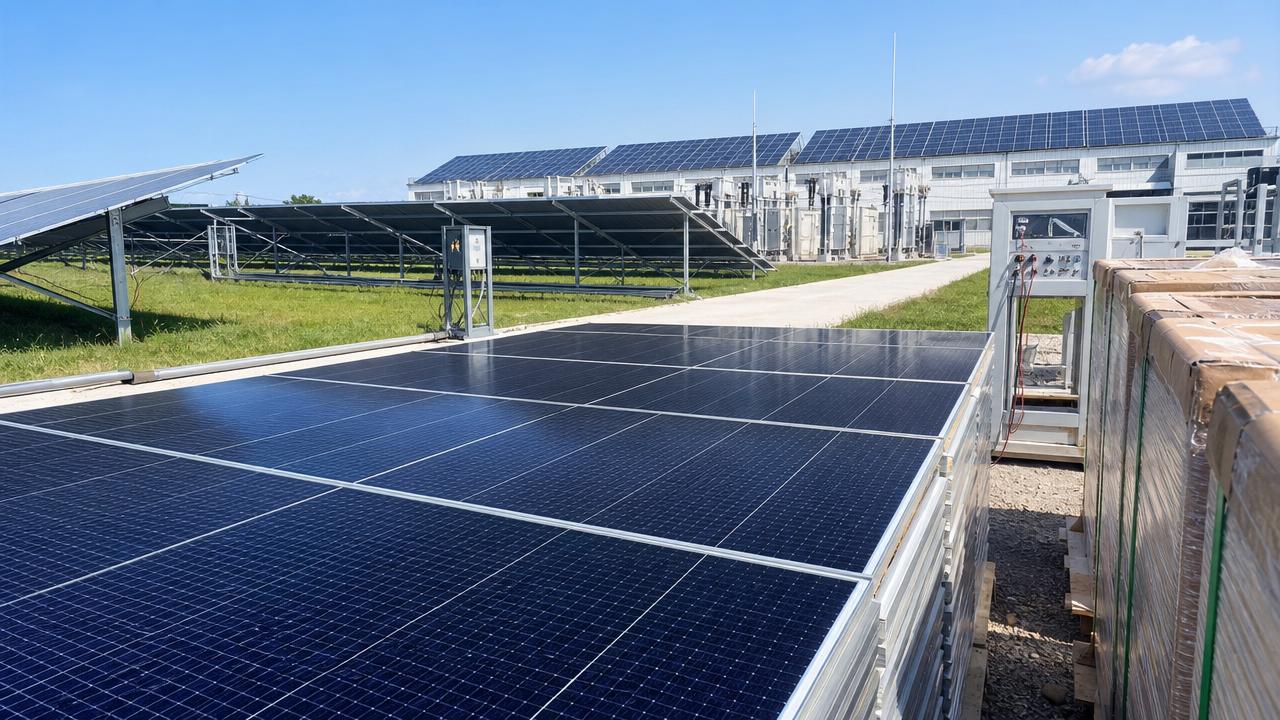
Comparing wholesale topcon solar panels in 2026 requires more than checking price lists. Procurement decisions now depend on measurable lifetime performance, financing credibility, grid compliance, and delivery resilience.
The global PV market has become more efficient, but also more complex. Module formats, cell architectures, and warranty structures vary widely across suppliers and regions.
This guide explains how to compare wholesale topcon solar panels using practical technical and commercial benchmarks. It focuses on bankable evaluation criteria that support long-term asset value.
Technical baseline for wholesale topcon solar panels

TOPCon stands for Tunnel Oxide Passivated Contact. It is an N-type cell architecture designed to improve passivation, reduce recombination losses, and raise conversion efficiency.
In 2026, wholesale topcon solar panels are common in utility, commercial, and distributed generation projects. However, similar nameplates do not guarantee similar field performance.
A reliable comparison starts with a shared technical baseline. The most important parameters should be reviewed together, not in isolation.
- Module efficiency at STC
- Power bin tolerance and sorting consistency
- Temperature coefficient of Pmax
- First-year degradation and annual linear degradation
- Bifaciality factor where relevant
- Mechanical load, hail, and fire ratings
- Product and performance warranty terms
When comparing wholesale topcon solar panels, efficiency alone should never dominate selection. A module with slightly lower wattage may still deliver better project economics under hot or high-albedo conditions.
Key performance metrics to verify
Temperature coefficient matters because many sites operate far above laboratory conditions. Lower thermal loss supports stronger midday output and better annual energy yield.
Degradation assumptions also shape financial modeling. Review both the first-year drop and the guaranteed retained output after 25 or 30 years.
For bifacial projects, the published bifaciality ratio must be tested against actual tracker height, ground reflectivity, and row spacing. Marketing figures alone are insufficient.
Market conditions shaping comparison in 2026
The 2026 market for wholesale topcon solar panels is influenced by rapid capacity expansion, regional trade controls, and tighter investor scrutiny of lifecycle quality.
Price compression remains visible, yet quality differentiation has become clearer. Buyers increasingly compare not only module cost, but also warranty enforcement and supply continuity.
This environment means wholesale topcon solar panels must be evaluated across procurement, engineering, finance, and compliance dimensions. One-dimensional price comparison creates avoidable project exposure.
Business value of a better comparison framework
A disciplined framework improves project returns beyond module purchase savings. It reduces hidden operating costs, curtails underperformance risk, and strengthens financing confidence.
Wholesale topcon solar panels often represent a major share of energy yield assumptions. Small differences in real performance can materially alter IRR, LCOE, and PPA competitiveness.
- Better thermal behavior supports stronger annual generation
- Lower degradation improves long-term revenue certainty
- Certified reliability reduces claims and replacement burdens
- Bankable suppliers improve insurability and lender acceptance
- Stable delivery planning protects EPC schedules
For grid-connected assets, module selection also affects system design. Voltage behavior, current profile, and form factor influence inverter matching and string layout efficiency.
How to compare wholesale topcon solar panels across project types
Not every project values the same module attributes. A sound comparison aligns module characteristics with environmental conditions, land constraints, and performance priorities.
For wholesale topcon solar panels used in constrained rooftops, module efficiency per square meter may outweigh pure price per watt. Structural and fire compliance remain decisive.
For large ground-mount projects, attention usually shifts toward energy yield modeling, tracker compatibility, and supplier stability over multi-batch deliveries.
Commercial comparison points
Commercial diligence should be as rigorous as technical review. Many sourcing risks emerge from terms, not from datasheets.
- Check Incoterms, shipping scope, and packaging specifications.
- Confirm lead times by batch and by production line.
- Review warranty claimant process and response timeline.
- Assess audited financial health and manufacturing scale.
- Verify traceability for cells, glass, and backsheet components.
Practical evaluation checklist and risk controls
The best way to compare wholesale topcon solar panels is to use a weighted scorecard. This prevents low-importance factors from distorting final selection.
A practical scorecard may combine technical performance, certification coverage, supplier bankability, delivery capability, warranty strength, and total landed cost.
- Request IEC, UL, and fire-class documentation
- Review PAN files and third-party flash reports
- Ask for historical field-performance references
- Validate anti-PID and durability test evidence
- Model temperature-adjusted yield, not STC only
- Include customs, insurance, and replacement logistics in cost analysis
Independent factory audits are especially useful when comparing wholesale topcon solar panels from several regions. Process consistency often reveals more than a brochure can show.
If multiple suppliers offer similar wattage, compare mismatch risk, packaging breakage rate, and responsiveness during document review. These details affect execution quality.
Next-step guidance for 2026 sourcing decisions
In 2026, successful sourcing of wholesale topcon solar panels depends on balancing efficiency, durability, compliance, and supplier credibility. Price remains important, but it is only one input.
Start with a short list based on certifications, thermal performance, degradation guarantees, and financial stability. Then compare delivered cost and project-specific yield assumptions.
Use sample testing, third-party verification, and structured scorecards before final award. This approach lowers procurement risk and supports stronger long-term asset performance.
A careful comparison of wholesale topcon solar panels creates more resilient energy investments. It also improves alignment between engineering expectations, commercial terms, and real operating outcomes.
Deep Dive
Related Intelligence
- Why high-net-worth buyers are reshaping demand for automotive technologyAuthor :

- When does strategic link acquisition improve a clean energy site's authority?Author :

- What drives solar street lighting cost for a new installation?Author :

- How much do livestock management software solutions cost?Author :