How Solar Glass Manufacturers Affect Module Efficiency and Loss
Key Takeaways
- How grid access delays are reshaping renewable project timelines in Latin AmericaDr. Elena Volt
- What drives energy storage systems price per kWh for commercial projects?Dr. Julian Volt
- What manufacturers should compare in emissions tracking softwareLina Cloud
- Why high-net-worth buyers are reshaping demand for automotive technologyDr. Aris Sun
- Can project tender intelligence software improve bid opportunity quality?Lina Cloud
- Which metrics reveal whether a P2P energy trading platform is working?Lina Cloud
- When does strategic link acquisition improve a clean energy site's authority?Dr. Aris Sun
- What drives solar street lighting cost for a new installation?Dr. Aris Sun
Industry Overview
Our mission is to safeguard the future of global renewable energy development through verifiable data, interdisciplinary academic scrutiny, and unwavering industry integrity.
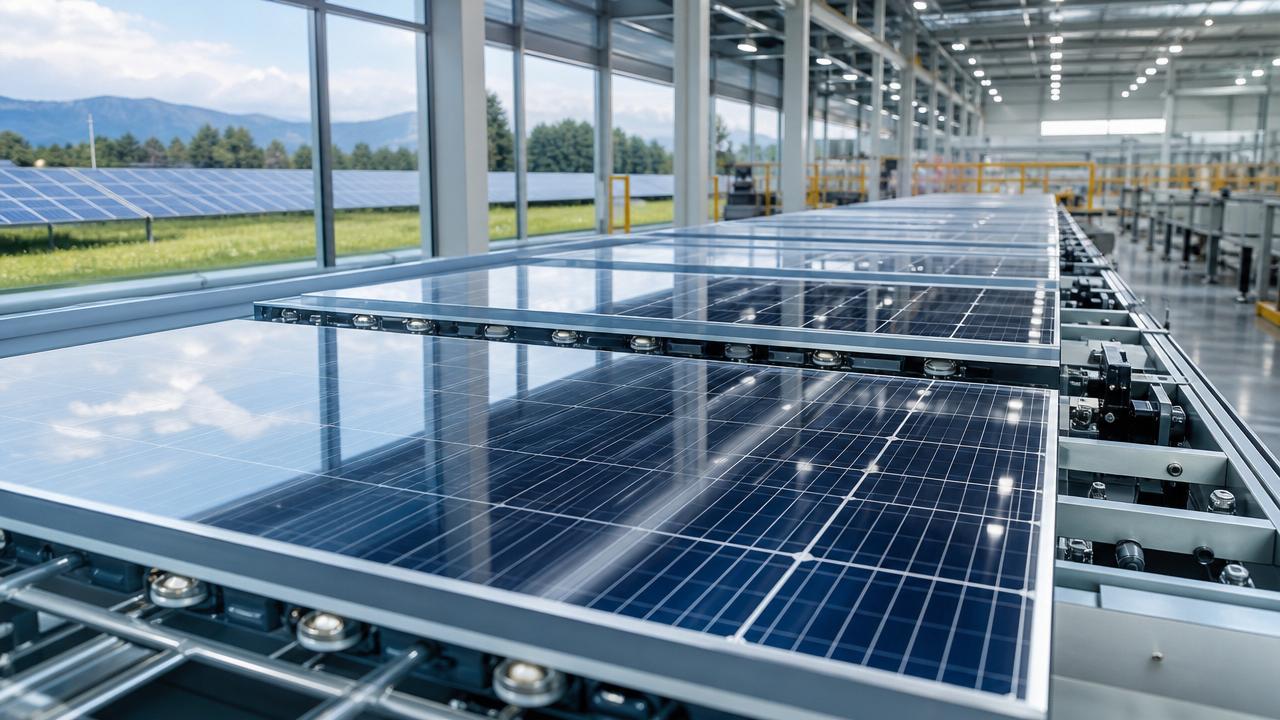
A solar glass manufacturer influences photovoltaic output more than surface-level module datasheets often show. Glass determines how much sunlight enters the cell stack, how much heat is retained, and how well the module survives weathering over decades.
For energy infrastructure research, this is not a minor materials issue. It affects efficiency ranking, annual degradation, bankability assumptions, warranty confidence, and lifecycle value across utility, commercial, and distributed solar portfolios.
When comparing PV supply chains, evaluating the solar glass manufacturer behind a module helps explain hidden performance gaps. Light transmission, coating quality, iron content, tempering precision, and encapsulation compatibility all contribute to real-world module loss.
Solar glass manufacturer fundamentals and why they matter
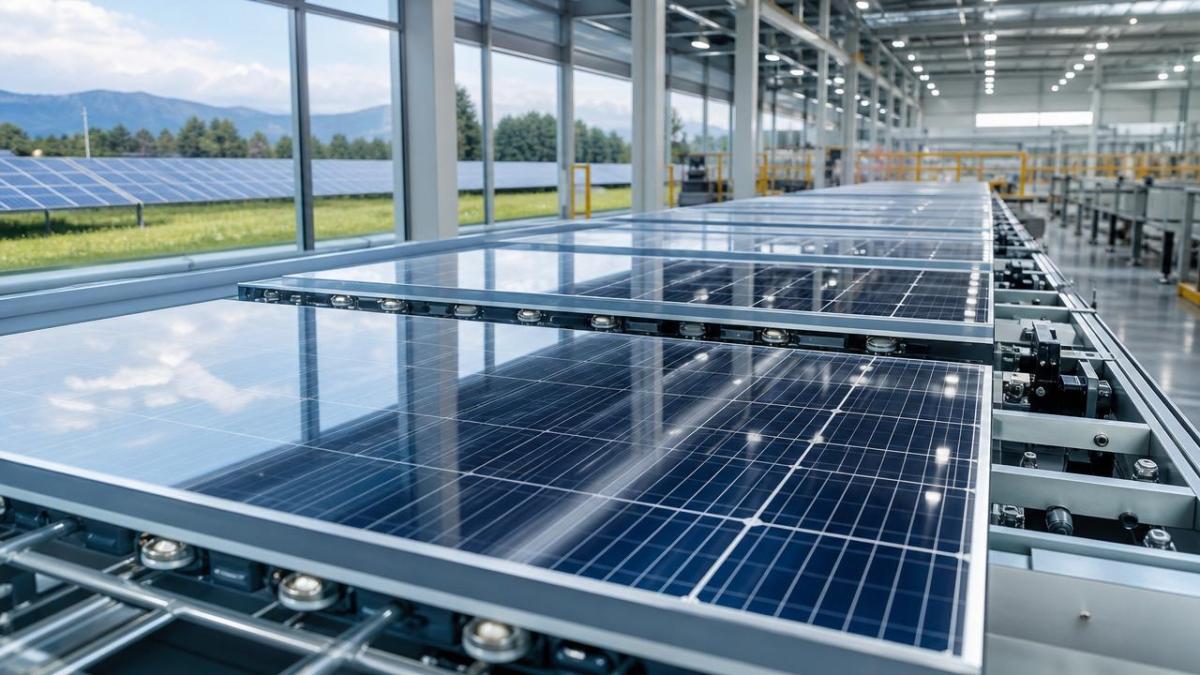
Solar glass is the front or dual-side protective layer used in PV modules. It must transmit maximum useful light while resisting impact, humidity, UV exposure, and thermal cycling over long operating periods.
A strong solar glass manufacturer does far more than produce flat transparent sheets. It controls raw material purity, surface texture, anti-reflective treatment, tempering, thickness tolerance, and optical consistency at industrial scale.
In modern modules, especially TOPCon, HJT, and bifacial designs, glass quality becomes even more critical. Advanced cells can only convert light they actually receive. Poor glass can quietly cap the value of premium cell technology.
This means the solar glass manufacturer affects both nameplate efficiency and field yield. It also influences shipping breakage, lamination quality, hotspot risk, and the long-term stability of encapsulated module structures.
Core technical variables
- Visible and solar-spectrum transmittance
- Low-iron composition and impurity control
- Anti-reflective coating durability
- Surface flatness and haze balance
- Mechanical strength after tempering
- Thickness uniformity and edge quality
How glass specifications shape module efficiency and loss
Module loss begins before electrons move. If incoming irradiance is reflected, scattered, absorbed, or distorted by glass, less usable light reaches the cell. That directly reduces conversion opportunity.
A capable solar glass manufacturer improves front-side transmittance by reducing iron content and applying optimized anti-reflective coatings. Even small optical gains can create meaningful production differences at utility scale.
Glass also affects angle-dependent performance. Morning, evening, winter, and cloudy conditions expose modules to oblique light. Superior textured or coated surfaces can lower reflectance under these less ideal incidence angles.
Thermal behavior matters too. Glass absorbs part of the solar spectrum and interacts with heat dissipation across the laminate. Poor thermal properties can raise operating temperature, reducing cell efficiency during hot-weather generation peaks.
Mechanical quality is another hidden factor. Micro-defects, poor edge finishing, or uneven tempering can increase crack risk. Cell cracks may not appear immediately, but they can trigger power loss over time.
Main loss pathways linked to glass quality
Industry signals behind growing attention to solar glass manufacturer selection
The PV market has moved beyond simple watt-per-dollar comparison. High-efficiency cells, bifacial architectures, thinner wafers, and harsher project environments have increased attention on every balance-of-performance component, including glass.
In large renewable portfolios, one supplier change in the solar glass manufacturer layer can alter annual generation models. That affects LCOE assumptions, insurance analysis, and grid-connected production forecasts.
Several industry trends explain this focus:
- Bifacial modules depend on stable glass properties on both sides.
- Desert, coastal, and high-altitude sites expose glass to aggressive stress.
- Thinner module designs raise sensitivity to lamination and mechanical precision.
- Financial models increasingly value long-term degradation differences.
- Carbon accounting encourages scrutiny of upstream materials quality and yield loss.
For an intelligence platform covering renewable assets and smart-grid infrastructure, the solar glass manufacturer becomes a useful signal in technical benchmarking. It links material science to energy yield, maintenance exposure, and asset reliability.
Business value in technical and commercial comparison
Glass quality should be assessed as part of total asset performance, not isolated procurement cost. A lower-cost module may create hidden losses if the solar glass manufacturer cannot maintain optical and mechanical consistency.
In project evaluation, better glass can improve specific yield, reduce mismatch risks, and support stronger degradation assumptions. These gains compound over years, often exceeding small upfront price differences.
This matters in broad infrastructure contexts because generation predictability influences grid planning. Lower output variance improves dispatch modeling, storage coordination, and virtual power plant scheduling across interconnected renewable assets.
Where comparison value appears
- Nameplate efficiency validation during supplier screening
- Degradation modeling for long-term revenue analysis
- Failure-risk assessment for harsh environments
- Shipment durability and installation breakage review
- Consistency checks across production batches
Typical scenarios where solar glass differences become visible
Not every project exposes the same glass-related risks. Some environments magnify optical or structural weaknesses quickly, while others reveal gradual performance divergence through annual yield data.
Practical evaluation points for solar glass manufacturer review
A useful review process combines optical data, durability evidence, and production consistency. Relying only on brochure efficiency can miss important loss drivers embedded in glass selection.
- Check nominal transmittance and angle-dependent optical performance.
- Ask how anti-reflective coating durability is validated.
- Review thickness tolerance, flatness, and edge defect control.
- Confirm compatibility with encapsulant and cell architecture.
- Assess thermal cycling, damp heat, and mechanical load test records.
- Look for batch consistency rather than isolated peak results.
- Connect glass data to site conditions and degradation assumptions.
It is also useful to compare laboratory claims with field evidence. A reputable solar glass manufacturer should support traceability, quality records, and repeatable performance under IEC-aligned validation frameworks.
Next-step framework for more accurate PV benchmarking
A structured benchmark should treat the solar glass manufacturer as a primary technical variable, not a background supplier detail. This improves module comparison, asset forecasting, and supply-chain transparency.
Start by mapping module brands to their glass sources, then compare optical specifications, durability records, and known field behavior. Align those findings with climate profile, project design, and expected operating life.
For broader renewable infrastructure analysis, this approach supports better decisions across PV generation, storage coordination, and grid integration planning. Better glass selection often means lower hidden loss and more stable clean energy output.
In short, the right solar glass manufacturer can protect efficiency gains that advanced cells promise. The wrong one can quietly erode performance from day one and continue reducing energy yield throughout the module lifecycle.
Deep Dive
Related Intelligence
- Why high-net-worth buyers are reshaping demand for automotive technologyAuthor :

- When does strategic link acquisition improve a clean energy site's authority?Author :

- What drives solar street lighting cost for a new installation?Author :

- How much do livestock management software solutions cost?Author :