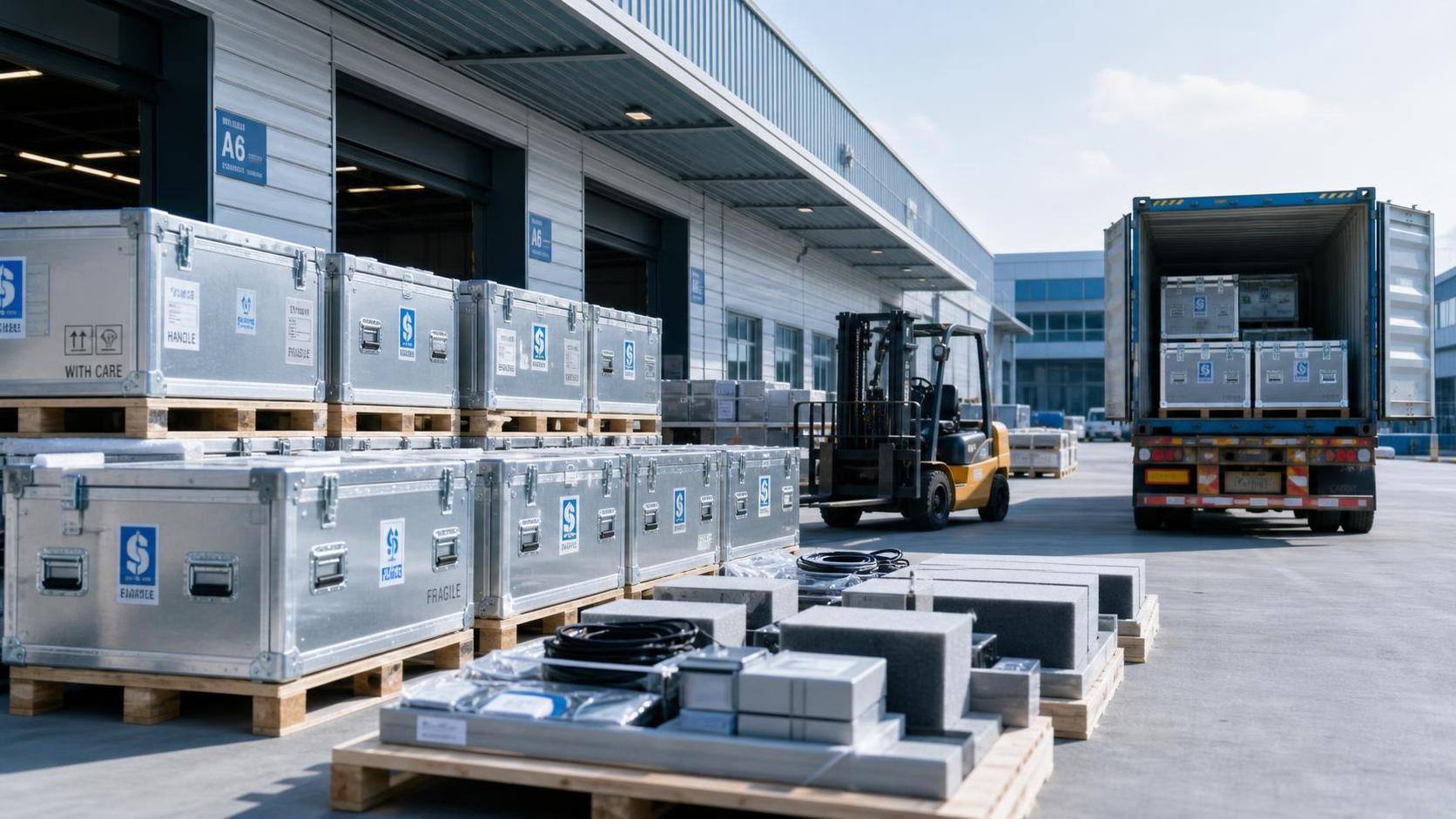
New Maritime Code Shifts No-Pickup Liability to Shippers

Key Takeaways
- What drives power distribution cost in a substation upgrade?Dr. Elena Volt
- How grid access delays are reshaping renewable project timelines in Latin AmericaDr. Elena Volt
- What drives energy storage systems price per kWh for commercial projects?Dr. Julian Volt
- What manufacturers should compare in emissions tracking softwareLina Cloud
- Why high-net-worth buyers are reshaping demand for automotive technologyDr. Aris Sun
- Can project tender intelligence software improve bid opportunity quality?Lina Cloud
- Which metrics reveal whether a P2P energy trading platform is working?Lina Cloud
- When does strategic link acquisition improve a clean energy site's authority?Dr. Aris Sun
Industry Overview
Our mission is to safeguard the future of global renewable energy development through verifiable data, interdisciplinary academic scrutiny, and unwavering industry integrity.
Effective May 1, 2026, the revised Maritime Code of the People’s Republic of China introduces a material shift in cargo liability allocation — particularly for exporters of grid resilience equipment. The amendment reassigns responsibility for uncollected cargo at destination ports from consignees to shippers, triggering immediate recalibration of risk management practices across international trade, logistics, and manufacturing segments.
Event Overview
The newly revised Maritime Code of the People’s Republic of China, effective May 1, 2026, amends Article 93 to establish shipper-first liability for cargo not collected at the discharge port. Under the prior regime, consignees bore primary responsibility for timely customs clearance and physical pickup; under the revised provision, shippers — typically Chinese export enterprises — become legally liable for storage fees, disposal costs, and port demurrage penalties if consignees fail to act. This applies regardless of Incoterm® used (e.g., FOB or CIF), unless contractually overridden with enforceable safeguards.
Industries Affected
Direct Trading Enterprises
Exporters of grid resilience equipment — including smart ring-main units, fault indicators, and edge-side EMS terminals — face heightened financial exposure. Under FOB/CIF terms, they now bear legal risk for downstream consignee inaction. Exposure manifests not only in direct port charges but also in potential cargo abandonment claims, insurance premium adjustments, and reputational impact when disputes escalate to foreign port authorities or courts.
Raw Material Procurement Enterprises
Suppliers providing critical components (e.g., embedded controllers, communication modules, or high-reliability sensors) to grid resilience OEMs may see increased contractual scrutiny. Buyers are likely to demand stricter delivery timelines, traceability documentation, and joint liability clauses — especially where procurement contracts reference final export compliance. Delayed component deliveries could now indirectly trigger shipper liability under the revised Code, amplifying upstream accountability.
Manufacturing Enterprises
OEMs and ODMs producing grid resilience hardware must reassess their order intake and contract governance frameworks. Manufacturing lead times, packaging specifications, and pre-shipment documentation (e.g., commercial invoices, packing lists, and technical conformity statements) now carry greater legal weight — as deficiencies may be cited in port disputes alleging misdeclaration or non-compliance, further complicating liability defenses.
Supply Chain Service Providers
Freight forwarders, customs brokers, and logistics integrators face expanded due diligence obligations. They are increasingly expected to verify consignee readiness (e.g., import license validity, warehouse capacity, local agent authority) pre-departure — not merely process paperwork. Some forwarders have begun offering ‘consignee readiness verification’ add-ons, though enforceability remains untested in Chinese or foreign jurisdictions.
Key Focus Areas and Recommended Actions
Revise Incoterm®-Aligned Contract Clauses
Exporters must explicitly allocate no-pickup risk in sales contracts — e.g., by requiring consignees to provide irrevocable bank guarantees or local third-party logistics (3PL) performance bonds covering minimum 60-day post-arrival handling. Relying solely on standard FOB/CIF terms is no longer sufficient to insulate against Article 93 liability.
Strengthen Pre-Export Consignee Vetting
Conduct baseline due diligence on overseas buyers’ import track record, local customs broker affiliations, and history of port delays. Where feasible, require consignees to pre-submit import declarations or obtain pre-clearance approvals — particularly in jurisdictions with complex energy infrastructure import regimes (e.g., EU, India, Vietnam).
Update Insurance Coverage Scope
Review marine cargo and trade credit policies for explicit coverage of port-related liabilities arising from consignee non-performance. Standard policies often exclude ‘demurrage’, ‘storage’, or ‘abandonment’ costs unless specifically endorsed — and even then, sub-limits and exclusions (e.g., for political risk or force majeure events affecting consignee operations) may apply.
Editorial Perspective / Industry Observation
Observably, this amendment reflects a broader regulatory pivot toward aligning maritime liability standards with actual control points in modern supply chains — where shippers retain dominant influence over documentation accuracy, timing, and counterparty selection. Analysis shows that while the intent is to reduce port congestion and cargo abandonment, the practical effect may accelerate consolidation among larger exporters capable of embedding compliance into contractual architecture. Smaller manufacturers, meanwhile, may increasingly rely on integrated trade service platforms — not just for logistics, but for contractual risk absorption.
Conclusion
This revision does not represent an isolated legal update, but rather a structural recalibration of accountability in cross-border energy infrastructure trade. It signals growing regulatory emphasis on end-to-end visibility and enforceable handoffs — making proactive contract design, not just operational efficiency, a core competitiveness factor for grid resilience exporters.
Source Attribution
Official text: Standing Committee of the National People’s Congress, Revised Maritime Code of the PRC (Order No. 128, promulgated December 28, 2025). Effective date confirmed via Ministry of Transport Notice No. JTGF [2025] 47. Interpretive guidance pending from the Supreme People’s Court; industry guidance expected Q3 2026. Monitoring recommended for judicial interpretations and port-level enforcement precedents.
Deep Dive
Related Intelligence
- How grid access delays are reshaping renewable project timelines in Latin AmericaAuthor :

- How renewable development for utilities can improve grid resilienceAuthor :

- When does smart grid software with real-time analytics improve outage response?Author :

- How to Evaluate Industrial Technology Sourcing Suppliers for Delivery RiskAuthor :