How can battery storage improve power grid resilience?
Key Takeaways
- DOE Releases National Battery Strategy, Launches BattMan Manufacturing AllianceDr. Julian Volt
- How can battery storage improve power grid resilience?Dr. Elena Volt
- Tamil Nadu Announces BESS Policy With 2.5 GW/10 GWh Storage TargetDr. Julian Volt
- How to assess data coverage in a Southeast Asian technical benchmarking platformDr. Aris Sun
- Australian Energy Minister Seeks Mandatory Energy Contracts for Data CentresDr. Elena Volt
- Can a renewable energy planning platform estimate solar yield?Dr. Aris Sun
- Portugal Mandates Grid-Forming Capability for Large Storage, Launches 1 GW TenderDr. Elena Volt
- Can distributed energy systems keep commercial buildings powered during outages?Dr. Elena Volt
Industry Overview
Our mission is to safeguard the future of global renewable energy development through verifiable data, interdisciplinary academic scrutiny, and unwavering industry integrity.
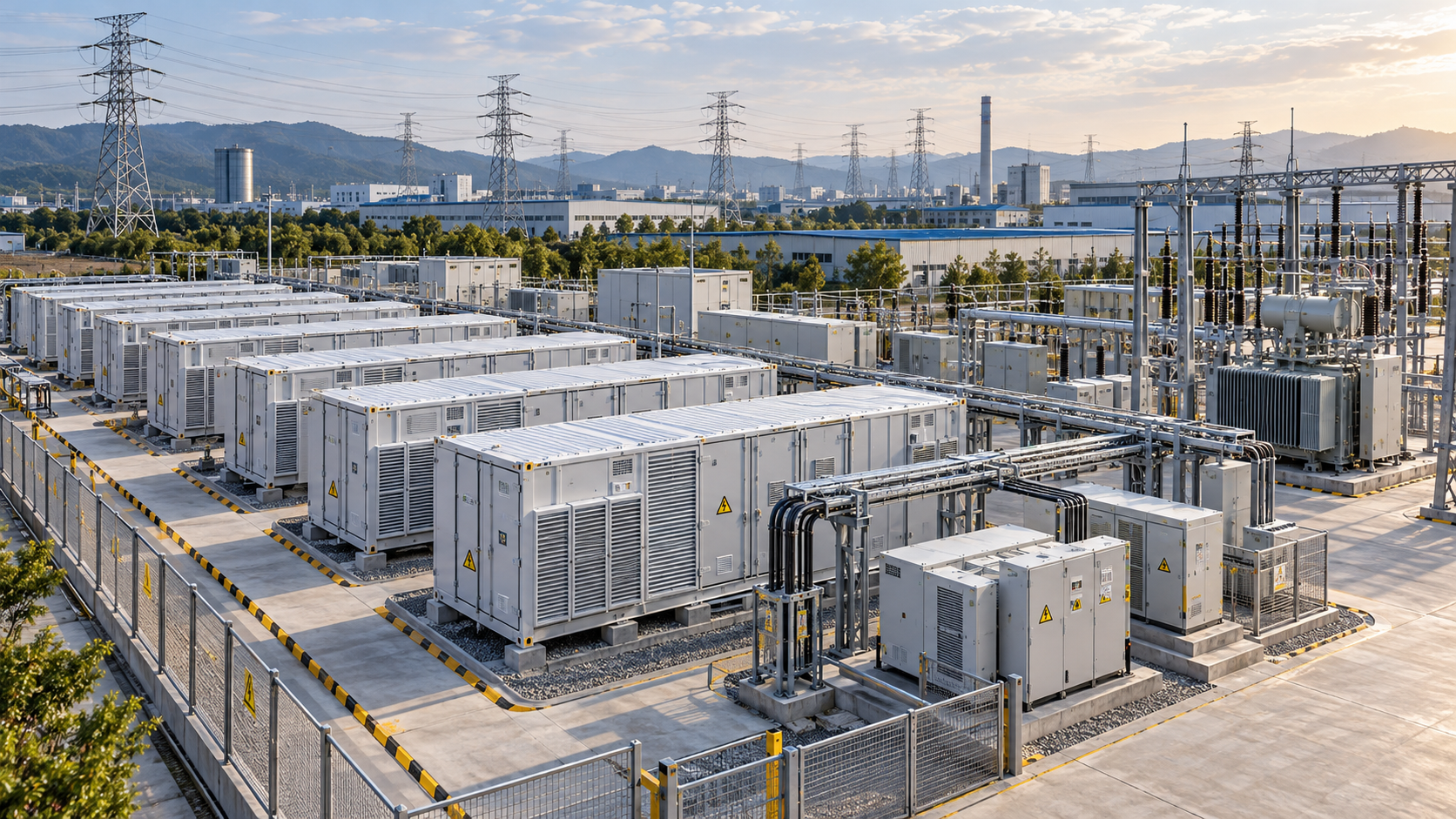
Battery storage can improve power grid resilience by injecting power rapidly during disturbances, supporting voltage and frequency, and supplying selected loads when part of the network is isolated. Its contribution depends on the service it is designed to provide: a battery configured for fast frequency response is not automatically capable of sustaining an islanded feeder through a prolonged outage.
Consider a feeder exposed to a transmission interruption. A storage system may have enough rated megawatts to cover the immediate load, yet still fail to keep customers energized if its usable energy is insufficient, its controls cannot form an island, or protection devices cannot isolate the fault correctly. Evaluation therefore has to connect battery capability with a specific disturbance, operating sequence and recovery objective.
Match the storage function to the disturbance
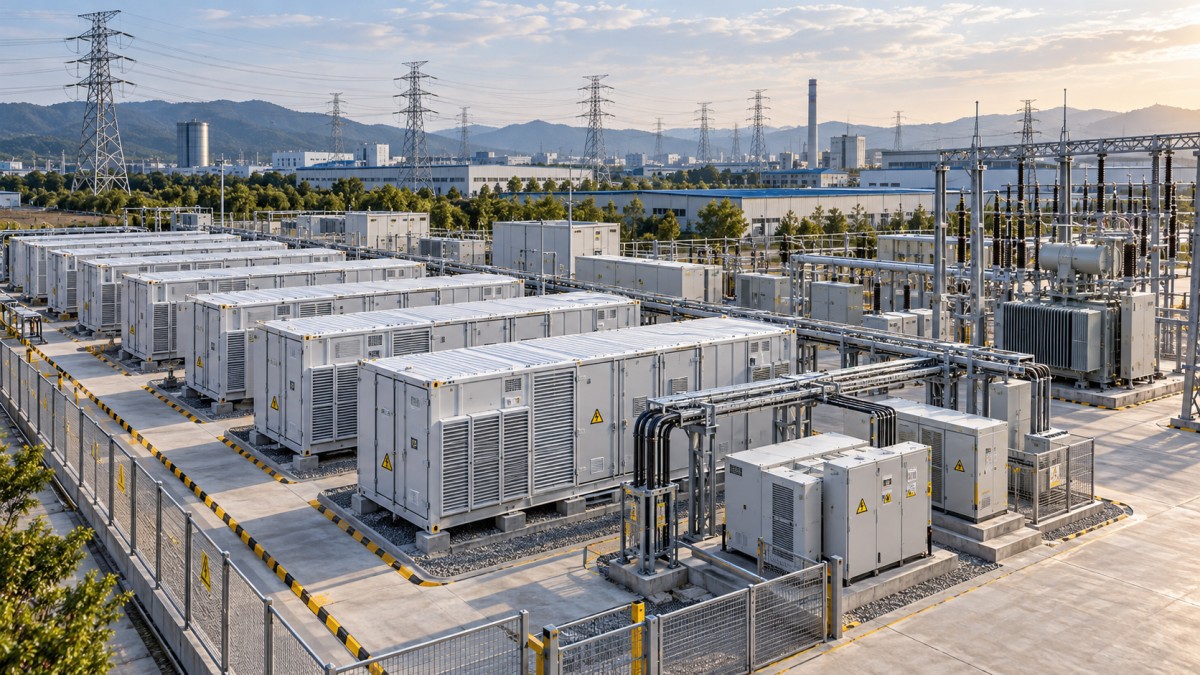
A grid-scale battery energy storage system (BESS) combines battery modules, power conversion equipment, controls, protection and auxiliary systems. The same installation can provide several services, but each service places different demands on its power rating, stored energy and state of charge.
Rapid frequency response
When generation and demand suddenly become unbalanced, grid frequency moves away from its nominal value. A suitably controlled BESS can change its active-power output quickly to help arrest that movement. The useful response depends on detection and control delays, inverter limits, the available charge or discharge headroom, and the duration for which the response must be sustained.
For evaluation, distinguish an inverter’s internal response capability from the end-to-end response measured at the point of interconnection. Communications, filtering, control settings and ramp limits can all affect the latter. A battery that is nearly empty may be unable to discharge for the required interval; one that is nearly full may have limited room to absorb surplus generation.
Voltage support and network constraints
Inverters can provide reactive power to help regulate voltage, subject to their operating envelope and the voltage conditions at the connection point. Active and reactive power share the inverter’s apparent-power capability, so full active-power output may reduce the reactive-power margin available at the same time. Review the required capability across the expected voltage range rather than relying on a single nameplate value.
Storage can also reduce loading on a constrained feeder or transformer by discharging during a peak and charging when capacity is available. That may preserve operational flexibility during a contingency, but it does not remove the need to check fault levels, thermal limits, voltage profiles and the consequences of the battery being unavailable.
Outage supply and restoration
During a loss of upstream supply, a BESS can serve as an energy source for a defined island if the electrical design and controls support that operating mode. Grid-forming functionality may establish voltage and frequency for the island, while load shedding keeps demand within available power and energy limits. Whether the transition is seamless, brief or requires a restart must be established in the design and verified through testing.
A battery may also support black start or restoration by energizing selected equipment and helping start other resources. Such a role requires a specific sequence, including auxiliary power, transformer energization, inrush and coordination with generating units. The presence of a battery alone does not establish black-start capability.
Size for the service, not just the nameplate
Start with the load or grid service that must be maintained, the disturbance to be covered and the expected time until another resource can take over. Then determine the power needed at the relevant connection point and the energy needed over the duty period. Include starting loads, expected load changes, losses, auxiliary consumption and operating reserves where applicable.
A useful first approximation for a steady discharge is required delivered energy equal to load in megawatts multiplied by operating time in hours. That figure is not the battery’s required nameplate capacity. The usable energy must account for conversion losses, permitted state-of-charge limits, temperature effects, degradation and any energy reserved for other obligations. For a variable load, use a time series or staged load profile instead of assuming a constant average.
Power capability needs a separate check. A system with sufficient megawatt-hours may still be unable to start a large motor or supply a sharp load step. Conversely, a high-power installation may provide valuable short-duration frequency response but exhaust its energy before an extended outage ends. Assess continuous output, short-duration overload capability where offered, and any reductions under the expected site conditions.
Account for the battery’s condition when the event occurs
Resilience is determined by the system’s available capacity at the time of a disturbance, not its capacity immediately after commissioning. Specify performance at the required point in the asset’s life and under the relevant ambient and battery temperatures. Degradation, maintenance outages and equipment derating can reduce the margin available to critical loads.
Operating policy matters as much as installed capacity. A battery dispatched for energy shifting may be unavailable for an outage shortly after a long discharge. An agreed minimum reserve, forecast-based charging rules or a hierarchy of dispatch priorities can help preserve resilience, although each choice limits the energy available for other services. Test those trade-offs against the actual duty profile.
Design the island before claiming backup capability
Island operation is a system-level function. The battery, switchgear, protection, load controls and any local generation must operate as a coordinated scheme. Define the island boundary and identify which loads remain connected, which are shed, and how the network separates from the utility system. Include communications failure and loss of individual components in the operating scenarios.
Grid-following inverters generally rely on an existing voltage reference; grid-forming controls are designed to establish or regulate a voltage reference under specified conditions. A project may require one or more grid-forming resources, but the label alone is not proof that the proposed combination will be stable. Examine control modes, transition logic, parallel operation and the manufacturer’s validated operating limits.
Protection deserves particular attention. Inverter-based resources can produce different fault-current behavior from synchronous machines, potentially affecting devices that depend on fault-current magnitude or direction. Engineers should study faults both before and after islanding, verify protection sensitivity and selectivity, and address anti-islanding requirements for parts of the system not intended to remain energized. Reconnection also requires a defined synchronization and switching sequence.
Where solar or other distributed generation is present, the island controller must balance that generation against load and battery limits. Once the battery approaches its maximum state of charge, surplus generation may need to be curtailed. At a low state of charge, additional load shedding or another source may be needed. Neither renewable capacity nor battery capacity should be assumed available without checking weather, controls and operating restrictions.
Evaluate integration through credible operating sequences
Instead of comparing equipment solely by efficiency or response time, request a sequence of operations for each resilience service. The sequence should identify the initiating event, measurements, control decisions, switching actions, expected system response and conditions that cause the service to stop. This exposes dependencies that a specification sheet may not show.
- Define the event and success criterion. Identify the initiating fault or supply loss, the loads or grid variables to be supported, and the acceptable interruption or recovery time.
- Establish the initial condition. Test relevant states of charge, network configurations, local generation output and equipment availability, including a credible degraded condition.
- Model the electrical response. Use studies appropriate to the service, such as power flow, short circuit, protection coordination and dynamic or electromagnetic transient studies where needed.
- Review control interactions. Check setpoints, priority between services, communications delays, loss-of-signal behavior and coordination with existing voltage and frequency controls.
- Verify the recovery path. Confirm how loads are restored, how the battery is recharged, and how the island resynchronizes or returns to normal operation without exceeding equipment limits.
Models should represent the proposed controls and operating limits closely enough for the study objective. Request documentation of model assumptions, version and validation status, together with the conditions under which the model is reliable. A favorable simulation is less persuasive if it omits auxiliary loads, protection actions or the transition between control modes.
Safety and availability affect resilience too
A BESS that cannot safely remain available during an emergency may not deliver its intended grid service. Review the site’s thermal management, battery management system, detection and response arrangements, isolation provisions and emergency procedures. The design should address how faults are detected, how affected equipment is disconnected and what remains operational after a protective trip.
Auxiliary dependencies can be decisive. Cooling, controls, communications and switchgear may require power during the very outage the battery is intended to mitigate. Determine which auxiliary supplies are backed up, how long they can operate and whether a loss of cooling or communications causes a derating or shutdown. Also consider site access, environmental exposure and maintenance needs when assessing availability.
Applicable interconnection, electrical, fire and product requirements vary by jurisdiction and configuration. Evaluation should identify the requirements governing the proposed installation and request evidence for the complete system and its intended operating mode, rather than assuming that a component-level certification covers every site-level obligation.
Turn specifications into acceptance criteria
Procurement documents should state the required performance at the point where it matters: for example, power delivered at the interconnection point, energy available to the defined island, or reactive-power capability under specified active-power and voltage conditions. Record the measurement method, initial state of charge, ambient conditions, duration and permitted tolerance for each criterion.
Commissioning tests can then verify items such as dispatch response, protective trips, communication loss, island separation, load shedding and resynchronization, as applicable to the installation. Some severe fault or black-start scenarios may require staged testing, simulation or another agreed verification method where a live test would create unacceptable risk. Define those limits before contracting, not after equipment is installed.
Finally, establish ongoing evidence of readiness: available energy, state of charge, alarms, derating, control-mode status and the results of periodic functional checks. A storage system improves resilience only when the required power, energy and control functions remain available together at the time the network needs them.
Deep Dive
Related Intelligence
- How can battery storage improve power grid resilience?Author :

- Australian Energy Minister Seeks Mandatory Energy Contracts for Data CentresAuthor :

- Portugal Mandates Grid-Forming Capability for Large Storage, Launches 1 GW TenderAuthor :

- Can distributed energy systems keep commercial buildings powered during outages?Author :