India Tightens Silver Import Controls, Pressuring Liquid-Cooled BESS Supply Chains
Key Takeaways
- How grid access delays are reshaping renewable project timelines in Latin AmericaDr. Elena Volt
- What drives energy storage systems price per kWh for commercial projects?Dr. Julian Volt
- What manufacturers should compare in emissions tracking softwareLina Cloud
- Why high-net-worth buyers are reshaping demand for automotive technologyDr. Aris Sun
- Can project tender intelligence software improve bid opportunity quality?Lina Cloud
- Which metrics reveal whether a P2P energy trading platform is working?Lina Cloud
- When does strategic link acquisition improve a clean energy site's authority?Dr. Aris Sun
- What drives solar street lighting cost for a new installation?Dr. Aris Sun
Industry Overview
Our mission is to safeguard the future of global renewable energy development through verifiable data, interdisciplinary academic scrutiny, and unwavering industry integrity.
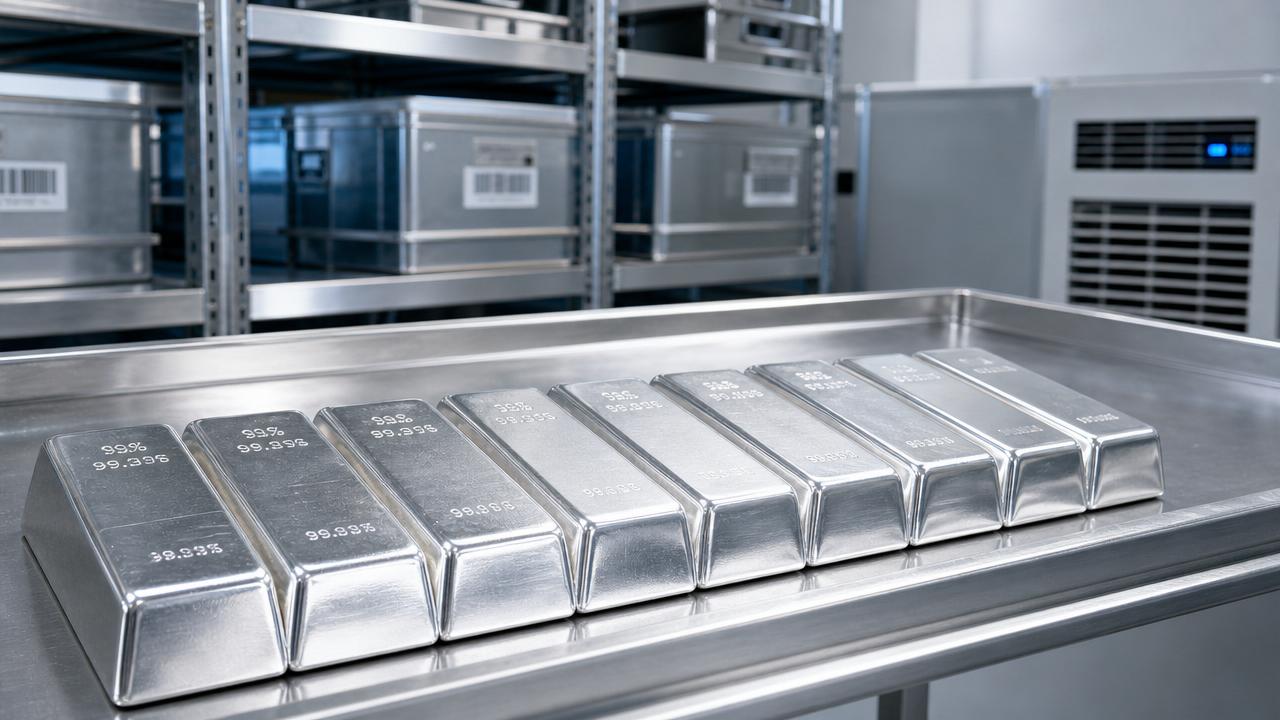
On May 29, 2026, the Indian government reclassified imports of silver bars with purity exceeding 99.9% from ‘free’ to ‘restricted’, requiring import licenses tied to exporters’ verified export performance. This move directly impacts global suppliers of thermal management modules and conductive components for liquid-cooled battery energy storage systems (BESS), particularly those relying on Indian-sourced or India-processed silver — raising concerns for procurement stability, compliance pathways, and lead times across the clean energy infrastructure supply chain.
Event Overview
Effective May 2026, India shifted the import classification of silver bars ≥99.9% purity from ‘free’ to ‘restricted’. Under the revised policy, import licenses are now contingent upon applicants’ documented export performance. The stated objective is to conserve foreign exchange reserves amid persistent pressure on the Indian rupee, which recently hit an all-time low of INR 96.18 per USD. No further regulatory details — such as license issuance timelines, eligibility thresholds, or appeal mechanisms — have been publicly disclosed as of May 29, 2026.
Industries Affected by Segment
Raw Material Procurement Firms
These firms source high-purity silver for downstream BESS component manufacturing. Because India has historically served as a regional hub for refined silver trading and toll processing, restrictions may disrupt access to competitively priced, certified material. Impact manifests as longer sourcing cycles, increased documentation burden, and potential need to qualify alternative regional suppliers — all without guaranteed cost or quality parity.
BEES Thermal Module & Conductive Component Manufacturers
Manufacturers integrating silver into liquid-cooled BESS heat sinks, busbars, or current-collecting interfaces face dual exposure: delayed inbound shipments of Indian-sourced silver feedstock, and uncertainty in validating new supply routes for regulatory compliance (e.g., origin tracing, assay certification). Delivery schedules for OEMs may be at risk if substitution timelines exceed contractual buffer windows.
International Trade & Logistics Service Providers
Firms managing cross-border silver shipments into India — including customs brokers, freight forwarders, and compliance consultants — must now verify license linkage to export records before clearing cargo. This introduces new pre-clearance validation steps, increasing transit time and administrative overhead for consignments previously cleared under simplified procedures.
Key Focus Areas and Practical Responses for Stakeholders
Monitor official updates from India’s Directorate General of Foreign Trade (DGFT)
The DGFT has not yet published formal guidelines on license application criteria, verification methodology, or transitional arrangements. Stakeholders should subscribe to DGFT notifications and track updates via India’s Integrated Customs and GST Portal (ICEGATE) — rather than relying on third-party summaries.
Map silver-sourcing dependencies by origin and purity grade
Identify which BESS subcomponents rely on silver sourced from or processed in India, especially those requiring ≥99.9% purity. Cross-reference this against existing contracts, inventory buffers, and minimum order quantities to assess near-term exposure — e.g., whether current stock covers ≥90 days of production.
Distinguish between policy signal and operational impact
This measure reflects macroeconomic policy intent (foreign exchange conservation), not a ban or tariff increase. Its immediate effect lies in procedural friction — not material unavailability. Firms should avoid overreacting to headlines; instead, treat it as a trigger to audit supply chain resilience metrics, including dual-sourcing feasibility and assay certification portability.
Initiate contingency planning for key thermal module SKUs
For manufacturers with active liquid-cooled BESS projects in APAC or EMEA, prioritize technical validation of non-Indian silver sources (e.g., Swiss, Japanese, or Korean refineries) against existing thermal conductivity and solderability specs. Document test reports now to accelerate qualification if licensing delays persist beyond Q3 2026.
Editorial Perspective / Industry Observation
Observably, this policy shift functions less as an isolated trade barrier and more as a structural signal: India is prioritizing export-led foreign exchange generation over its role as a neutral refining and transshipment node for strategic metals. Analysis shows that while silver volumes involved are modest relative to India’s total commodity trade, the timing — coinciding with global BESS deployment acceleration and tightening thermal material specifications — amplifies ripple effects across engineering-critical supply nodes. From an industry perspective, it is better understood not as a finalized disruption, but as an early-stage stress test for supply chain agility in mid-tier critical materials — where regulatory transparency remains low and substitution paths are technically constrained.
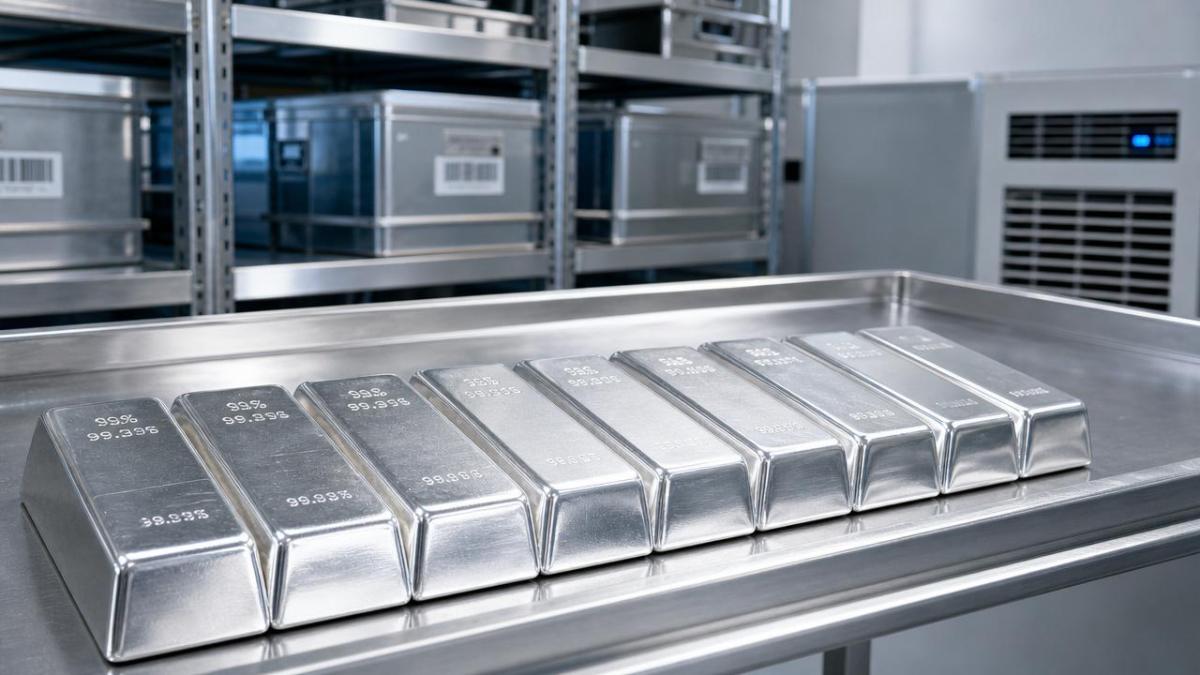
In summary, India’s silver import restriction is not a broad-based export control, but a targeted procedural recalibration with disproportionate implications for liquid-cooled BESS component supply chains. Its significance lies not in scale, but in specificity: it exposes dependency on geographically concentrated, specification-sensitive material flows where compliance and performance validation cannot be decoupled. Currently, it is more appropriately interpreted as a regulatory inflection point — one demanding granular supply mapping and proactive technical contingency, rather than wholesale strategic pivot.
Source: Official notification issued by India’s Directorate General of Foreign Trade (DGFT), effective May 2026; exchange rate data from Reserve Bank of India (RBI) daily reference rates, May 29, 2026.
Noted for ongoing observation: DGFT’s forthcoming guidance on license issuance criteria, verification protocol for export performance linkage, and any exemptions for industrial-use silver under special economic zone (SEZ) or electronic manufacturing cluster (EMC) frameworks.
Deep Dive
Related Intelligence
- How grid access delays are reshaping renewable project timelines in Latin AmericaAuthor :

- What drives energy storage systems price per kWh for commercial projects?Author :

- What manufacturers should compare in emissions tracking softwareAuthor :

- Why high-net-worth buyers are reshaping demand for automotive technologyAuthor :