Scaffolding Wholesale: Cost Drivers and Supplier Red Flags
Key Takeaways
- How grid access delays are reshaping renewable project timelines in Latin AmericaDr. Elena Volt
- What drives energy storage systems price per kWh for commercial projects?Dr. Julian Volt
- What manufacturers should compare in emissions tracking softwareLina Cloud
- Why high-net-worth buyers are reshaping demand for automotive technologyDr. Aris Sun
- Can project tender intelligence software improve bid opportunity quality?Lina Cloud
- Which metrics reveal whether a P2P energy trading platform is working?Lina Cloud
- When does strategic link acquisition improve a clean energy site's authority?Dr. Aris Sun
- What drives solar street lighting cost for a new installation?Dr. Aris Sun
Industry Overview
Our mission is to safeguard the future of global renewable energy development through verifiable data, interdisciplinary academic scrutiny, and unwavering industry integrity.
Why does scaffolding wholesale pricing vary so much between suppliers?
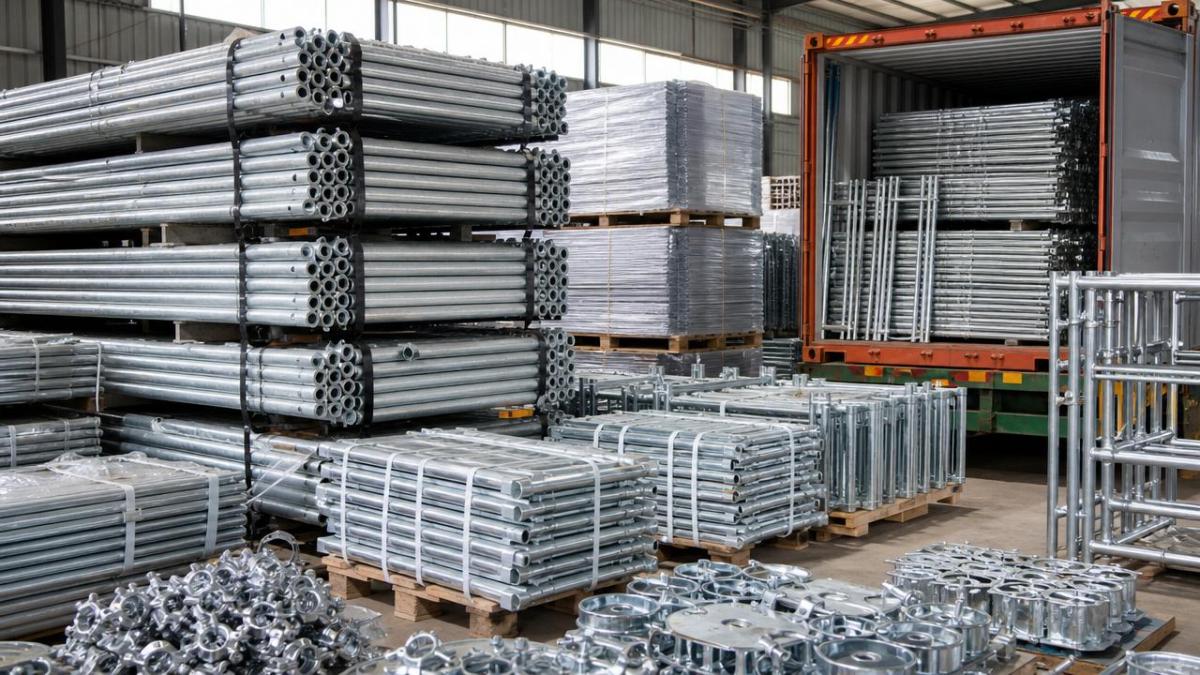
When reviewing scaffolding wholesale offers, the lowest unit price is rarely the lowest total cost.
In practice, pricing moves with steel grade, tube thickness, weld quality, surface treatment, load rating, and certification depth.
A supplier quoting aggressively may be trimming cost in places that are not obvious on the first spreadsheet review.
That matters even more for energy, grid, and utility construction, where access platforms support work at height around substations, storage systems, wind components, and plant retrofits.
From a G-REI perspective, procurement decisions improve when structural hardware is assessed with the same discipline used for critical energy assets.
Simple price comparisons miss hidden cost drivers such as rejection rate, replacement lead time, customs delay, and field assembly inefficiency.
More often, the real question is not “Which quote is cheapest?” but “Which scaffolding wholesale source stays predictable under project pressure?”
Which cost drivers deserve the closest attention before placing a scaffolding wholesale order?
Several cost elements shape the landed value of scaffolding wholesale procurement, and some appear only after delivery.
Material quality comes first. Higher-grade steel generally costs more, but it can reduce deformation, early corrosion, and replacement frequency.
Galvanizing method also matters. Hot-dip galvanizing usually carries a premium, yet it performs better in outdoor and coastal project environments.
Manufacturing consistency is another major variable. Uneven dimensions create fit-up issues, slower erection, and more on-site labor hours.
Certification cost should be viewed carefully. Verified compliance adds upfront expense, but weak documentation increases legal and operational exposure.
Freight and packaging are often underestimated. Dense steel products can turn a low ex-works price into an expensive delivered order.
Tooling, mold ownership, and custom dimensions may also affect repeat orders, especially for projects requiring special bay sizes or access layouts.
A useful way to compare suppliers is to break cost into five layers rather than one headline number.
This comparison method helps reveal why one scaffolding wholesale quote looks cheap while carrying higher downstream risk.
How can you tell whether a low scaffolding wholesale quote is efficient or simply risky?
A low quote is not automatically a bad quote. Sometimes it reflects scale, vertical integration, or strong steel sourcing.
The safer approach is to test whether the price is supported by verifiable operating discipline.
Start with the bill of materials. If the supplier cannot tie pricing to exact specifications, the cost base may not be stable.
Then examine production evidence. Repeatable dimensions, clear weld procedures, and batch records often separate efficient suppliers from opportunistic traders.
Another practical check is sample consistency. One acceptable sample proves little if later batches vary in weight or finish.
For large industrial projects, especially where outage windows are tight, schedule reliability can be more valuable than a small unit discount.
That is why many technically mature buyers compare scaffolding wholesale offers against failure cost, not only purchase price.
- Ask whether steel source and coating process remain fixed across all batches.
- Confirm whether load data is tested or simply copied from old catalog sheets.
- Check whether the lead time includes production, inspection, and port handling.
- Review claim handling terms for missing parts, bent frames, or coating defects.
If these answers stay vague, the quote is probably low for the wrong reason.
What supplier red flags appear most often in scaffolding wholesale sourcing?
Red flags usually show up before production begins, but they are easy to miss when timelines are tight.
One common warning sign is inconsistent documentation. A supplier may share certificates, yet names, product codes, or dates do not match the quoted items.
Another issue is specification drift. The initial quote looks attractive, then tube thickness, finish, or fitting details change quietly during order confirmation.
Unclear factory identity is also risky. Some trading companies perform well, but some outsource to different workshops without process control.
Extremely broad product catalogs can be another clue. If a supplier claims deep expertise in every steel product, verification becomes even more important.
Communication behavior matters too. Slow answers on technical drawings often predict slower response when quality disputes arise.
The table below summarizes warning signs that deserve extra review during scaffolding wholesale evaluation.
Needless to say, not every red flag means automatic rejection.
Still, repeated warning signs usually justify deeper due diligence before a scaffolding wholesale contract moves forward.
Does project type change what “good value” means in scaffolding wholesale?
Yes, and this is where many comparisons become misleading.
For short-duration interior work, a lower-cost finish may be acceptable if corrosion exposure is limited and turnover is fast.
For renewable energy and smart-grid construction, the operating context is often harsher.
Outdoor substations, wind foundations, solar farm maintenance zones, and battery storage sites may involve moisture, dust, chemicals, or repeated relocation.
In those cases, better surface protection and more stable dimensional control usually create better value than a minimal purchase price.
G-REI’s broader benchmarking logic is useful here: the right industrial component is the one that remains compliant, serviceable, and predictable under real operating conditions.
That same logic applies to scaffolding wholesale evaluation.
A buyer supporting energy infrastructure projects may prioritize the following more than a generic project would.
- Corrosion resistance in coastal or high-humidity environments.
- Documented compliance for contractors working under strict site safety controls.
- Reliable delivery windows aligned with outage or commissioning schedules.
- Part interchangeability across multiple construction phases and regions.
So the best scaffolding wholesale option depends less on abstract price competitiveness and more on project exposure and failure consequence.
What should be checked before final approval and the first large scaffolding wholesale shipment?
The final review should translate technical and commercial assumptions into measurable checkpoints.
One effective approach is to approve the order only after specification, inspection, and claim rules are written in the purchase documents.
This is especially important when repeat orders are likely, because early ambiguity tends to multiply over time.
Before release, confirm the essentials in a short control list.
- Approved drawings match the quoted scaffolding wholesale bill of materials.
- Steel grade, finish, and dimensional tolerances are stated clearly.
- Inspection method covers both pre-shipment and random batch verification.
- Packing standards reduce bending, coating damage, and part loss in transit.
- Replacement and shortage procedures include response time and responsibility split.
- Lead time is tied to a realistic production and shipping schedule.
A disciplined first order often determines whether scaffolding wholesale becomes a stable supply channel or a recurring source of disruption.
In the end, sound sourcing comes from connecting price, compliance, field performance, and supplier behavior into one decision framework.
If the next step is a live supplier comparison, build the review around total cost, documentation quality, batch consistency, and schedule reliability.
That makes scaffolding wholesale decisions clearer, safer, and far easier to defend over the full project cycle.
Deep Dive
Related Intelligence
- What to check before choosing a solar carport systems exporterAuthor :

- How Modular Solar Carport Systems Reduce Installation Time and Site DisruptionAuthor :

- Elevators and Escalators: Key Safety and Maintenance Risks to CheckAuthor :

- Solar Tracker Foundation Load: How to Avoid Undersizing and ReworkAuthor :