China Launches EV Battery Recycling Enforcement Action

Key Takeaways
- How grid access delays are reshaping renewable project timelines in Latin AmericaDr. Elena Volt
- What drives energy storage systems price per kWh for commercial projects?Dr. Julian Volt
- What manufacturers should compare in emissions tracking softwareLina Cloud
- Why high-net-worth buyers are reshaping demand for automotive technologyDr. Aris Sun
- Can project tender intelligence software improve bid opportunity quality?Lina Cloud
- Which metrics reveal whether a P2P energy trading platform is working?Lina Cloud
- When does strategic link acquisition improve a clean energy site's authority?Dr. Aris Sun
- What drives solar street lighting cost for a new installation?Dr. Aris Sun
Industry Overview
Our mission is to safeguard the future of global renewable energy development through verifiable data, interdisciplinary academic scrutiny, and unwavering industry integrity.
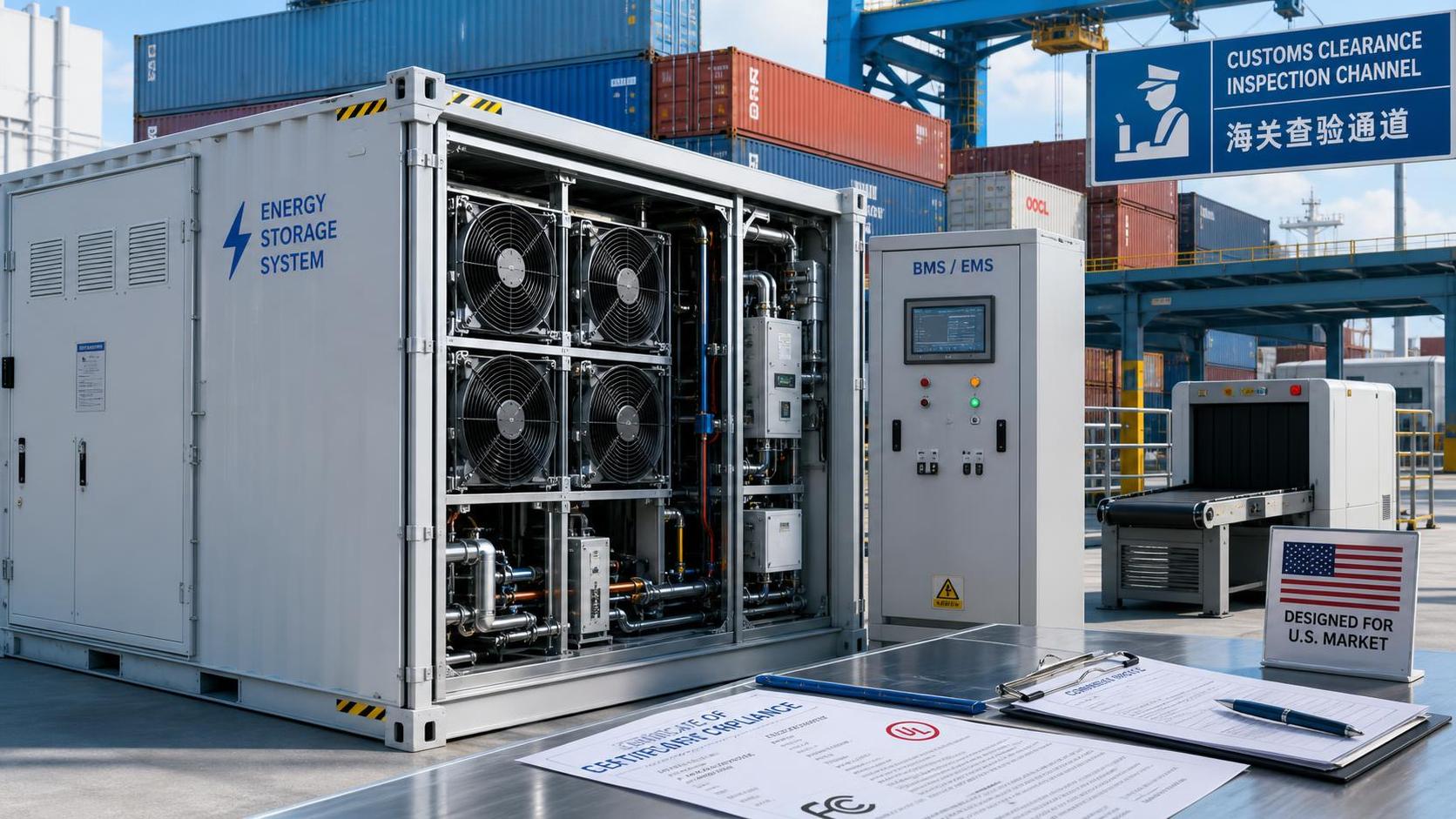
On April 28, 2026, China’s Ministry of Industry and Information Technology (MIIT) and four other departments initiated a nationwide enforcement campaign targeting the recycling and reuse of spent electric vehicle (EV) and energy storage batteries. The action directly affects battery management system (BMS) and energy management system (EMS) manufacturers—especially those supplying global energy storage projects—as compliance with traceability, data interface openness, and certification requirements now influences international market access.
Event Overview
On April 28, 2026, MIIT, the Ministry of Ecology and Environment, the State Administration for Market Regulation, and two additional departments jointly launched a special law enforcement operation on the recycling and utilization of spent power batteries. Key inspection items include: (1) validity and completeness of battery traceability codes; (2) mandatory openness of BMS data interfaces; and (3) compliance with certification standards for battery second-life (repurposed) applications.
Industries Affected
Direct Exporters of Energy Storage Systems
These enterprises are affected because overseas customers—including EU-based project developers and system integrators—now require proof that suppliers participate in China’s official ‘white-listed’ battery recycling collaboration system. Absence from this system may trigger liability exposure under the EU Battery Regulation (EU 2023/1542), particularly regarding extended producer responsibility (EPR) for end-of-life batteries.
BMS/EMS Hardware and Software Manufacturers
Manufacturers face technical and documentation adjustments: BMS firmware must support standardized, open data interfaces as mandated; EMS platforms must accommodate traceability data ingestion and reporting. Non-compliant designs may delay type approvals or disqualify products from tenders requiring UL 1974 or IEC 62619:2026 alignment.
Domestic Battery Repurposing and梯次利用 Service Providers
Operators engaged in second-life battery applications must verify that all incoming used batteries carry valid traceability codes and have undergone certified health assessment. Failure to confirm chain-of-custody compliance risks enforcement penalties and invalidates downstream certification claims.
Global Supply Chain Compliance Officers & Technical Procurement Teams
Professionals responsible for supplier qualification and regulatory due diligence must now cross-check vendor participation in China’s white-listed recycling network—not only for environmental reporting but also as a de facto prerequisite for EU market entry. This adds a new layer to supplier audits beyond traditional safety or performance certifications.
What Stakeholders Should Monitor and Act On
Track Official Updates on the White-List Framework
Stakeholders should monitor announcements from MIIT and the National Development and Reform Commission regarding the operational scope, application process, and public disclosure mechanism of the ‘white-listed’ recycling collaboration system. Current details remain limited to enforcement priorities—not full implementation rules.
Verify Interface Specifications Against Emerging Standards
Manufacturers should align BMS data output formats with the technical requirements implied by the enforcement focus—particularly those referenced in UL 1974 (2024 edition) and the newly updated IEC 62619:2026. While not yet cited verbatim in the notice, analysis shows these standards are increasingly treated as de facto benchmarks during inspections.
Distinguish Between Policy Signal and Enforceable Obligation
The April 28 action is an enforcement initiative—not a new regulation. Observably, it reflects intensified application of existing provisions under the Administrative Measures for Traceability Management of Power Batteries (2021) and the Guidelines for Second-Life Battery Utilization (2022). Companies should avoid assuming new legal duties exist where none have been formally promulgated.
Prepare Documentation for Cross-Border Traceability Handover
Exporters and system integrators should begin compiling battery-level traceability records—including manufacturing batch IDs, initial installation dates, and decommissioning logs—for inclusion in commercial contracts and customs declarations. Early documentation reduces friction when EU importers request EPR-relevant data under Article 77 of EU 2023/1542.
Editorial Perspective / Industry Observation
This enforcement action is best understood not as an isolated inspection round, but as a structural signal: China is consolidating upstream battery lifecycle governance to strengthen its position in global battery policy coordination. From industry perspective, the linkage between domestic recycling enforcement and international standard adoption (e.g., UL 1974, IEC 62619:2026) suggests convergence—not divergence—in technical compliance expectations across major markets. However, analysis shows no evidence yet of formal mutual recognition agreements; alignment remains voluntary and commercially driven. Continued monitoring is warranted—not because rules have changed overnight, but because enforcement intensity is now a measurable variable in supply chain risk modeling.

In summary, the April 2026 enforcement action does not introduce new statutory obligations—but it materially raises the operational cost of non-compliance for BMS/EMS suppliers serving global energy storage markets. It signals tightening integration between China’s domestic circular economy framework and internationally recognized battery safety and sustainability standards. Currently, it is more accurately interpreted as a calibration of enforcement posture than a shift in regulatory substance—yet one with tangible implications for technical design, documentation practices, and cross-border contractual terms.
Source: Public notice issued jointly by MIIT, Ministry of Ecology and Environment, State Administration for Market Regulation, and two unnamed departments on April 28, 2026. Details confirmed via official press release and accompanying Q&A document published on the MIIT website. Note: The composition of the ‘five departments’ and full criteria for white-list inclusion remain pending official clarification and are subject to ongoing observation.