Which renewable energy projects qualify under the EU taxonomy?
Key Takeaways
- Australian Energy Minister Seeks Mandatory Energy Contracts for Data CentresDr. Elena Volt
- Can a renewable energy planning platform estimate solar yield?Dr. Aris Sun
- Portugal Mandates Grid-Forming Capability for Large Storage, Launches 1 GW TenderDr. Elena Volt
- Can distributed energy systems keep commercial buildings powered during outages?Dr. Elena Volt
- China Sets Wind Power Capacity Credit Target of Around 11% by 2030Marcus Wind
- How to verify a solar water pumping system exporter's flow ratingsDr. Aris Sun
- IRENA Warns Global Clean Energy Additions Could Fall in 2026 as Grid Constraints BiteDr. Elena Volt
- What tests should a three-phase hybrid solar inverter factory run?Dr. Aris Sun
Industry Overview
Our mission is to safeguard the future of global renewable energy development through verifiable data, interdisciplinary academic scrutiny, and unwavering industry integrity.
Solar photovoltaic, concentrated solar power, wind, hydropower, geothermal and bioenergy projects can qualify under the EU taxonomy, but “renewable” does not automatically mean “taxonomy-aligned.” A project must fall within a covered economic activity, meet its substantial contribution criteria, satisfy the applicable “do no significant harm” requirements, and comply with minimum safeguards.
The distinction matters because a solar farm can be taxonomy-eligible yet lack the evidence needed to demonstrate alignment. Hydropower may meet the climate mitigation threshold but fail requirements concerning river ecology. A battery installed beside a wind farm requires its own activity assessment rather than inheriting the wind farm’s status.
Eligibility identifies the activity; alignment establishes compliance
Under Regulation (EU) 2020/852, an environmentally sustainable economic activity must satisfy the conditions in Article 3. For renewable electricity projects assessed against the climate change mitigation objective, the principal technical requirements sit in Annex I to Commission Delegated Regulation (EU) 2021/2139, as amended.
Taxonomy eligibility means an activity is described in an applicable delegated act, regardless of whether it meets the technical screening criteria. Taxonomy alignment requires compliance with those criteria, the other applicable environmental safeguards and minimum safeguards.
This is not a general EU product certification scheme. An IEC test report, environmental permit or renewable electricity certificate may support particular aspects of an assessment, but none independently establishes taxonomy alignment. Likewise, a renewable power purchase agreement does not prove that the generating asset satisfies the taxonomy’s environmental requirements.
A defensible assessment identifies the economic activity, environmental objective, applicable legal text and assessment period before evaluating performance. The version matters: amendments and their application dates must be checked rather than relying on a screening checklist prepared for an earlier reporting cycle.
Which generation technologies are covered?
The climate mitigation criteria distinguish between technologies whose substantial contribution follows directly from the activity description and those requiring emissions calculations or additional technical conditions.
The table identifies the substantial contribution entry point, not the complete alignment test. Renewable heat and cogeneration have separate activities and criteria. For example, a geothermal heating network should not be assessed solely against the geothermal electricity section, and a biomass combined heat and power installation requires the relevant cogeneration assessment.
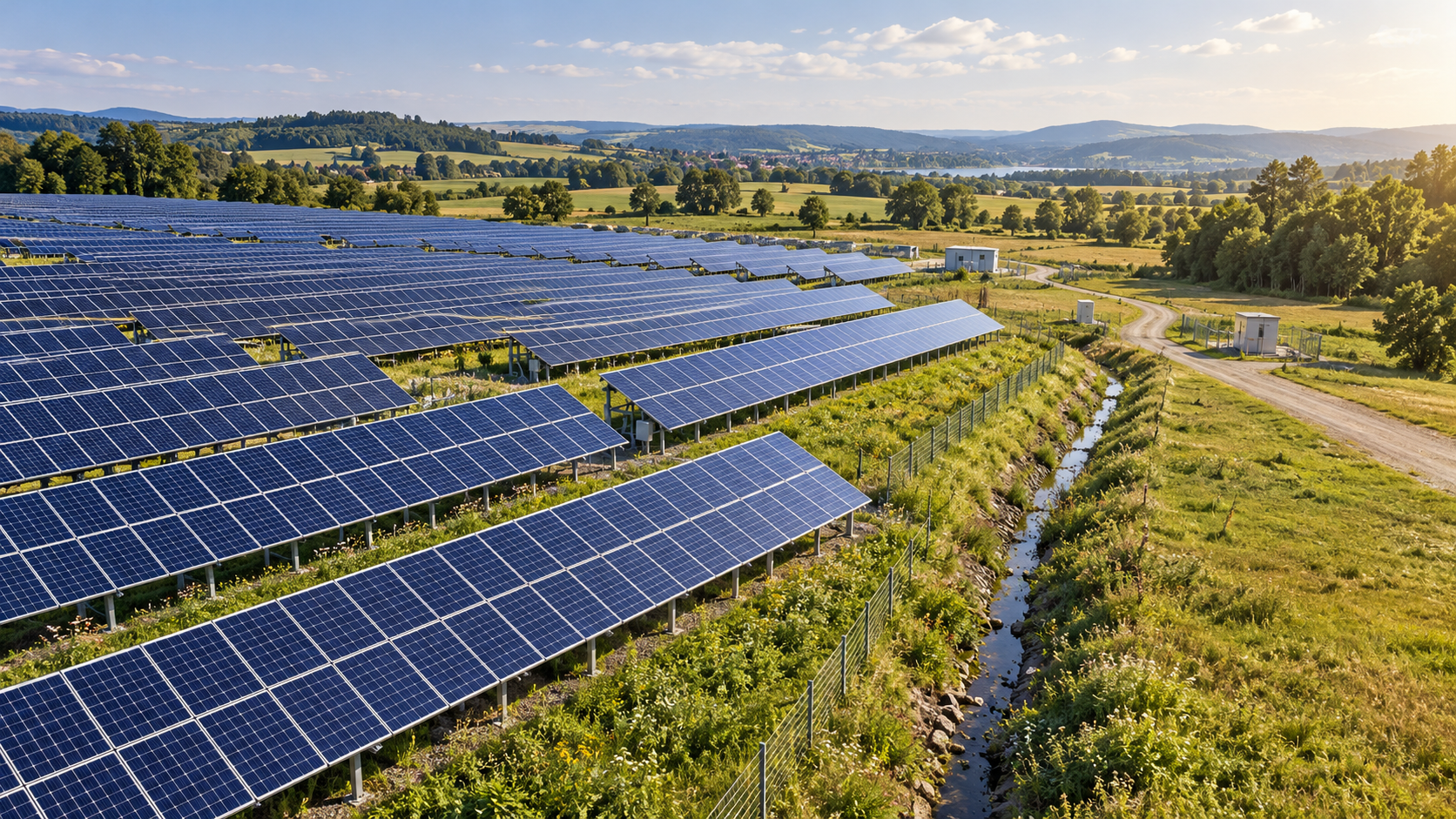
Solar and wind: straightforward climate criteria, site-dependent alignment
Solar PV and wind do not need to demonstrate a project-specific lifecycle emissions value below 100 g CO₂e/kWh to meet their climate mitigation substantial contribution criteria. Applying that threshold indiscriminately to all renewable generation introduces a requirement that these activity sections do not contain.
The remaining obligations still matter. A solar installation needs an assessment of material physical climate risks and compliance with the applicable circular economy and biodiversity provisions. Equipment durability, dismantling, refurbishment and recycling considerations belong in the technical evidence where required by the activity criteria.
Wind assessments must address relevant ecological impacts, including those affecting birds and bats. Offshore projects also require attention to the marine environment. A high turbine efficiency rating or a low estimated carbon footprint cannot compensate for unresolved significant ecological harm.
Hydropower: a qualifying emissions route is only part of the test
Hydropower’s alternative substantial contribution routes should not be treated as cumulative requirements. An installation meeting the specified run-of-river condition does not also have to demonstrate power density above 5 W/m² to satisfy that part of the assessment.
However, the water and biodiversity requirements remain decisive. Evidence may need to address ecological flows, fish migration, sediment continuity, habitat protection and measures relevant to the affected water body. Existing plants and new developments face different detailed conditions under Section 4.5, including provisions connected to the Water Framework Directive.
For reservoir projects using the lifecycle emissions route, the assessment must use an appropriate system boundary and defensible reservoir emissions assumptions. An operational emissions estimate that excludes material lifecycle sources is not equivalent to the required lifecycle calculation.
Geothermal and bioenergy: the calculation boundary can determine the result
Geothermal electricity requires more than confirmation that the heat source is renewable. Direct releases of naturally occurring greenhouse gases can affect the result. The lifecycle calculation must follow the methods accepted by the applicable criteria, with quantified lifecycle emissions verified by an independent third party.
Bioenergy requires closer scrutiny of feedstock origin, sustainability evidence and greenhouse gas savings. Applicable requirements depend on the fuel, installation characteristics and relevant operating dates. A generic biomass supplier declaration is insufficient where traceability, forest or agricultural sustainability, or calculation evidence is required.
For both technologies, the evidence should identify the actual operating configuration and supply chain. A calculation based on one feedstock mix or gas-management arrangement cannot automatically substantiate a materially different configuration.
“Do no significant harm” is an engineering and environmental test
For an activity contributing to climate mitigation, alignment also requires that it does not significantly harm the other environmental objectives. The applicable checks concern climate adaptation, water and marine resources, the circular economy, pollution prevention, and biodiversity and ecosystems. Not every activity has identical requirements under each objective; the relevant activity section determines what applies.
Climate adaptation needs a project-specific risk assessment. Appendix A establishes a framework for identifying physical climate risks and assessing their significance over the activity’s expected lifetime. Depending on location and asset design, relevant hazards can include flooding, extreme heat, drought, wildfire, coastal inundation or changing wind conditions.
A hazard map alone does not establish compliance. The assessment must connect exposure to asset vulnerability and, where material risks are identified, to adaptation solutions that satisfy the criteria. For a solar site, this could require examining drainage capacity, inverter temperature limits or foundation resilience—not simply recording that flooding or heat exists in the region.
Biodiversity evidence must demonstrate outcomes and implementation. Where an environmental impact assessment or screening is required, the relevant procedures and mitigation measures must be addressed. Sites in or near biodiversity-sensitive areas require the assessments and protective measures specified by the applicable criteria. An approved report is not evidence that every required mitigation measure has been implemented.
EU environmental permits provide important supporting evidence, but permitting and taxonomy alignment are not interchangeable. A permit may not address the complete taxonomy adaptation assessment, circularity provisions or minimum safeguards.
Storage and grids require separate classification
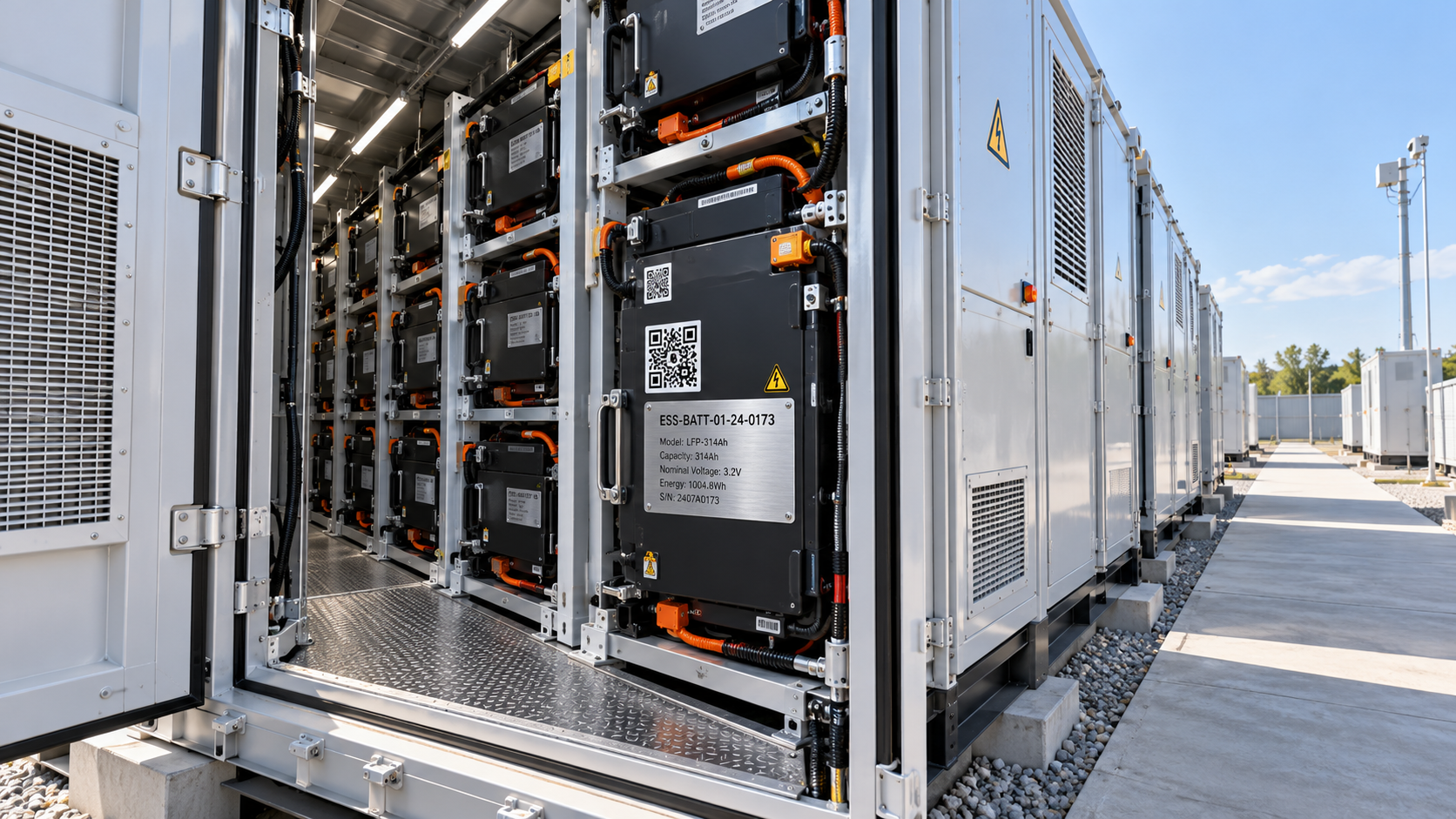
Electricity storage is covered by Section 4.10. Battery storage and pumped hydropower storage can therefore be eligible activities, but their alignment must be tested against that section’s requirements. A battery does not become aligned merely because it is physically connected to a renewable generator.
For co-located solar and storage, the assessment should distinguish generation equipment, storage equipment and shared infrastructure. Relevant evidence includes the system configuration, asset boundaries, environmental assessments and applicable end-of-life provisions. Pumped storage also brings water and ecological considerations that cannot be resolved through an electricity dispatch model alone.
Electricity transmission and distribution fall under Section 4.9. That section provides specific routes involving the electricity system, connections and qualifying equipment or infrastructure. It also contains exclusions, including infrastructure dedicated to a direct connection to generation above the specified emissions threshold.
Consequently, “supports renewable integration” is not a sufficient alignment argument for every substation, grid extension or control platform. The asset must fit the activity description and satisfy the relevant route. Standalone software should not be classified as transmission or distribution infrastructure solely because its commercial purpose involves renewable energy.
Minimum safeguards extend beyond the installation
Article 18 addresses procedures implemented by the undertaking carrying out the activity to ensure alignment with the OECD Guidelines for Multinational Enterprises and the UN Guiding Principles on Business and Human Rights, including the labour and human rights instruments referenced in that article.
This creates an evidence requirement that cannot be discharged through plant performance tests. Relevant documentation includes responsible business conduct procedures, human rights due diligence, grievance mechanisms and evidence that identified impacts are addressed. A policy statement without implementation evidence provides a weaker basis than a documented process linked to actual operations and business relationships.
Supply-chain issues can therefore remain material even when the generating equipment meets all technical specifications. Equally, strong corporate safeguards cannot compensate for a project failing an activity-specific environmental criterion.
What a defensible alignment file contains
A renewable energy taxonomy assessment should make each conclusion traceable to a legal requirement and an identifiable piece of evidence. A useful compliance matrix records the activity code, criterion, applicability, supporting document, assessment conclusion and any unresolved condition.
The underlying file should establish:
- Asset identity and boundaries: location, capacity, technology, operating status and the division between generation, storage, grid connection and associated works.
- Substantial contribution: specifications, commissioning records, lifecycle calculations or feedstock evidence, according to the applicable activity.
- Environmental safeguards: climate risk assessments, environmental studies, permits, mitigation plans and evidence of implementation.
- Minimum safeguards: undertaking-level procedures and supporting due diligence records.
- Evidence validity: document dates, assumptions, responsible parties and changes that could invalidate the conclusion.
Independent verification is explicitly required for certain calculations, including relevant lifecycle emissions assessments. That should not be confused with a universal requirement for an EU-issued taxonomy certificate. External assurance can strengthen confidence, but its scope must be clear: checking a carbon calculation is not the same as verifying the entire alignment claim.
Projects outside the EU are not automatically excluded. Their assessment must nevertheless address the applicable taxonomy criteria, including provisions concerning equivalent environmental assessment requirements where relevant. Compliance with host-country law alone does not establish alignment.
Keep the alignment conclusion as specific as the evidence
A project may be eligible while alignment remains unsubstantiated. Missing evidence is not necessarily proof of substantive non-compliance, but it prevents an affirmative alignment conclusion. Reports should distinguish a demonstrated failure from an unresolved documentation gap.
Alignment claims also need a defined boundary. An aligned wind generation activity does not establish that every associated investment, the developer’s entire business or a financing instrument is aligned. Turnover, capital expenditure and operating expenditure disclosures follow their own accounting rules under the taxonomy disclosure framework.
The strongest conclusion identifies the activity, objective, criteria version, assessment period and supporting evidence. For renewable projects, qualification depends less on the renewable label than on whether the complete legal and technical case can withstand review.
Primary legal references: Regulation (EU) 2020/852, particularly Articles 3, 9 and 18; Delegated Regulation (EU) 2021/2139, particularly Annex I and its appendices, as amended; and Delegated Regulation (EU) 2021/2178, as amended, for taxonomy disclosures. The consolidated text and relevant application dates should govern each assessment.
Deep Dive
Related Intelligence
- Which renewable energy projects qualify under the EU taxonomy?Author :

- Which BESS batteries require an EU battery passport from 2027?Author :

- How to verify REC retirement for power purchase agreement complianceAuthor :

- What manufacturers should compare in emissions tracking softwareAuthor :