EU Battery Rule Mandates Carbon Labels From Aug 18
Key Takeaways
- EU Revises EN 50598-2:2026 for Liquid-Cooled BESSDr. Julian Volt
- How to Size Off-Grid Solar Systems for Remote Areas Without OverspendingDr. Aris Sun
- DOE Rule Sets Sept. 2026 BMS Requirement for Liquid-Cooled BESSDr. Julian Volt
- Solar Market Middle East 2026: Which Policy and Grid Factors Will Shape Project Returns?Dr. Elena Volt
- EU Sets Dual Certification Rule for Liquid-Cooled BESSDr. Julian Volt
- IEC Compliance Testing: Which Standards Matter for Grid Equipment?Dr. Elena Volt
- DOE Rule Raises Import Bar for Liquid-Cooled BESSDr. Julian Volt
- How to Evaluate a Portable Solar Generators Supplier for Runtime, Safety, and After-Sales SupportDr. Aris Sun
Industry Overview
Our mission is to safeguard the future of global renewable energy development through verifiable data, interdisciplinary academic scrutiny, and unwavering industry integrity.
From August 18, 2026, batteries covered by the EU’s new battery rules will face a more visible compliance requirement: an official carbon footprint performance label must be attached directly to the product body. The move matters not only for battery makers selling into the EU, but also for importers, sourcing teams, certification workflows, and delivery planning, because the label must be determined at factory level and remain clear and indelible on the product itself.
What the rule requires on the product itself
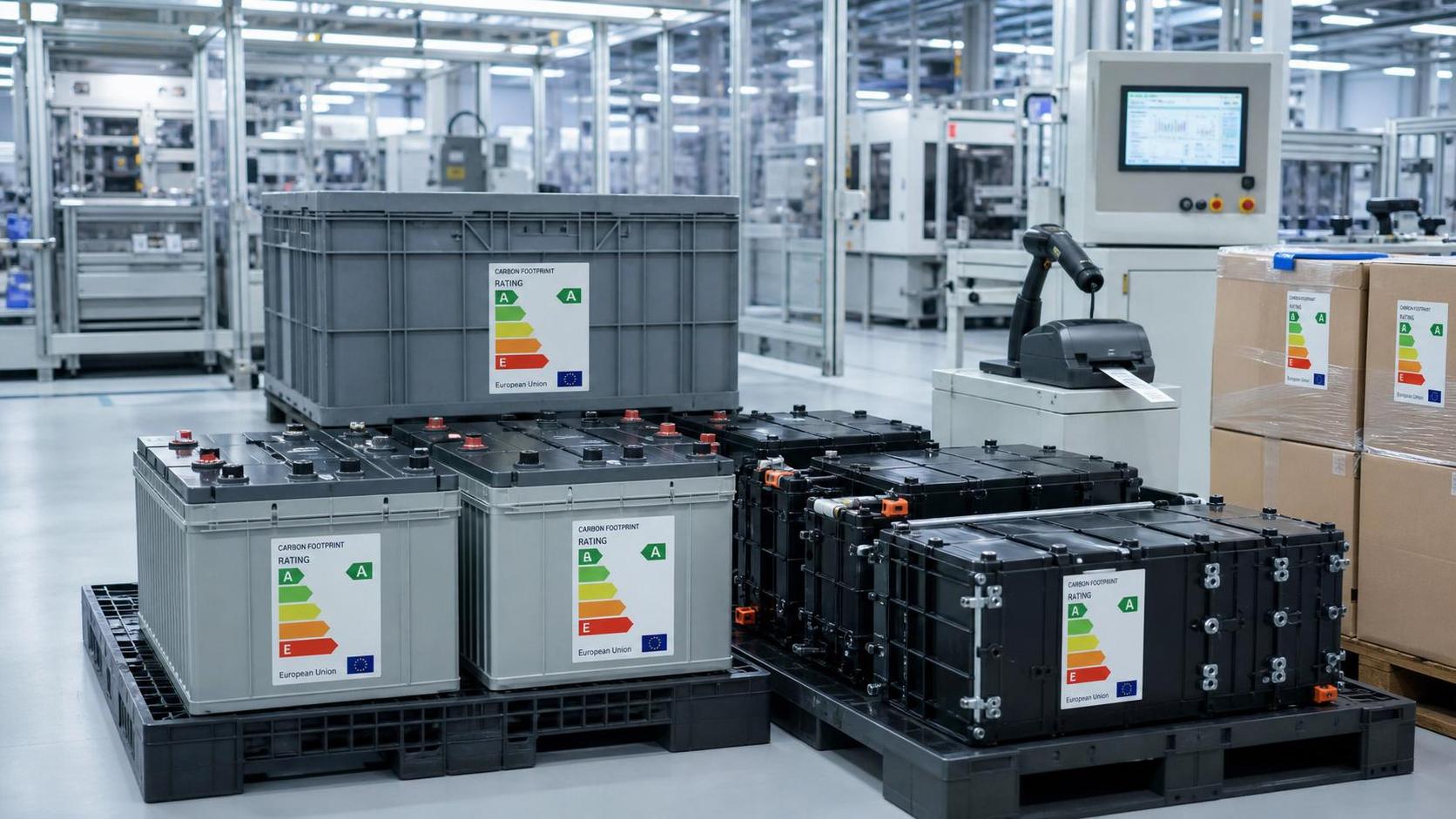
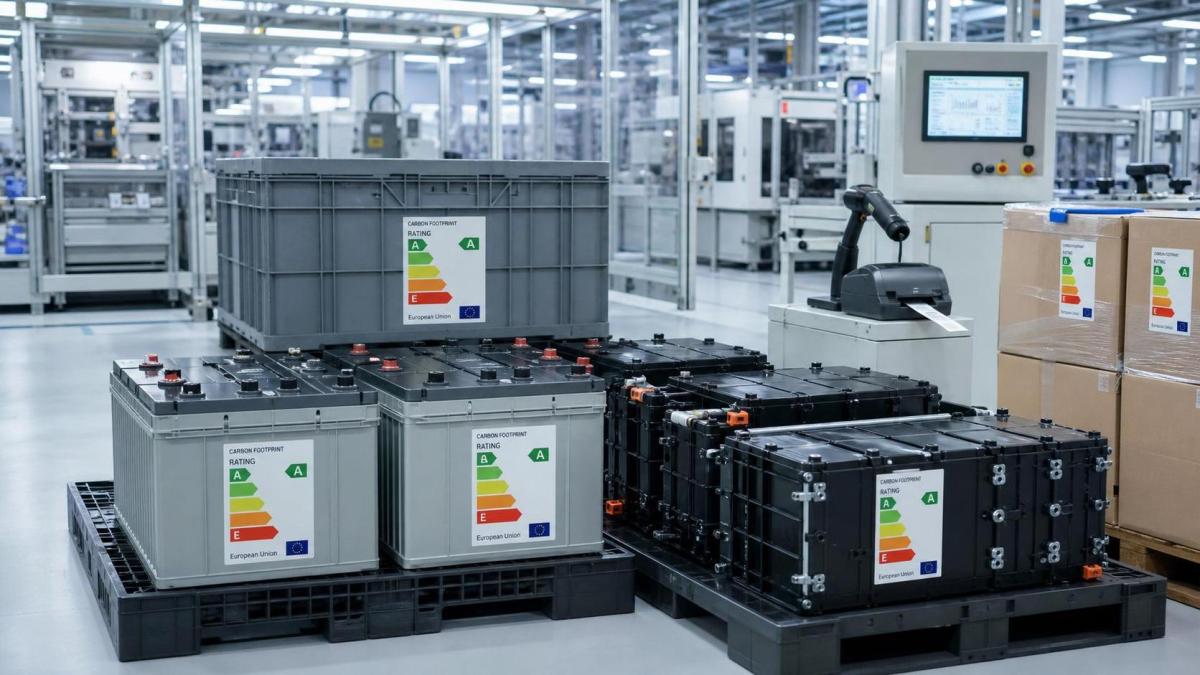
According to the implementing rules under the EU’s new battery law, from August 18, 2026, all electric vehicle batteries, industrial batteries of at least 2 kWh, and light means of transport batteries sold in the EU market must carry an official carbon footprint performance label rated from A to E.
The label must be assessed at the production-factory level rather than applied as a generic company-level mark. It must also be clearly visible and non-removable on the product body.
Where the pressure is likely to appear first
Export battery manufacturers facing tighter delivery coordination
From an industry perspective, battery exporters selling into the EU are likely to feel the impact first because product shipment is no longer only about technical and customs readiness. The confirmed label requirement links compliance directly to the battery unit placed on the market, which may affect production scheduling, documentation matching, and final delivery timing.
Importers needing stronger supplier verification
Importers will likely need to pay closer attention to whether suppliers can support traceable label data. The input information specifically points to advance verification of supplier data traceability capabilities, which means importer due diligence may increasingly focus on whether factory-level carbon footprint label information can be checked and aligned with supply documents.
Certification and compliance-related service workflows under cost pressure
Analysis shows that the rule may also affect the service chain around compliance execution. Because the requirement is factory-specific and tied to a visible, non-erasable product label, certification preparation and supporting compliance work may become more detailed, which is consistent with the stated expectation of higher certification costs for Chinese battery exporters.
What companies should watch in practical terms
Check which battery categories are within scope
What deserves closer attention is product scope. The rule described here applies to electric vehicle batteries, industrial batteries of 2 kWh or more, and light means of transport batteries sold in the EU. Companies should first confirm whether their outbound product portfolio falls into these categories.
Review factory-level data readiness
Analysis shows that the factory-level basis for label determination is a key operational point. Businesses involved in manufacturing, sourcing, or importing should focus on whether internal and supplier-side records can support factory-specific carbon footprint label information rather than relying on broader corporate declarations.
Prepare for label execution on the product body
The label must be visible and non-removable, so companies should pay attention to how this requirement interacts with production, packaging, and outbound inspection processes. The practical issue is not only having a label result, but also ensuring that the physical marking step does not disrupt shipment preparation.
Align customer communication with compliance timing
Observably, delivery rhythm may become a discussion point between suppliers and EU-side customers. Exporters and importers should pay attention to how label verification, supporting records, and product marking could affect lead times, contract execution, and customer communication before the effective date.
Why this looks like more than a short-term labeling change
Analysis shows that this update is not just about adding a sticker. The requirement connects carbon footprint assessment, factory-level identification, and physical product presentation into one compliance action. That makes it more appropriate to understand this as a concrete operational rule with immediate execution implications, while also serving as a longer-term signal that traceable carbon information is becoming more embedded in battery market access.
At the same time, it remains necessary to keep watching how implementation is interpreted in practice. The confirmed information establishes the obligation and its basic form, but day-to-day business impact will depend on how companies organize data, labeling, and delivery coordination around it.
How to read this development now
At this stage, it is more appropriate to understand the August 18, 2026 requirement as an enforceable compliance milestone rather than a distant policy signal. For affected battery businesses, the issue is less about abstract sustainability positioning and more about whether factory-level data, product labeling, and shipment readiness can stay aligned. For the wider supply chain, this is a development worth following closely because it may reshape how compliance evidence is prepared and checked before batteries enter the EU market.
Basis of this article and what still needs checking
This article is generated based on the user-provided news title, event date, and event summary. Information of this type is commonly cross-checked against sources such as official regulatory notices, company disclosures, industry association updates, authoritative media reporting, and standard-related documents.
No specific official source link was provided in the input, so the exact source document link still needs to be continuously verified. Areas that merit further follow-up include any later official clarifications on implementation wording, compliance procedures, and how market participants operationalize factory-level label data traceability.