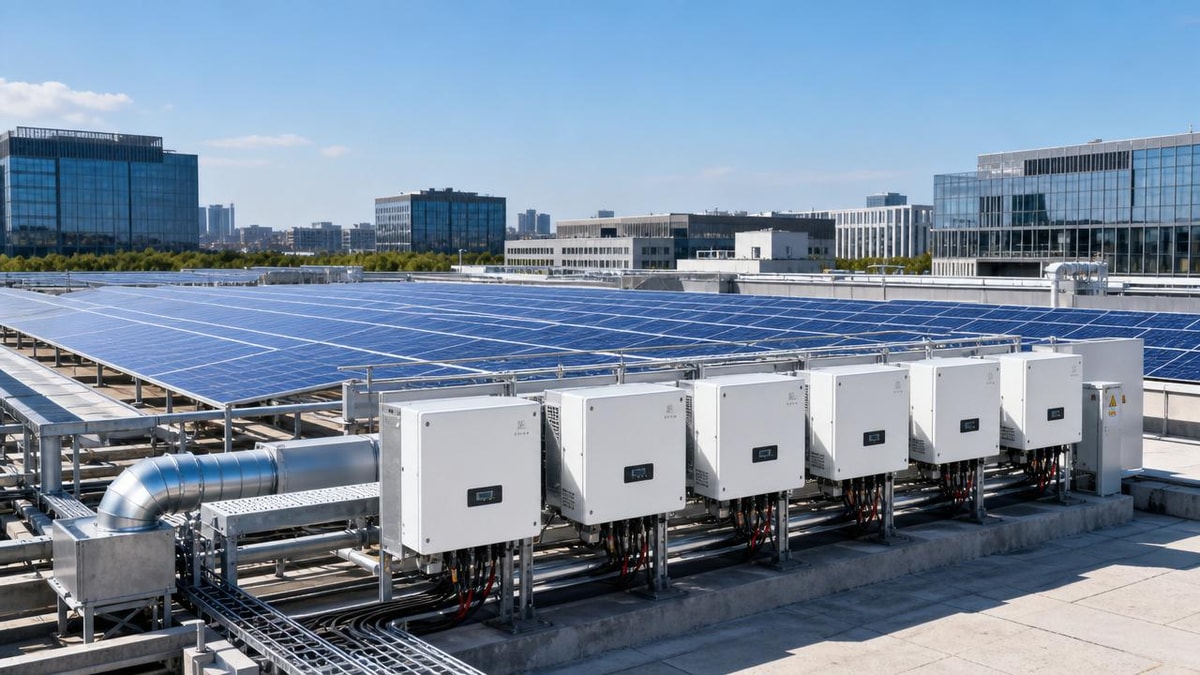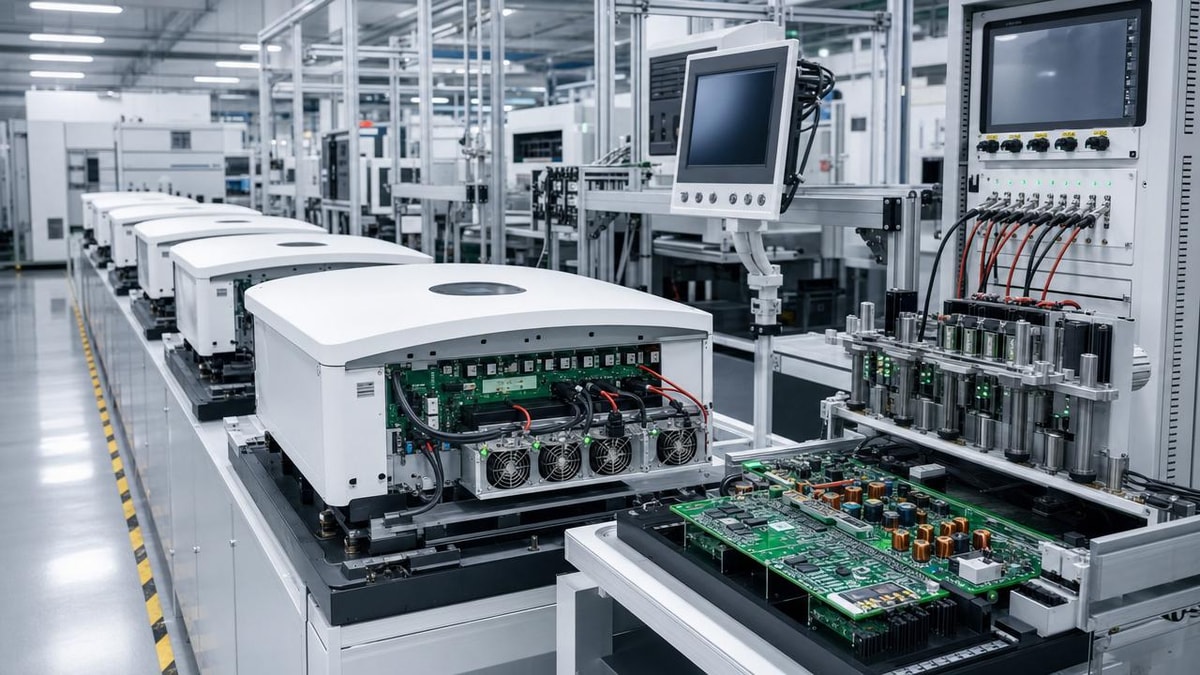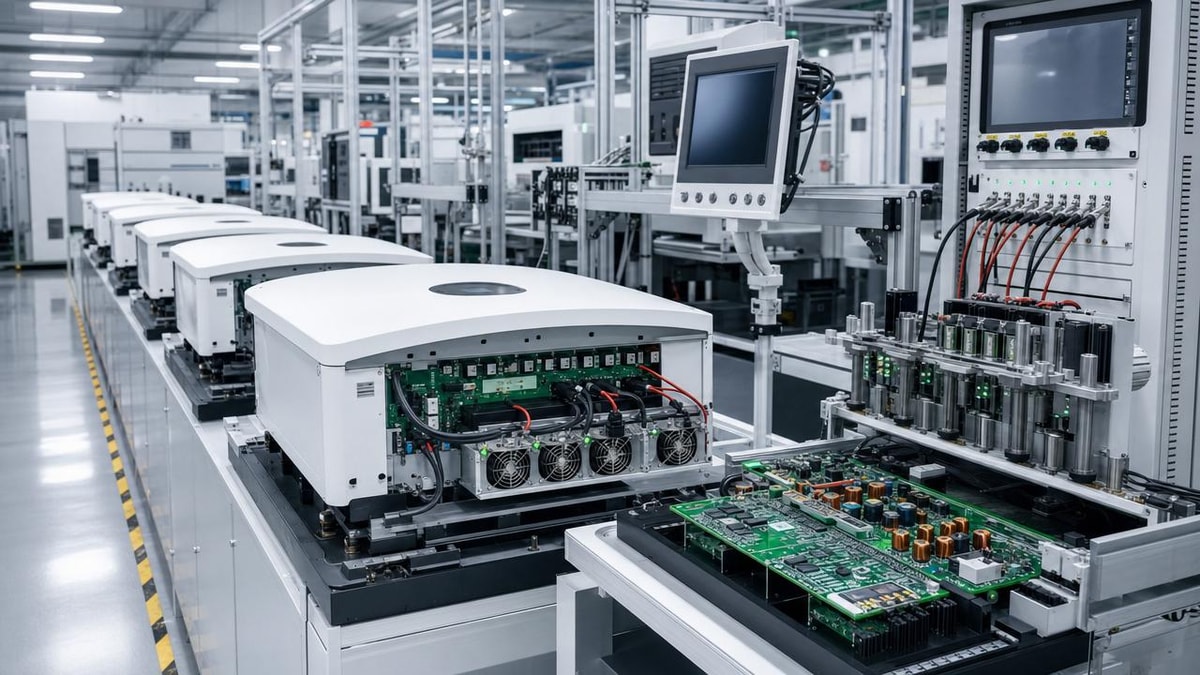
String Inverter Manufacturer Comparison for Commercial Rooftop Systems
Key Takeaways
- ITU 2026 Council Meeting Advances AI-Driven Smart Grid StandardsDr. Elena Volt
- MIIT Launches 'Model-Data Resonance' Action for AI in IndustrializationDr. Aris Sun
- WIC 2026 in Tianjin to Spotlight Liquid-Cooled BESSDr. Julian Volt
- ADB Raises Vietnam’s 2026 GDP Forecast to 7.2%, Grid Resilience Imports Up 12%Dr. Elena Volt
- EU CE-RENEW Extends LCA Requirement to Chinese Tier-2 SuppliersMarcus Wind
- US DOE Adds 2 Chinese AI VPP Platforms to Interoperability WhitelistLina Cloud
- Shanghai Yangshan Port Launches Green Energy Export Fast Lane for UHV SubstationsDr. Elena Volt
- TÜV Rheinland Launches Offshore Turbine Carbon Footprint VerificationMarcus Wind
Industry Overview
Our mission is to safeguard the future of global renewable energy development through verifiable data, interdisciplinary academic scrutiny, and unwavering industry integrity.
Selecting the right string inverter manufacturer for commercial rooftop systems requires more than comparing datasheets. For technical evaluators, the real challenge lies in balancing conversion efficiency, thermal performance, grid compliance, monitoring intelligence, and long-term bankability. This comparison highlights the key criteria and market differences that influence system reliability, project economics, and procurement confidence.
How should technical evaluators compare a string inverter manufacturer?
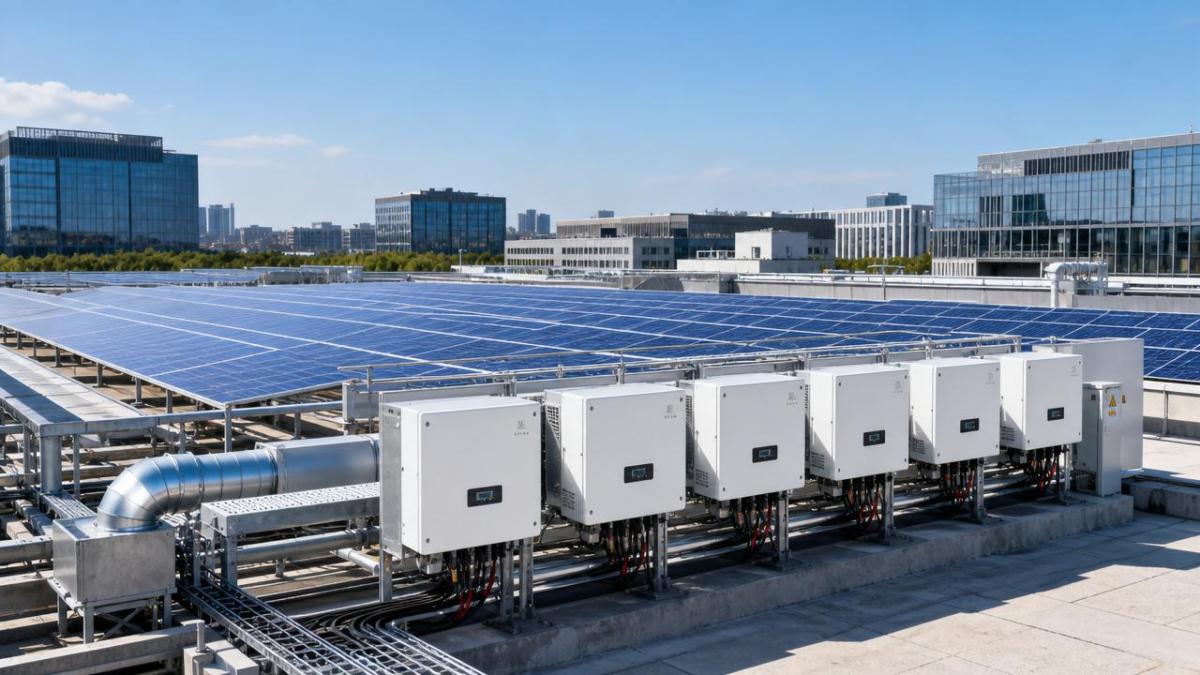
In commercial rooftop PV, the choice of a string inverter manufacturer affects far more than DC-to-AC conversion. It shapes plant availability, O&M workload, compliance readiness, cybersecurity posture, spare-parts planning, and even the ease of lender review. For technical teams, a weak comparison process often leads to hidden mismatch losses, derating under heat, or delays caused by grid-code documentation gaps.
A strong evaluation framework should look at the manufacturer as a systems partner, not just an equipment supplier. That means checking electrical architecture, firmware maturity, communication openness, local service depth, and the manufacturer’s ability to support changing grid conditions. This is where G-REI adds value: it connects hardware benchmarking with IEC, IEEE, and UL-oriented compliance perspectives, while also considering project tender realities, PPA pressure, and operational risk.
- Evaluate efficiency in realistic rooftop conditions, not only peak laboratory efficiency. Pay attention to European or weighted efficiency, MPPT operating windows, and behavior under partial loading.
- Check thermal design carefully. Rooftop systems often face elevated ambient temperatures, restricted airflow, and direct solar gain on the inverter enclosure.
- Review grid-support capabilities such as reactive power control, voltage ride-through, frequency response, ramp-rate control, and export limitation integration.
- Confirm monitoring depth. A capable string inverter manufacturer should offer device-level alarms, IV diagnostics where relevant, event logs, and integration with SCADA or third-party EMS platforms.
- Assess bankability through warranty terms, service response structure, documentation quality, and long-term firmware maintenance rather than relying on marketing claims.
What matters most in commercial rooftop scenarios?
Commercial rooftop projects are not uniform. A logistics warehouse, food-processing plant, shopping center, and electronics factory can all require different inverter priorities. Roof segmentation, shading obstacles, grid interconnection rules, and load profiles change the technical ranking of each string inverter manufacturer. Evaluators should therefore start from the application scenario instead of beginning with brand preference.
The table below summarizes how rooftop conditions influence the technical screening of a string inverter manufacturer for different commercial settings.
The practical lesson is clear: the best string inverter manufacturer for one rooftop portfolio may be the wrong choice for another. A site with frequent clipping risk may reward higher overload handling, while a site in a sensitive utility area may prioritize grid response and documentation discipline over small efficiency differences.
Which technical parameters deserve deeper review beyond datasheets?
Many procurement teams compare nominal power, maximum efficiency, and price first. That is necessary, but not sufficient. Technical evaluators should go deeper into operating behavior and supportability, because commercial rooftop yields are often affected by edge conditions rather than nameplate values.
Electrical design and MPPT behavior
The number of MPPTs, maximum input current per MPPT, startup voltage, and allowable DC oversizing all determine design flexibility. A string inverter manufacturer that supports modern high-current modules and broad MPPT windows can reduce compromise in string layout, especially when rooftops have multiple azimuths or equipment shadows.
Thermal stability and environmental suitability
Rooftops are harsh environments. Technical teams should review ingress protection, corrosion resistance, cooling concept, fan replacement strategy where applicable, and the derating profile at elevated temperatures. The more aggressive the local climate, the less useful a peak efficiency figure becomes if the inverter frequently throttles output.
Monitoring intelligence and integration
A capable string inverter manufacturer should support practical diagnostics, not just a web portal. Ask whether the platform can export raw data, maintain event history, integrate Modbus or other industrial communication layers, and distinguish between arc-fault, insulation, overtemperature, and communication-related events with enough detail for service teams.
Grid compliance and controls
Grid operators increasingly demand ride-through functions, Volt-VAR, Volt-Watt, frequency-watt response, anti-islanding performance, and certified behavior under specific local codes. A string inverter manufacturer with strong compliance documentation can shorten utility approval and reduce redesign risk.
To make these factors easier to screen, the next table converts technical review into a procurement checklist.
For technical evaluators, this checklist is often more useful than a headline efficiency ranking. It reveals whether a string inverter manufacturer can support real project execution, not merely pass an initial quote stage.
How do leading manufacturer profiles usually differ?
Without naming specific brands, the market often groups a string inverter manufacturer into several broad profiles. Understanding these profiles helps evaluators predict strengths and trade-offs before entering detailed vendor review.
- Scale-focused global suppliers: Usually offer broad product portfolios, stronger documentation libraries, and wider service coverage. They may be attractive where standardization across regions matters.
- Engineering-driven specialists: Often perform well in niche rooftop designs, complex retrofits, or custom monitoring integration, but evaluators should verify service network depth.
- Price-aggressive entrants: Can improve CAPEX competitiveness, yet technical teams should look closely at firmware maturity, replacement lead time, and long-term support commitment.
- Smart-grid aligned vendors: These manufacturers tend to emphasize communications, remote control logic, and future integration with storage, demand response, or VPP environments.
The right decision depends on the project’s risk profile. If a commercial rooftop portfolio spans multiple utilities and future flexibility is important, a string inverter manufacturer with stronger grid-adaptive features may justify a higher unit price. If the project is simple and service access is excellent, a more cost-sensitive option may be acceptable.
What procurement mistakes create the highest long-term cost?
The most expensive mistakes in commercial rooftop procurement rarely appear on the purchase order. They emerge later as yield losses, troubleshooting complexity, or utility nonconformance. Technical evaluators can prevent these outcomes by challenging assumptions early.
- Choosing only on initial price. A lower inverter price can be erased by one summer of thermal clipping or repeated service visits caused by weak diagnostics.
- Ignoring roof-specific MPPT needs. When rooftops include multiple orientations, skylights, vents, or phased construction, insufficient MPPT flexibility can force poor string design.
- Underestimating grid-code change risk. Utilities may revise export control logic, reactive power settings, or communication expectations during project development.
- Treating monitoring as an afterthought. Limited data transparency increases mean time to diagnose faults and makes performance guarantees harder to verify.
- Failing to check lifecycle support. Warranty language, regional spare stock, and escalation paths matter as much as nameplate specifications for long-lived rooftop assets.
G-REI’s cross-sector perspective is useful here because inverter selection increasingly intersects with storage planning, smart distribution rules, and software-driven energy management. A string inverter manufacturer that appears adequate today may become limiting when the asset later needs export optimization, dynamic curtailment, or participation in a distributed energy platform.
How should compliance, standards, and grid readiness be reviewed?
Standards review should be practical and project-linked. Technical teams do not simply need a long certificate list; they need evidence that the selected string inverter manufacturer can support the specific interconnection process, safety expectations, and utility communication rules of the target market.
Key areas to verify
- Electrical safety and installation conformity relevant to the region, including accepted test and listing pathways.
- Grid-interactive behavior aligned with local utility requirements, especially ride-through and reactive power functions.
- Documentation quality, including single-line examples, parameter-setting guidance, communication maps, and protection coordination notes.
- Cybersecurity and remote-update governance, particularly for portfolios integrated into SCADA, EMS, or VPP frameworks.
Because G-REI monitors policy and grid-access developments across renewable and smart-grid sectors, it can help technical evaluators look beyond checkbox compliance. That includes understanding where a given string inverter manufacturer fits within emerging distributed energy control architectures, not just today’s standalone rooftop requirements.
FAQ: what do buyers ask most about a string inverter manufacturer?
How do I compare two string inverter manufacturers with similar efficiency figures?
Start with thermal derating, MPPT flexibility, and monitoring depth. In commercial rooftop conditions, these factors usually create more operational difference than a few tenths of a percent in maximum efficiency. Then review grid-code readiness, firmware support, and warranty workflow.
Are higher MPPT counts always better for commercial rooftop systems?
Not always. More MPPTs help when the roof has multiple orientations, shading zones, or phased construction. On simple open-span roofs, extra MPPT complexity may not bring proportional value. The correct choice depends on layout diversity and expected mismatch risk.
What service questions should I ask a string inverter manufacturer before approval?
Ask about standard warranty scope, regional spare stock, replacement lead time, remote diagnostic support, escalation path for recurring faults, and firmware update policy. Also request a sample commissioning workflow and alarm list to judge practical support quality.
Is a lower-cost string inverter manufacturer suitable for institutional or multi-site portfolios?
It can be, but only if the manufacturer meets your documentation, interoperability, and lifecycle support requirements. Institutional portfolios often need standardized reporting, utility acceptance consistency, and predictable replacement procedures. A low purchase price alone does not satisfy those needs.
Why many portfolios now evaluate inverters through a smart-grid lens
Commercial rooftops are no longer isolated generation assets. They increasingly connect with storage, plant controllers, flexible tariffs, carbon reporting, and distributed dispatch logic. That trend changes what technical evaluators should expect from a string inverter manufacturer. Communication openness, grid responsiveness, and lifecycle software support are becoming central selection criteria.
This is especially relevant for organizations managing complex energy assets across regions. G-REI’s integrated view across PV, energy storage, smart distribution, and Energy Internet architecture helps procurement and engineering teams build a selection process that is not trapped by short-term hardware thinking. The strongest commercial rooftop systems are designed for both immediate yield and future controllability.
Why choose us for string inverter manufacturer evaluation?
G-REI supports technical evaluators who need more than vendor brochures. Our role is to help you benchmark a string inverter manufacturer against real commercial rooftop requirements, international standards logic, and evolving smart-grid expectations. We combine hardware screening with grid-readiness analysis, procurement intelligence, and implementation practicality.
You can contact us for project-specific support on parameter confirmation, product selection strategy, rooftop scenario matching, delivery-cycle discussion, certification review, communication protocol checks, sample-document assessment, and quotation comparison frameworks. If your project also involves future storage integration, export limitation, or VPP compatibility, we can help align inverter selection with those next-stage requirements before procurement locks in the wrong platform.
Deep Dive
Related Intelligence