Global Methanol Electrification Alliance Launched
Key Takeaways
- US DOE Adds 3 Chinese VPP Platforms to Interoperability White ListLina Cloud
- Global Methanol Electrification Alliance LaunchedLina Cloud
- EU Launches CE-RENEW Phase 2: Nacelle Systems Must Submit EPDs from June 2026Marcus Wind
- India Extends N-Type Module Import Duty Exemption to Dec 2026 with Photon Yield RequirementDr. Aris Sun
- IEC Releases New Short-Circuit Withstand Standard for GIS SwitchgearDr. Elena Volt
- Shanghai Yangshan Port Launches Green Clearance for Liquid-Cooled BESSDr. Julian Volt
- FCC Updates BMS/EMS Wireless Module Certification: Sub-1 GHz EMI Immunity Now MandatoryDr. Julian Volt
- ADWEA Launches International Tender for PV Trackers with Sandstorm Aging CertificationDr. Aris Sun
Industry Overview
Our mission is to safeguard the future of global renewable energy development through verifiable data, interdisciplinary academic scrutiny, and unwavering industry integrity.
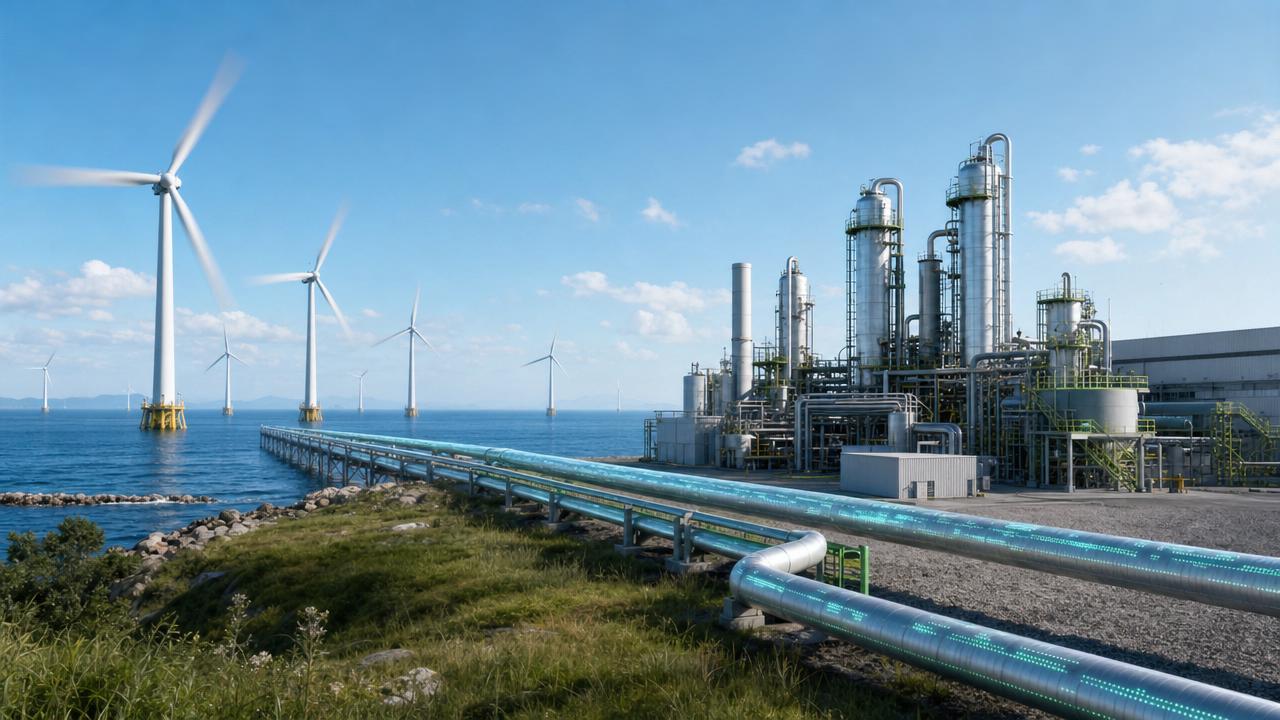
On May 8, 2026, the Global Methanol Electrification Alliance (GMEA) was formally established in Beijing — a cross-sector initiative co-founded by the Chebai Institute, China Automotive Technology & Research Center (CATARC), DNV, TÜV NORD, and nine other institutions. The alliance introduces the ‘Carbon-Linked Offshore Certification’ framework, directly coupling real-time carbon intensity data from offshore wind turbines with carbon tracking records from downstream methanol synthesis. This development is particularly relevant for offshore wind–powered green hydrogen production projects targeting export markets — especially those requiring internationally recognized carbon credentials.
Event Overview
On May 8, 2026, the Global Methanol Electrification Alliance (GMEA) was launched in Beijing. It comprises 12 organizations, including the Chebai Institute, CATARC, DNV, and TÜV NORD. Its inaugural output is the ‘Carbon-Linked Offshore Certification’ framework, which links offshore turbine–generated electricity carbon intensity with methanol synthesis carbon tracking data in real time. The framework aims to support international carbon credential recognition for Chinese offshore wind–to–hydrogen–to–methanol export projects.
Impact on Specific Industry Segments
Export-Oriented Green Hydrogen & E-Fuel Producers
These producers rely on verifiable, low-carbon electricity inputs to meet importers’ sustainability requirements. The certification framework introduces a standardized method to trace and verify upstream carbon intensity — directly affecting eligibility for preferential tariffs, green procurement contracts, or compliance with EU CBAM-aligned reporting. Impact manifests in documentation burden, audit readiness, and system interoperability between turbine operators and methanol synthesizers.
Offshore Wind Farm Operators
Operators supplying power to green hydrogen facilities must now ensure their generation data — especially real-time carbon intensity metrics — are captured, timestamped, and compatible with downstream certification systems. This implies potential upgrades to SCADA and digital twin platforms, as well as alignment with GMEA’s data schema and verification protocols.
International Certification & Verification Service Providers
DNV and TÜV NORD are founding members — signaling active involvement in shaping the technical criteria and audit procedures. Other third-party verifiers may need to adapt existing methodologies to accommodate coupled turbine–to–methanol carbon tracing, including chain-of-custody validation across energy and chemical domains.
Methanol Synthesis & Distribution Companies
For firms integrating green hydrogen into methanol production, this framework adds a new layer of upstream data dependency: methanol carbon intensity will no longer be assessed in isolation but anchored to certified offshore generation data. That affects batch-level carbon accounting, product labeling, and contractual carbon guarantees offered to end buyers.
What Relevant Enterprises or Practitioners Should Focus On & How to Respond
Monitor official technical specifications and pilot implementation timelines
The GMEA has announced the framework but not yet published detailed protocols, data format standards, or audit checklists. Enterprises should track forthcoming documentation from founding members — especially DNV and CATARC — rather than assume immediate regulatory enforcement.
Assess current data infrastructure compatibility with real-time carbon intensity linkage
Companies involved in offshore wind, electrolysis, or methanol synthesis should inventory existing metering, telemetry, and ERP systems. Key questions include: Can turbine-level emissions factors be exported in standardized time-series format? Is there API-level integration capability between power generation logs and chemical process data systems?
Distinguish between certification eligibility and market acceptance
While the framework enables issuance of internationally aligned carbon credentials, buyer recognition remains voluntary. Exporters should engage early with key off-takers — particularly in EU maritime fuel markets or Japanese industrial decarbonization programs — to confirm whether GMEA certification satisfies their due diligence requirements.
Prepare for joint audits across energy and chemical value chains
Future verification may require coordinated site visits or synchronized data reviews covering both offshore substations and methanol synthesis plants. Firms should initiate internal alignment between energy operations and chemical engineering teams, and designate cross-functional points of contact for certification-related queries.
Editorial Perspective / Industry Observation
Observably, the GMEA launch signals a structural shift toward integrated carbon accounting across previously siloed sectors — electricity generation, electrolysis, and synthetic fuel synthesis. Analysis shows this is less a finalized regulatory outcome and more a coordination mechanism emerging in response to tightening international carbon transparency demands. From an industry perspective, it reflects growing pressure to harmonize measurement approaches before fragmented national or regional schemes proliferate. Current relevance lies not in immediate compliance mandates, but in its role as a testbed for interoperable carbon traceability — one that could inform future ISO or IEC standards. Continued attention is warranted because adoption momentum will likely hinge on early-mover participation in pilot projects, not top-down mandate.
In summary, the formation of the Global Methanol Electrification Alliance marks a targeted step toward operationalizing cross-sector carbon traceability — specifically for offshore wind–driven green hydrogen and methanol pathways. It does not introduce binding regulation, nor does it replace existing certification schemes. Rather, it offers a collaborative, industry-led framework whose practical utility will depend on technical execution, data governance rigor, and uptake by trading partners. Currently, it is best understood as an infrastructure-building initiative — one that lowers coordination friction but does not eliminate the need for robust, auditable data systems at each node of the value chain.
Source: Official announcement by Chebai Institute, CATARC, DNV, and TÜV NORD; public launch event held in Beijing on May 8, 2026.
Noted for ongoing observation: Finalized technical specifications, pilot project selection, and third-party verifier accreditation criteria remain pending publication.